

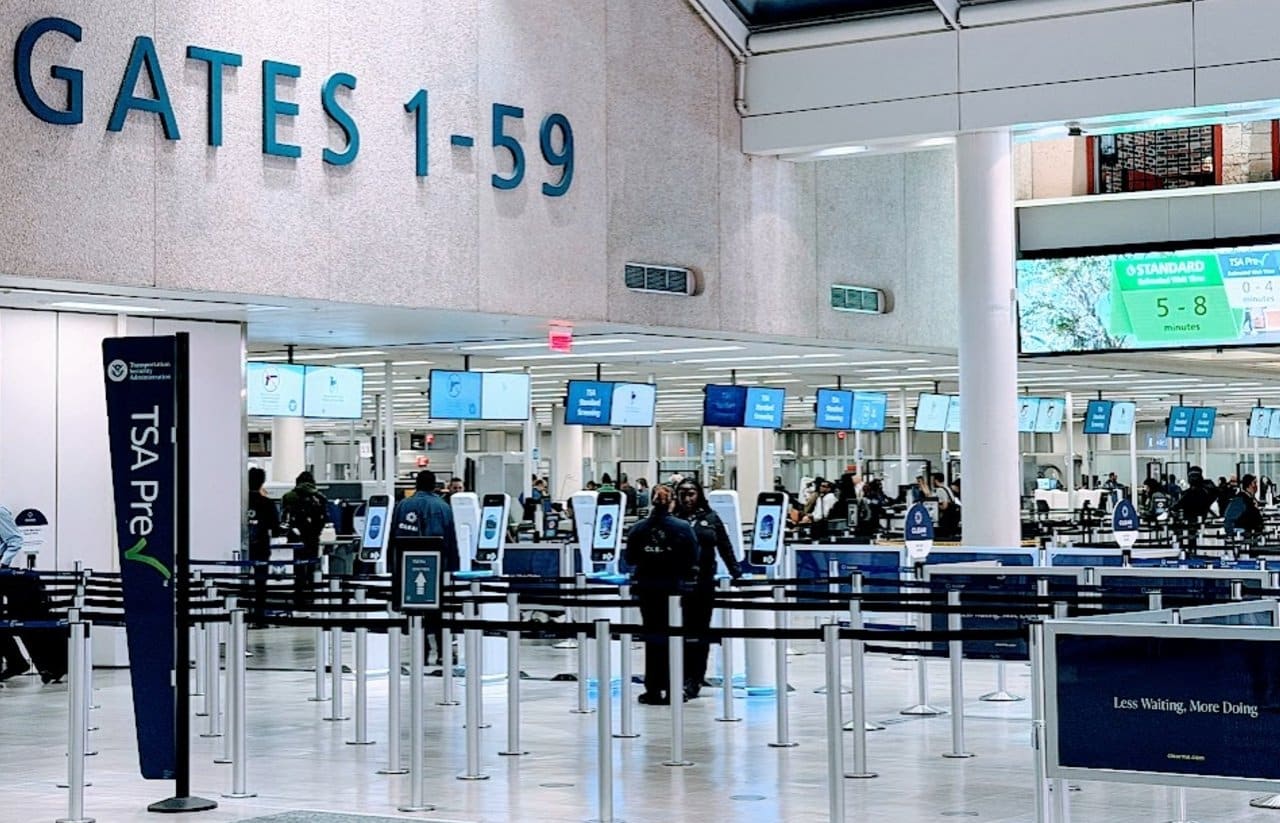
Faced with scenarios of administrative instability and government shutdowns in the Estados Unidos, the fluidity of air transport becomes a central concern for millions of passengers. While the country’s main hubs face long lines and significant delays due to the absence of federal employees, a select group of terminals operate with remarkable efficiency. The key to this operational difference lies in the outsourcing of passenger and baggage inspections, a measure that separates these activities directly from Administração of Segurança of Transporte, known by the acronym TSA. Esse alternative model allows private companies to take control of checkpoints, ensuring the continuity of essential services even when the federal government suspends payments.
Large and medium-sized facilities, such as Aeroporto Internacional of São Francisco and Aeroporto Internacional of Kansas City, have adopted this management strategy. The federal program authorizes the hiring of specialized companies to manage security, offering a parallel path to the traditional public servants. The effectiveness of these service providers gains special prominence in times of Estado financial crisis, when the public sector reduces its operating pace. Passageiros who transit through these locations report a more agile boarding experience, without the common bottlenecks seen in terminals managed exclusively by the government.
Civil aviation experts closely monitor the results of this mixed approach to public and private security. Maintaining the flow of travelers without compromising strict standards against terrorist threats demonstrates the viability of the system at different scales of operation. Terminais regional and large airport complexes have similar performance metrics with regard to waiting time in x-ray and metal detector queues.
Historical and operational context of the inspection system
The partial transition to the private sector dates back to legislative changes implemented after the September 2001 attacks, when aviation security was largely federalized with the creation of the TSA. During this period, all screening operations at American terminals were conducted by outsourced companies, a model that came under harsh criticism following the security breaches that resulted in the attacks. However, the American Congresso later established the Programa of Parceria of Essa configuration works as a strategic partnership, where the private sector provides the labor and performs the final service, but all guidelines, review protocols and quality standards are determined and strictly monitored by federal authorities in Washington.
University professors and researchers specializing in aviation security systems point out that the terminals participating in this program operate independently of government shutdowns. The ability of contractors to maintain cash flow and continue paying their employees, even during legislative impasses over the national budget, acts as the main factor of stability.
Private security companies assume full responsibility for their agents’ payroll. Essa Financial independence protects local operations against political disputes in the country’s capital, ensuring that professionals attend their jobs with the guarantee of receiving their salaries on time.
Direct impact on large air connection hubs
The situation at airports managed exclusively by the federal government becomes critical during Estado funding crises. Locais with heavy traffic, such as the Aeroporto Intercontinental George Bush, in Houston, and the Aeroporto Internacional Hartsfield-Jackson, in Esse cenário caótico decorre da ausência de mais de um terço dos agentes federais em determinados turnos, evidenciando a vulnerabilidade da infraestrutura de transporte quando atrelada diretamente à folha de pagamento do governo.
The prolonged salary crisis generates a climate of uncertainty and dissatisfaction among public servants responsible for protecting flights. Enquanto parliamentarians debate the approval of funds for the Departamento of
Financial resilience of outsourced operators
Managers of private security companies that operate in regional terminals, such as Aeroporto of Tupelo, report that their staff never stopped receiving their salaries during government shutdowns. Embora these companies need to bear operational expenses while waiting for the government to reopen to process their invoices and receive federal transfers, they demonstrate a remarkable capacity for immediate financial resilience.
For smaller companies, covering payroll during a public machine blackout represents a considerable financial burden, requiring lines of credit and emergency reserves. Contudo, maintaining operational stability ensures that screening services are not interrupted, resulting in less inconvenience for passengers and strict compliance with contractual clauses signed with the airport administration.
Strict supervision and unified agent training
Despite management being transferred to the private sector, all airport security operations strictly follow federal supervision. Contracted companies are required by law to comply with the same rules, guidelines and security standards imposed on traditional federal agents. The autonomy of these companies is mainly restricted to the internal management of human resources, encompassing the number of professionals to be hired, the work schedules and the benefits packages offered.
Former federal security directors who now work in the private sector ensure that contract agents receive exactly the same type of training provided by the TSA academy. Essa curricular standardization guarantees that the change in the management model does not imply, under any circumstances, a reduction in the levels of protection against threats to civil aviation.
Flexibility in personnel management allows private companies to quickly adjust their staffing levels according to seasonal passenger demand. Essa operational agility contrasts with the bureaucracy of the public service, facilitating the retention of talent and the maintenance of motivated teams through performance incentives and structured career plans.
Bureaucratic challenges for expanding the model
Despite the clear benefits of the privatized model in times of government crisis, the transition to this system does not represent a quick solution for terminals facing chronic staffing problems. The legal process for an airport to implement private screening is long, complex and highly bureaucratic, requiring multiple approval steps.
Initially, the local administration must request formal permission from the national TSA management, justifying the need for the change. Caso the request is approved, the preparation of the notice and the issuance of the contract may take up to a year to be completed, due to the strict technical and financial compliance requirements.
The phase of selecting the winning company to take on the security service can take another six months of analysis and audits. Essa lentidão no processo de transição atua como um fator de desestímulo para que aeroportos de grande porte adiram ao programa, uma vez que a mudança envolve uma reestruturação operacional profunda e riscos associados à troca de comando.
Industry data indicates that the model’s efficiency is proven in practice, but does not eliminate the logistical barriers of its large-scale implementation. The complexity of replacing thousands of public employees with private employees in a short space of time makes the expansion of the program a gradual and cautious process on the part of aeronautical authorities.
Union criticism and labor concerns
Union representation of federal agents raises significant concerns about the advancement of outsourcing in passenger terminals. The main argument of professional associations is based on the premise that contracts, often awarded to companies that present the lowest price in tenders, can compromise the quality of the service provided and, consequently, the safety of travelers. Unions warn that prioritizing corporate profits over employee well-being represents a systemic risk, which could lead to a shortage of qualified personnel, high turnover and precarious working conditions in inspection areas.
On the other hand, defenders of the private model argue that competition in the free market drives efficiency and technological innovation at checkpoints. The requirement to meet performance targets established in federal contracts obliges companies to maintain high quality standards to avoid financial penalties or termination of the agreement. The debate between total federalization and private management continues to shape transport policies, requiring a delicate balance between the responsibility of Estado in civil protection and the search for operational fluidity offered by the private sector.
Terminals participating in the federal program
The list of facilities currently part of the screening partnership program covers an impressive variety of infrastructures, demonstrating the system’s adaptability to different operational realities. Entre the places that operate with private security, include terminals of great economic and tourist relevance, such as the Aeroporto Internacional of São Francisco, at Califórnia, and the Aeroporto Internacional of Kansas City, at The model’s presence is also strong in regional and municipal complexes, including the Aeroporto Internacional of Orlando Sanford and the Punta Gorda Airport, both in Flórida, in addition to the Aeroporto Internacional of The state of Montana concentrates a significant number of participating terminals, such as the Aeroporto Comunitário of Dawson, the Municipal Sidney-Richland Airport, the Aeroporto Internacional of Glasgow/Wokal Field and the Yellowstone Airport. Outros notable sites include the Aeroporto Internacional of Atlantic City, in Nova Jersey, the Aeroporto Charles M. Internacional Sarasota-Bradenton Airport, the Aeroporto Regional of Sioux Falls, in the Dakota of the Essa diversidade geográfica e de tamanho de frota atendida comprova que a terceirização pode ser moldada para atender desde demandas locais restritas até o intenso fluxo de conexões internacionais.
Continued efficiency in air transport
The analysis of the functioning of these terminals highlights the importance of considering management alternatives for critical public services, especially in the face of political impasses that threaten the continuity of essential operations. Maintaining the flow of passengers and rigorously guaranteeing protection against threats consolidates the relevance of the debate on the direction of airport administration in the contemporary scenario.



