
Samsung withdraws the Galaxy Z TriFold smartphone from circulation in the United States and South Korea


The South Korean manufacturer confirmed the interruption of sales of its first mobile device with a double folding screen in the North American and Asian markets. The measure comes just a few months after the official launch of the device, which hit the shelves with the aim of innovating the premium electronics segment. The exhaustion of remaining stocks marked the end of the product’s supply to end consumers.
The equipment was initially made available at Coreia from Sul at the end of last year and reached Estados Unidos at the beginning of this year. The company’s initial strategy involved selling a restricted volume of units, positioning the item much more as a demonstration of technological capacity than as a product aimed at the masses. The initial acceptance surprised market analysts who follow the telecommunications sector.
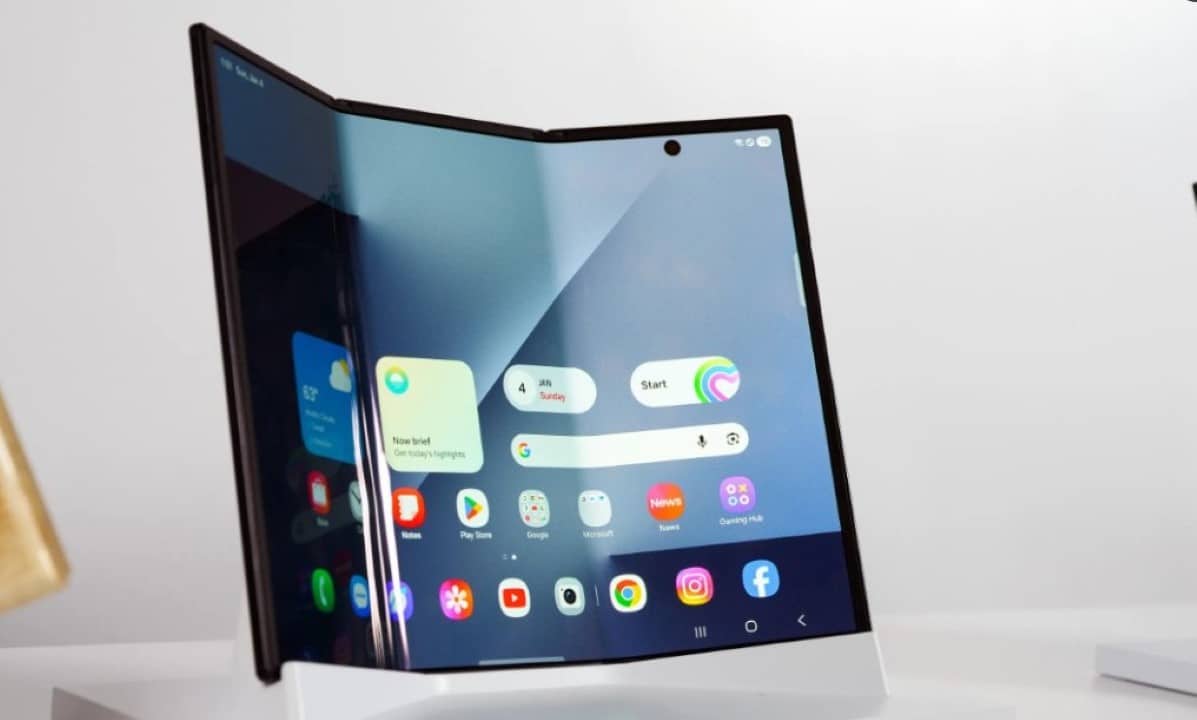
Despite the strong interest of the enthusiastic public, the continuation of production ran into logistical and financial obstacles. The complexity in manufacturing the exclusive parts required by the innovative design forced the company to reevaluate the feasibility of keeping the model in its active portfolio. The decision aims to protect the profitability of the mobile devices division and focus on projects with greater commercial scalability.
Production challenges and operating costs
The device’s architecture required the integration of highly sophisticated components, which drastically increased manufacturing costs. The large flexible panel and double hinge system represented the biggest bottlenecks on the assembly line. The scarcity of suppliers capable of delivering these parts with the required quality limited the manufacturer’s production capacity.
Macroeconomic factors also influenced the suspension of sales of the device. The global semiconductor market has seen a significant increase in the prices of next-generation memory chips and processors. Esse scenario compressed the company’s profit margins, making the operation unsustainable even with the high price charged for the equipment in official stores.
The suggested price of almost three thousand dollars on the Estados Unidos was not enough to cover the expenses of low-scale development and manufacturing. The company’s management chose to absorb the technical knowledge acquired during the short commercialization period instead of insisting on a loss-making business model. The priority now is to optimize the supply chain for future projects.
Durability and brand image issues
Preliminary reports from consumers pointed to possible weaknesses in the internal display after weeks of continuous use. The reported problems are similar to the challenges faced by the industry in the first generations of foldable phones, involving premature wear of the protective film and noises in the hinge mechanism. The brand’s engineering monitored these cases closely to apply corrections to parallel projects.
To avoid damaging the reputation of its main line of premium products, the manufacturer acted preventively by withdrawing the model from circulation. Prolonged exposure to structural failures could compromise users’ confidence in the durability of flexible displays. The silent withdrawal strategy preserves the prestige achieved by the company over the years in the mobile innovation sector.
High-performance technical specifications
The equipment’s hardware was impressive with specifications worthy of portable computers. The main screen featured advanced light-emitting technology, measuring ten inches when fully expanded, with very high definition resolution and variable refresh rate. The intense brightness allowed comfortable viewing even in direct sunlight, maintaining color fidelity.
The processing was carried out by a state-of-the-art chip developed in partnership with Qualcomm, specifically optimized for the device’s energy demands. The system was accompanied by sixteen gigabytes of random access memory and internal storage options that reached up to one terabyte. Essa configuration ensures fluidity in complex tasks and simultaneous execution of multiple applications.
The photographic set was not neglected in the mobile device project. The main camera boasted a two-hundred-megapixel sensor with optical image stabilization, flanked by ultrawide and telephoto lenses with optical zoom capabilities without loss of quality. The front cameras were strategically distributed to answer video calls in any format, whether with the device folded or fully open.
Power autonomy was supported by a high-density battery, compatible with ultra-fast cable charging and magnetic induction protocols. The device’s chassis, built from lightweight metal alloys, was surprisingly thin when opened, although the total weight exceeded the three hundred gram mark. The operating system already featured the latest software adaptations to maximize productivity on large screens.
Consumer behavior and initial demand
Public reception exceeded the most optimistic projections drawn up by the Asian company’s marketing department. Durante stock replenishment windows, which occurred in a controlled and sporadic manner, available units sold out in a matter of minutes on online sales channels. Esse phenomenon of artificial scarcity generated a sense of urgency among technology enthusiasts, who saw the device as a symbol of status and digital vanguard. The pent-up demand showed that there is a niche market willing to invest substantial amounts in disruptive formats, as long as the practical utility justifies the initial investment and offers a different user experience compared to traditional smartphones.
Estimates from independent analysts suggest that only a few thousand copies were actually delivered to end consumers, mostly concentrated in the manufacturer’s domestic market. Essa limited edition turned the equipment into an instant collector’s item. The company used this select group of buyers as a real-time test bed, collecting valuable data on daily usage patterns, how often hinges are opened, and which apps benefit most from the expanded screen. Essas information is considered the true return on investment of this pioneering project, serving as a practical guide for the development of more intuitive interfaces.
Prospects for the next generation of devices
The closing of this chapter does not mean the abandonment of the three-fold format by the technology giant, but rather a strategic retreat for internal improvement. Research and development laboratories are already working on designing a successor that corrects structural flaws and reduces dependence on excessively expensive components. The goal established by the executive board is to simplify the assembly process, allowing the next iteration of the product to be manufactured on a large scale and with a sustainable profit margin. The competitive scenario requires quick responses, especially with the advancement of competing brands based in China, which have presented aggressive prototypes in the ultra-premium segment. The experience gained from this first release provides the company with a crucial analytical advantage, allowing engineers to focus on durability solutions such as new materials for display protection and hinge mechanisms sealed against the ingress of microparticles. The market awaits that the innovations tested in this exclusive model will be gradually incorporated into the brand’s conventional foldable lines, raising the quality standard of the entire mobile ecosystem in the coming years and ensuring the manufacturer’s competitiveness at the top of the chain of technological innovations.
Impact on the premium electronics market
The South Korean manufacturer’s move sends a clear signal to the industry that innovation at any cost is no longer a viable policy. The balance between technological pioneering and financial responsibility has become the new paradigm for the development of complex hardware. Investors reacted neutrally to the product withdrawal, understanding the rationale behind the corporate decision to focus on high-volume products.
The future of the flexible smartphone line
The brand reaffirms its commitment to the category of phones that fold in half, which continues to be the main driver of growth in the high-value-added segment. Marketing and production efforts will be redirected to already consolidated models, which have stable approval rates and mature supply chains. Consolidation of this leadership is essential for the mobility division’s annual revenues.
The concept of screens that expand in multiple directions remains alive in the company’s laboratories as a promise for the near future. The calibration of market expectations combined with the natural advancement of materials science will dictate the pace of upcoming launches. The company maintains its position at the forefront, closely observing movements in the global technology sector to decide the exact moment to reintroduce the trifold format in stores.




