

Space exploration takes on new contours with recent updates in the planning of manned missions towards the natural satellite of Terra. The American space agency’s strategy underwent rigorous technical reviews to ensure the safety of the crew and the viability of the equipment involved. Essa restructuring directly affects the dates stipulated for the physical return of humans to the lunar surface.
The adjustment to the calendar moves the first manned landing of the modern era to the year 2028, as part of the Artemis 4 mission. The decision reflects the need for more time for the development and testing of critical life support and in-orbit docking systems. Engenheiros and experts assessed that bringing forward steps could compromise the integrity of operations in deep space.
Before touching down, the agency will carry out fundamental preparatory flights to validate the new generation spacecraft and rockets. The immediate focus of the engineering and flight operations teams is on the launch scheduled for early April 2026, which will return humans to the lunar vicinity after more than five decades.
Architectural adjustments and new flight organization
The architecture of the space program underwent substantial modifications to accommodate additional tests before final landing. A new mission was included in the official planning for the year 2027, with the exclusive objective of carrying out tests in low orbit of the Terra.
This intermediate flight will serve as a proving ground for landing modules developed by the private sector. Validation of the coupling maneuvers between the main capsule and commercial vehicles is considered the most complex phase of the entire descent operation.
With the introduction of this verification stage in Earth orbit, the mission that originally made the landing also underwent adaptations in its scope. The relaxation of technical requirements allows partner companies an extended period of time to improve their propulsion and navigation systems.
The main target of future descents remains unchanged, maintaining the focus on the lunar south pole region. Essa area is of extreme scientific interest due to the high probability of harboring large reserves of water ice within permanently shadowed craters.
Operational details of the preparatory trip
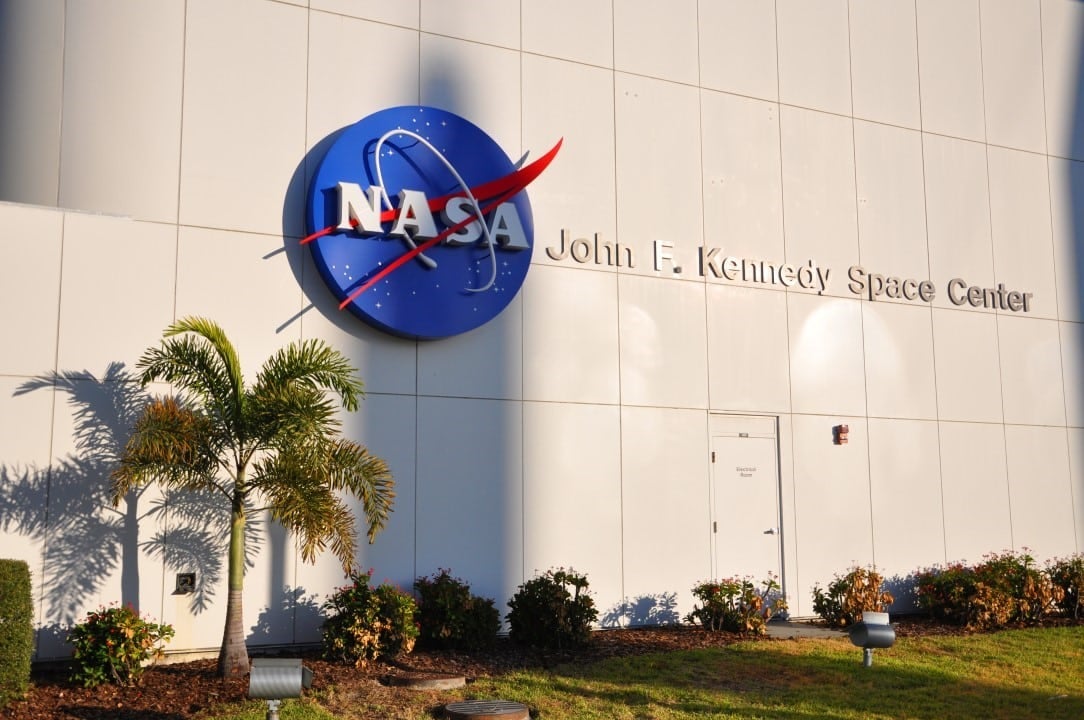
The Artemis 2 mission represents the first crewed flight test of the new deep exploration capsule. The launch will take place from Centro Espacial Kennedy, located in the state of Flórida, using the most powerful rocket ever built by modern aerospace engineering.
For approximately ten days, a crew made up of four professionals will fly over Lua. The group is made up of commander Reid Wiseman, pilot Victor Glover, mission specialist Christina Koch and Canadian specialist Jeremy Hansen.
The route does not include descent to the surface, but will ensure complete assessment of the spacecraft’s life support, communication and manual control systems. Astronauts will travel beyond the far side of Lua, reaching a distance from Terra greater than any other manned mission in history.
Intensive preparation and field training
The quartet selected for the orbital flight underwent three years of practical and theoretical training, with methodologies inspired by old missions from the Apollo era. Activities included expeditions to remote areas of Terra that simulate the geological and visual conditions found in the lunar environment.
The instruction prioritized the capacity for scientific observation and the precise description of rock formations and relief variations. The astronauts learned to identify subtle topographic features that will be key in helping scientists plan future surface exploration routes.
Human observation and interactive mapping
The presence of human eyes in lunar orbit offers significant advantages over the exclusive use of automated probes and satellites. Durante the flyby, the crew will dedicate blocks of up to six continuous hours to recording lighting conditions, terrain colors and textures of polar craters using high-resolution portable cameras and tablets configured for the microgravity environment. Essa direct perception allows you to capture geological nuances and anomalies that robotic sensors often cannot detect with the same clarity, complementing the vast existing database.
To optimize this visual recognition work, ground teams developed an interactive and dynamic lunar atlas, specifically designed to guide astronauts during the observation window. The software crosses real-time trajectory data with topographic maps, indicating targets of greatest scientific interest as the spacecraft moves over the surface. The system was designed to receive constant updates after launch, adapting photography and analysis priorities according to the capsule’s exact position and reflected sunlight conditions at the time of the flyby.
Integration of robotic probes and risk mitigation
In parallel with the effort to send humans into deep space, a fleet of robotic missions is being prepared to pave the way and reduce operational uncertainties at the lunar south pole from 2027 onwards. frequently interrupted. The data transmitted by these machines is vital for the improvement of new generation extravehicular spacesuits, which will need to withstand the intense cold of permanent shadow areas and guarantee the mobility of astronauts during scientific walks. The strategy of interspersing unmanned launches with the main missions creates an early support infrastructure, dramatically decreasing the risks associated with the 2028 landing and laying the technological foundation for the construction of long-lasting habitats and in situ resource mining operations in subsequent years.
Commercial partnerships and module development
The viability of the updated planning depends heavily on the performance of the private companies contracted to build the lunar descent vehicles. Companhias like SpaceX and Blue Origin lead the development of landers that will final transport astronauts from orbit to the ground at the south pole.
The transfer of design and manufacturing responsibilities to the commercial sector represents a paradigm shift in government space exploration. Essa approach aims to reduce long-term operating costs and foster a competitive cislunar economy where multiple companies offer cargo and crew transportation services.
Establishing a sustainable presence
The ultimate goal of all date restructuring and investments in new technologies is to ensure that humanity not only returns to Lua, but remains there continuously. With annual missions expected after the first successful landing, the established infrastructure will serve as the main testing ground for crewed missions even further into the solar system.



