
Space telescope reveals exoplanet with magma ocean and sulfur atmosphere 35 light years away
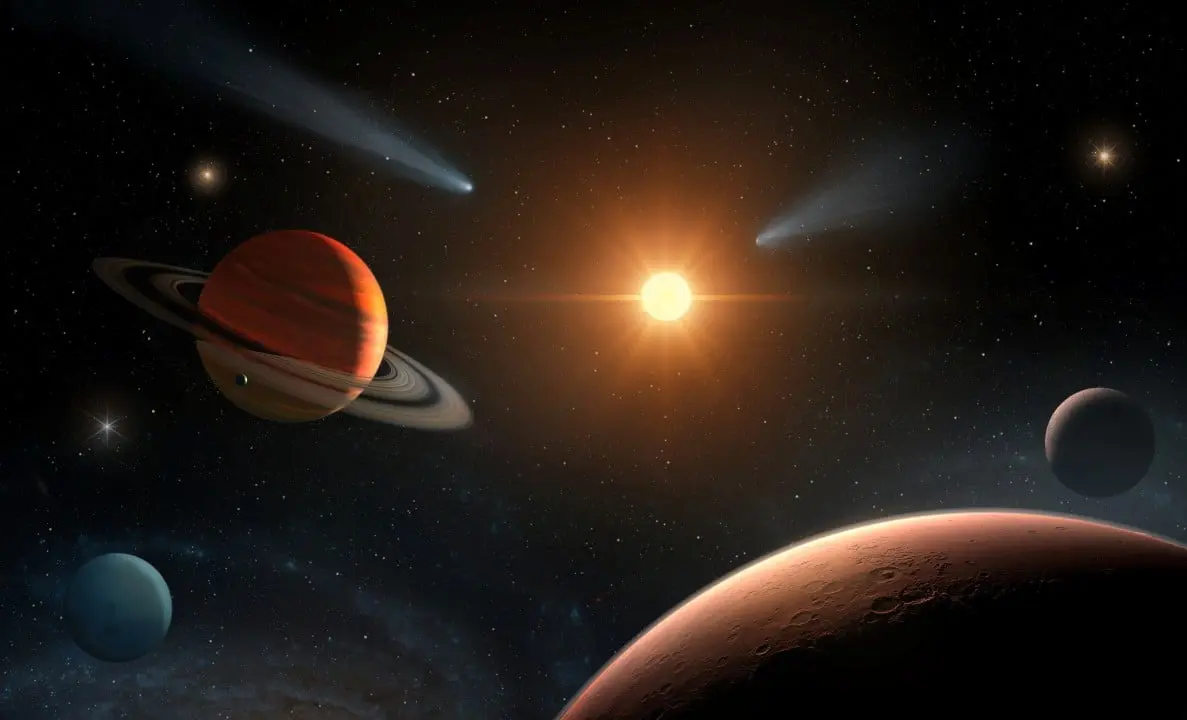
An international team of astronomers has identified unprecedented atmospheric and surface features on a celestial body located outside our solar system. Recent observations point to an extreme environment, dominated by active volcanism and temperatures that make it impossible for any known life form to exist. The target of the study is the exoplanet designated L 98-59 d, which orbits a red dwarf star in the constellation Volans.
Data captured by high-precision instruments revealed that the surface of this planet is completely melted, forming a vast and deep ocean of magma. Thermal measurements indicate that temperatures on the day side of the planet exceed the 1,500 degree mark Celsius. Esse level of extreme heat prevents the solidification of the surface mantle, creating a dynamic and continuous geological environment.
Detailed spectroscopic analysis allowed scientists to accurately profile local conditions. Entre the most relevant discoveries, the following points about the planetary system stand out:
– The system’s exact distance from Terra is 35 light years, which makes it a relatively close cosmic neighbor in astronomical terms.
Learn more: Astronomers discover new type of exoplanet with sulfur-rich magma ocean 35 light years away
– The host star is a red dwarf, a smaller and cooler stellar type than Sol, but known for its high magnetic activity.
– The planet’s atmosphere is dense and composed primarily of heavy elements, with an almost total absence of primordial hydrogen and helium.
Density anomaly and structural composition
Physical measurements of L 98-59 d present an intriguing scenario for planetary formation models. The exoplanet has a radius approximately 1.6 times greater than that of Terra, which would initially classify it in the super-Earth category. However, its mass does not follow this proportion linearly, resulting in an average density calculated at just 2.2 grams per cubic centimeter.
Full coverage: News (EN)
This unusually low density for a rocky planet indicates that a significant fraction of its volume is made up of an envelope of volatile materials. The researchers determined that the internal structure cannot be explained by a pure iron core and silicate mantle. The presence of a thick atmosphere and a thermally expanded magma ocean is the most coherent physical explanation for the observed volume in relation to the total mass of the celestial body.
The tidal heating mechanism
The primary source of the extreme heat melting L 98-59 d’s surface doesn’t just come from radiation from its host star. The planet’s orbit is extremely close to the red dwarf, resulting in an intense gravitational interaction. Essa proximity generates colossal tidal forces that physically distort the structure of the planet as it travels its orbital path.
In addition to stellar attraction, L 98-59 d is in an orbital resonance configuration with other planets in the same system. Essa complex gravitational dance prevents the planet’s orbit from becoming perfectly circular. Continued orbital eccentricity forces the planet’s interior to repeatedly contract and expand, generating massive internal friction.
This mechanical process, known in astrophysics as tidal heating, is the same phenomenon that causes extreme volcanism on the moon Io, from Júpiter. In the case of L 98-59 d, the scale of heating is orders of magnitude greater, providing the thermal energy necessary to keep the rock in a liquid state on a global scale and fuel uninterrupted volcanism.
Chemical signatures of a sulfurous atmosphere
A observação da atmosfera do L 98-59 d exigiu a aplicação da técnica de espectroscopia de transmissão. Quando the planet passes in front of its star, a small fraction of the starlight passes through the planet’s gaseous layer before reaching the telescopes at Terra. Diferentes moléculas absorvem comprimentos de onda específicos da luz, deixando uma assinatura química única no espectro captado.
On the same topic: James Webb Telescope detects magma ocean on exoplanet L 98-59 d, 35 light years from Earth
The data revealed strong absorption at wavelengths corresponding to sulfur-based compounds. The detection of sulfur dioxide and hydrogen sulfide in large quantities confirms the volcanic nature of the planet. Magma exposed at the surface continually releases these gases, replenishing the atmosphere and creating a closed chemical cycle between the ocean of molten rock and the gaseous envelope.
The presence of abundant sulfur also suggests that the planet’s original atmosphere has been completely altered over billions of years. Ultraviolet radiation from the red dwarf star likely broke apart water molecules and other lighter compounds in the system’s early days. The resulting hydrogen escaped into space, leaving behind heavier elements that now dominate atmospheric chemistry.
This sulfur-rich composition acts as an additional thermal blanket. Volcanic gases have a high capacity to retain infrared radiation, creating an extreme greenhouse effect that helps maintain surface temperatures above the melting point of basalt rocks.
Evolution of astronomical observation
The initial identification of the L 98-59 system occurred in 2019, through data collected by the TESS satellite. The transit method used by the satellite made it possible to detect periodic drops in the star’s brightness, confirming the existence of multiple planets in orbit. Naquela time, astronomers were able to calculate the size and orbital period of celestial bodies, but the exact nature of their atmospheres remained beyond technological reach.
The entry into operation of new generation space telescopes, operating in the infrared spectrum with large diameter mirrors, changed this scenario. The ability to separate the star’s light from the planet’s own thermal emissions allowed the detailed characterization that is now public. The instrumental breakthrough was critical in distinguishing a barren rocky planet from a dynamic world with active volcanism and a secondary atmosphere.
Dynamics of water formation and loss
The geological history of L 98-59 d offers empirical data on the evolution of planets around red dwarfs. Theoretical models indicate that, during the first 100 million years after its formation, the host star went through a phase of extreme activity, emitting extremely high levels of high-energy radiation and intense stellar winds. If the planet had oceans of liquid water on its surface during this period, stellar energy would have caused the total evaporation of this water. The photodissociation of water vapor molecules in the upper atmosphere separated oxygen from hydrogen. With the loss of hydrogen to the space vacuum due to the planet’s low relative gravity, the surface dried out completely. The remaining oxygen reacted with minerals in the crust and with sulfur expelled from the mantle, forming the sulfur dioxide compounds that today make up the thick gaseous layer observed by astronomers.
Read also: New type of rocky planet with global magma ocean identified by telescope
A new planetary category
The unique characteristics of L 98-59 d force the scientific community to establish a new classification for celestial bodies. The planet does not fit traditional models of dense rocky super-Earths, nor mini-Neptunes with thick hydrogen atmospheres. The definition of a sulfur world with a global magma ocean creates a new parameter for planetary diversity in the galaxy.
The future of exoplanet exploration
The confirmation of a sulfur-rich atmosphere on a planet so close to its star demonstrates the resilience of gaseous envelopes under conditions of extreme radiation. Continuous volcanism acts as a defense mechanism against atmospheric erosion caused by stellar winds. Enquanto the planet has internal energy to maintain the molten mantle, the emission of volcanic gases will continue to replace the atmosphere lost to space.
The study of this star system will continue to be a priority target for astrophysics. Continued observation of L 98-59 d will allow us to refine fluid dynamics models in magma oceans and better understand how sulfur chemistry operates at extreme temperatures. Mapping other systems around red dwarfs will seek to identify whether sulfur worlds are an isolated anomaly or a common evolutionary phase for planets subject to intense tidal heating.
More news in News (EN)
See more → Samsung releases new system update with new features for Galaxy Watch 4 users
 Digital retail reduces the value of the Galaxy S25 5G smartphone with bank bonuses and device exchange
 Amazon’s wireless CarPlay adapter has a 50% discount and high approval ratings from drivers
 Zach Cregger’s new Resident Evil ignores games and focuses on an unprecedented story with new characters
 Rumor suggests that Nintendo is preparing a special edition of the Switch 2 with a remake of Ocarina of Time
 Apple accelerates production of the iPhone 17e and develops new Air model with dual camera system
 Epic Games platform releases twelve high-budget games at no permanent cost for PC users
 PlayStation 5 Pro price drop accelerates digital retail sales and eliminates global stocks
 New Galaxy Watch 9 firmware appears on server and confirms progress in software development
 Apple’s commemorative project tests cell phone with 1.1 millimeter edge and curved screen for 2027
 New Apple system update optimizes urgent task management for iPhone users
 Leak details hardware of the new portable PlayStation with superior graphics to the Xbox Series S
More news on Mix Vale
- 1Colby Minifie confirms Ashley Barrett’s powers in The Boys season five
- 2Napoli x Milan in Serie A with confirmed lineups and where to watch live
- 3New battery test puts Galaxy S26 Ultra ahead of iPhone 17 Pro Max in global ranking
- 4Research reveals that parents are unaware of how their children use artificial intelligence
- 5Oppo officially launches the Find X9 Ultra worldwide with Hasselblad lenses and robust battery
- 6Tim Cook reveals new iPhone and iPod prototypes in celebration of Apple’s fiftieth anniversary
- 7New edition of foldable smartphone brings gold finish to Winter Games competitors
- 8Android system receives native Gemini Nano 4 integration for offline processing on smartphones
- 9Samsung updates QuickStar module and expands visual control of the panel in the One UI 8.5 interface
- 10Leak reveals Lords of the Fallen and Sword Art Online in April’s PS Plus Essential catalog