
After years of severe headaches attributed to anxiety, Jodie Boulton removes 85% of old brain tumor


Jodie Boulton, resident of Caerphilly, in País of Gales, lived for around 20 years with an undiagnosed brain tumor. Severe headaches that began shortly after her son’s birth were attributed to anxiety by family doctors. Aos 38 anos, no início de 2025, a interrupção completa da menstruação levou a exames que revelaram um meningioma de baixo grau, do tamanho aproximado de uma tangerina.
The MRI confirmed the presence of the mass, which had probably been developing for two decades. The tumor affected hormones due to its location, causing the premature end of menstruation. Additional Sintomas have included balance problems and double vision in recent periods. Jodie opted for removal surgery in June 2025.
Late diagnosis and initial impact
Doctors have identified meningioma as the most common type of brain tumor. Esse tumor can remain asymptomatic for long periods or cause persistent headaches, visual changes and muscle weakness. In her case, slow growth allowed the tumor to reach significant size without prior detection.
Jodie reported mixed feelings upon receiving the diagnosis. Ela expressed frustration over years of suffering without clear explanation and relief at finally identifying the cause. The discovery made it possible to initiate appropriate treatment.
Surgery removes most of the tumor
The operation lasted 12 hours and removed 85% of the tumor mass. The remaining 15% were preserved because they were attached to the optic nerve, which made total removal too risky. The surgery took place on University Hospital Cardiff.
The procedure followed standard protocols for symptomatic meningiomas. Subtotal resection aims to alleviate symptoms and control growth, with subsequent monitoring for remaining fragments.
Postoperative infectious complications
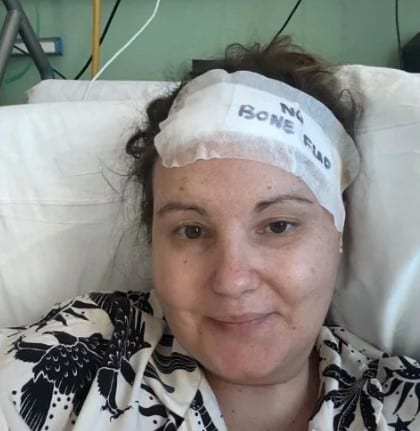
Ten days after surgery, the surgical wound began to ooze. Inicialmente assessed as normal in an outpatient consultation, the condition progressed quickly. The surgeon identified clear signs of infection when removing the dressing during a follow-up examination.
The infection has spread to the cranial bone. Médicos removed part of the skull to control the infectious condition. Jodie remained hospitalized for two weeks receiving potent intravenous antibiotics.
Adaptation and recovery underway
Currently, Jodie is awaiting the placement of a titanium plate to reconstruct the cranial structure. The procedure has been postponed twice, but is scheduled to take place soon. Ela faces limitations in returning to work as an optical consultant due to health risks.
The mother of a 6-year-old boy tries to maintain the family routine. Ela adapted daily activities to continue caring for her son while he recovers.
Participation in awareness campaign
Jodie joined Brain Tumour Research to promote greater awareness of brain tumors. Ela completed the 10,000 daily steps challenge in February, raising funds for the organization.
Participation includes sharing experiences to raise awareness about late diagnoses. The organization advocates for more investment in research and clinical trials in País of Gales.
General characteristics of meningioma
Meningiomas represent the most common form of primary brain tumor. Most are slow growing and have a low degree of malignancy. Quando symptomatic, require intervention to prevent progressive neurological damage.
Therapeutic options vary depending on size, location and symptoms. Periodic Observação applies to asymptomatic cases, while surgery is the main treatment for tumors that cause compression.



