
Brando immortalized his voice in The Godfather: The Game, marking his last performance two decades ago

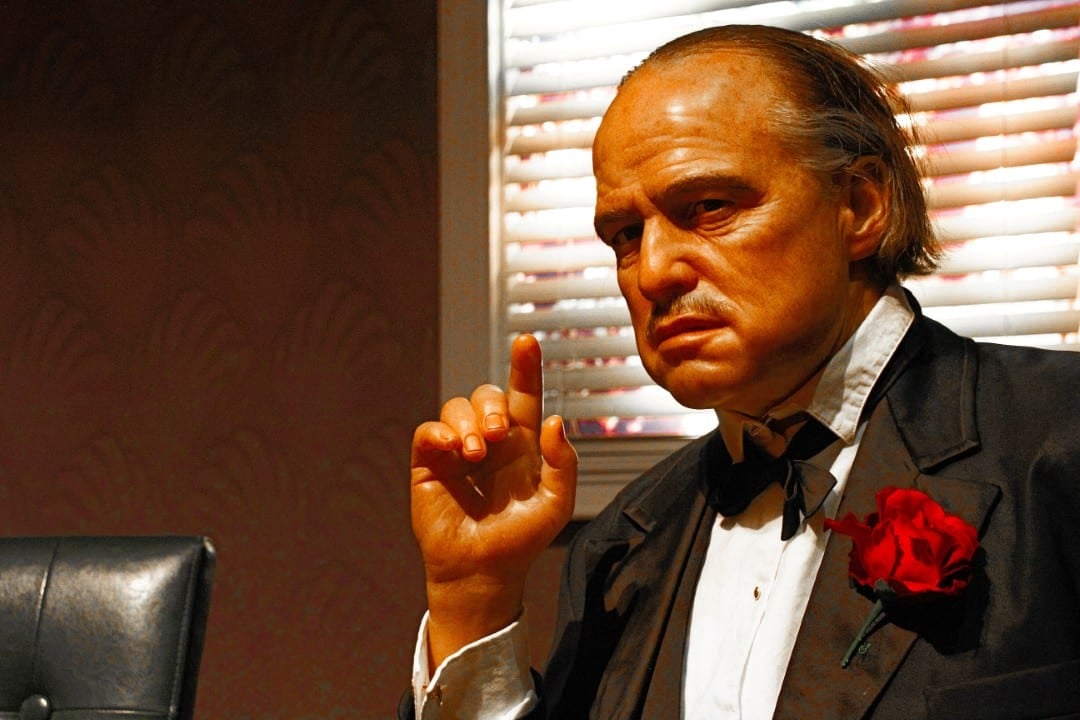
In a singular milestone in the history of cinema and video games, the unmistakable voice of Marlon Brando resounded for the last time in an artistic performance in the digital universe of “The Godfather: earned him an Oscar in 1973. The game, developed by Electronic Arts, served as an unexpected epilogue to Brando’s trajectory on screen and in the recording studios, consolidating his presence in a new medium.
Brando’s decision to lend his voice to the character in the game was a notable event, considering his poor health in the final years of his life. The recording sessions took place at a time when the actor was already facing serious health problems, which added a layer of complexity and emotion to the project. The production team was challenged to capture her performance effectively, ensuring that the essence of Vito Corleone was preserved with the authenticity that only Brando could deliver.
Apesar despite the difficulties, Brando’s dedication to the role remained evident. Sua contribution to the game was not just a contractual formality, but a testament to his professionalism and commitment to the art of acting, even in an emerging format like video games. Esse involvement highlighted the growing relevance of electronic games as a platform for complex narratives and high-level performances, transcending traditional entertainment boundaries.
The voice capture challenge
The production of “The Godfather: The Game” faced significant obstacles in securing Marlon Brando’s participation. Devido due to his fragile health, the recording sessions were carried out with extreme caution and in short periods, so as not to overload the actor. The audio team at Electronic Arts worked diligently to capture every nuance of his voice, work that became even more crucial after his passing.
The technology of the time, although advanced, required extra effort to integrate Brando’s voice cohesively into the game’s narrative. Fragmentos of dialogues were recorded, and in some cases, it was necessary to use a voice actor to complete the lines that Brando was unable to finish. The choice of a replacement was made with the utmost care, looking for someone who could mimic the tone and style of Brando without compromising the players’ immersion.
Este process highlights the complexity of working with high-caliber talent on large-scale projects, especially when there are unforeseen factors. The development team demonstrated remarkable respect for Brando’s performance, prioritizing the quality and integrity of his contribution, even in the face of adversity. Attention to detail in the audio production was fundamental to the game’s success and to honoring the actor’s legacy.
The expanded narrative of Vito Corleone
“The Godfather: The Game” offers players a unique perspective on the universe of the Corleone family, allowing them to experience the rise of a low-level mobster in Nova York. The presence of Vito Corleone, voiced by Brando, serves as an anchor to the story, connecting the game’s plot to the events of the original films. Sua voice, although present in a limited number of scenes, gives the character an unquestionable authority and authenticity.
The game’s story intertwines with the narrative of the first film, showing events from a different angle and filling in gaps. Players witness the evolution of their own character, who seeks to rise through the ranks of the mafia, under the tutelage and influence of Don Corleone. Brando’s voice, even in just a few lines, is crucial to establishing the tone and atmosphere that fans of the franchise expect.
The decision to include Brando in the voice cast, even if partly posthumous, was a strategic move that resonated with critics and the public. The possibility of hearing the legendary actor again in the role that made him famous was a powerful attraction for players, especially for admirers of “O Poderoso Chefão”. Isso demonstrates the lasting power of an iconic performance and the ability of a particular voice to evoke an entire universe.
Legacy and impact on entertainment
Marlon Brando’s participation in “The Godfather: The Game” went beyond simple dubbing, becoming a milestone in the intersection between cinema and video games. Vinte years after release, this performance continues to be a notable example of how Hollywood’s great talents can enrich the video game experience, raising the bar for acting and storytelling in a medium that was on the rise.
The inclusion of an actor of Brando’s caliber opened doors for other renowned artists to consider working on gaming projects, recognizing the legitimacy and artistic potential of this form of entertainment. Desde then, many film and television actors lent their voices and images to game characters, transforming dubbing into an area of great prestige and recognition.
Brando’s performance of “The Godfather: The Game” also serves as a reminder of the importance of preserving artistic legacy. Sua voice has been carefully recorded and used to create an immersive experience that remains relevant even as gaming technology advances. It is a testament to the timelessness of his talent and how his art can find new forms of expression and scope.
The critical reception and memory of Brando
Quando “The Godfather: The Game” was released, Marlon Brando’s participation generated considerable media buzz. Críticos and fans expressed a mixture of admiration and melancholy upon hearing the actor’s voice again. The quality of his performance, while limited, was widely praised, with many highlighting Brando’s ability to infuse the character with life and gravitas, even in a different format.
Although some voices were completed by a voice actor, the essence of Brando was maintained, and this contributed to immersion in the story. The actor’s memory was honored through meticulous editing and integration work, which ensured that his final contribution was as impactful as his cinematic performances. The game, therefore, was not only an entertainment product, but also a posthumous tribute to one of the greatest talents in the history of acting.
The game’s success and the attention paid to Brando’s performance solidified the idea that video games could be more than just pastimes. Eles could be platforms for art, for complex storytelling and for the preservation of legacies. Brando’s voice in “The Godfather: The Game” stands as an enduring testament to this evolution, a link between Hollywood’s glorious past and the ever-expanding future of digital entertainment.
Reflections on artistic immortality
Marlon Brando’s final contribution to “The Godfather: The Game” twenty years ago illustrates how an individual’s art can transcend the barriers of life and death, finding new forms of expression and scope. Sua’s voice, digitally immortalized, continues to echo the power and authority of Vito Corleone, allowing new generations of fans to experience his genius.
Este event highlights the evolutionary nature of the activity, which adapts to new media and technologies. Brando, an icon of classic cinema, left his final mark on a medium that was just beginning to gain the artistic recognition it enjoys today. Sua participation in the game is not just a historical curiosity, but an example of how art can find immortality in unexpected formats.
The story of Brando and “The Godfather: The Game” reminds us that the legacy of great artists is multifaceted and can be appreciated in many ways. Seja on movie screens or video game consoles, Brando’s presence continues to inspire and captivate, proving that true talent knows no limits of time or platform.



