
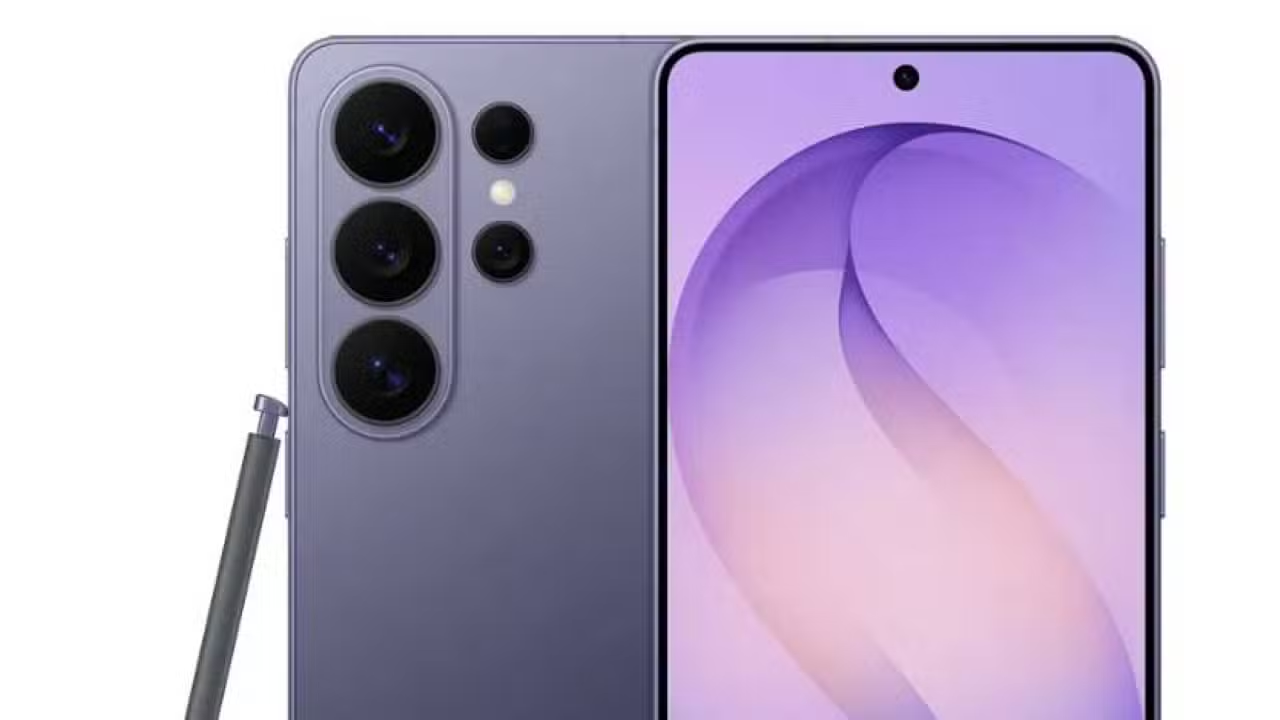
South Korean manufacturer Samsung has started distributing a software update that introduces compatibility with the Apple’s wireless transfer feature for Galaxy S26 line smartphones. The new feature allows owners of these devices to directly share photos, videos and documents with competing brand devices, such as iPhones, iPads and Mac computers. Integration occurs natively through the standard sharing application that is already pre-installed on the Asian company’s cell phones.
For communication between the Android and iOS operating systems to occur flawlessly, activation of the tool strictly depends on a specific update to a central component of the Google system. Esta technical requirement ensures that mutual detection protocols function properly, establishing the necessary network bridge for interoperability. The measure eliminates the need to install third-party applications to carry out transfers that were previously limited by the architectural barriers of each mobile ecosystem.

Users who own the standard models, Plus or Ultra of the new generation have already started to receive the software packages in selected regions, with the Coreia of the Sul leading the release schedule established by the manufacturer. The expansion of the resource is scheduled to occur gradually, reaching markets in Europa, América of Norte, América Latina, Japão, Hong Kong, Sudeste Asiático and
How transfer technology operates across ecosystems
The operation of cross-platform sharing results from a deep technical collaboration between operating system developers. The native system of Galaxy devices has been restructured in its source code to support the detection of devices that use the Apple transfer standard.
When a user selects a file to send, the smartphone uses the low-power Bluetooth connection to track and identify compatible devices that are physically nearby. Este initial discovery process consumes little battery power and takes place in a matter of seconds, mapping the environment around the emitter.
After identification and acceptance by the receiver on your device’s screen, heavy data is transferred using direct connection technology via a wireless network. Este method creates a private and temporary local network between the two devices, allowing gigabytes of information to be sent at high speed.
A fundamental feature of this direct communication technology is its complete independence from external internet networks or home routers. Users can exchange complex information in isolated environments, such as during commercial flights or in rural areas without mobile operator coverage.
Software requirements for system operation
Successful implementation of cross-platform communication support within the native environment requires that the Android device is running the Google base services in version 26.11.xx or a higher build. Este component acts as the main engine for many of the operating system’s connectivity functionalities, and outdated versions actively block the ability to communicate with external protocols. The manufacturer advises that all device owners in the line manually check the status of their systems to ensure immediate access to the new media sharing tool.
The update process for this vital component occurs directly through the Android developer’s servers, operating independently of traditional system updates provided by the hardware manufacturer. In many cases, the download and installation of the latest version happens silently in the background, as long as the device is connected to a stable network and has a sufficient battery. However, users who keep automatic updates turned off due to personal preference will need to force a search for the new data package through the operating system’s internal settings.
Installation and configuration procedure on devices
To manually check and update the service system, the user must access the main settings menu on their smartphone. Next, you need to navigate to the section dedicated to system application management and locate the Google services component in the list of factory-installed programs.
When opening the details page of the specific application, the user must tap the option that displays the software source information, which will redirect the interface to the online store update screen. If a new version is available for that model, a download button will appear to begin the installation process immediately.
After the download and installation is complete, software engineers recommend restarting the device to ensure the new network protocols are correctly applied to the cell phone’s memory. From this moment on, the sharing menu will automatically display devices from the competing brand that have reception activated in physical proximity.
Security protocols when exchanging files
The integration between historically closed platforms has raised technical questions about the protection of personal data, but the companies involved in the development guarantee that security remains an absolute priority in the new transfer system architecture. Toda data movement between the two ecosystems is protected by military-grade end-to-end encryption, which means that files are encrypted at the exact moment of sending and can only be decoded by the previously authorized receiving device. Além Furthermore, the pairing process requires mutual authentication based on temporary digital keys, preventing unknown devices or malicious software from intercepting data packets during transmission over the air. The implementation follows strict information security standards, which were exhaustively tested and validated by independent auditing companies before the public launch of the tool. Users also maintain full control over the visibility of their devices in public places, being able to configure the reception system to accept files only from contacts previously saved in the phonebook or temporarily disable discovery in environments with large crowds of people.
Functionality expansion schedule around the world
The distribution of the new connectivity firmware began at the end of March 2026, focused primarily on the Asian manufacturer’s domestic market. Esta regionalized release strategy allows network engineering teams to monitor connection stability and fix any code flaws before a large-scale global release.
The technology market’s expectation is that the update packages will reach other continents progressively over the following weeks, depending on local regulatory approvals. The company also confirmed in technical notes that there is structured planning to extend this same sharing compatibility to other older models in future updates.
End of historical barriers between operating systems
The arrival of this direct communication functionality represents a significant technical milestone in the mobile device industry, eliminating one of the biggest daily frustrations for technology consumers. Durante years, the difficulty of transferring photographs and videos in high resolution quality has forced the use of messaging applications that compress files or cloud storage services that rely on data allowance.
The initial compatibility of this open source system was introduced the previous year in the Pixel 10 line, demonstrating the technical feasibility of the protocol unification project. Agora, with the adoption by the largest cell phone manufacturer in the world in terms of sales volume, interoperability reaches a massive audience, facilitating work dynamics and social interaction in corporate and family environments with mixed use of technologies.
Continuous optimizations planned for the applications
To ensure the full and continuous operation of the transfer feature, users must also keep the sharing application itself updated through the device’s official software stores. The development teams will continue to release sequential packages focused on bringing visual interface refinements, greater speed of detection of nearby devices and stability fixes to maintain the efficiency of the new communication bridge between mobile ecosystems.