
Intensified rescue efforts for weakened whale stranded on Timmendorfer Strand sandbar

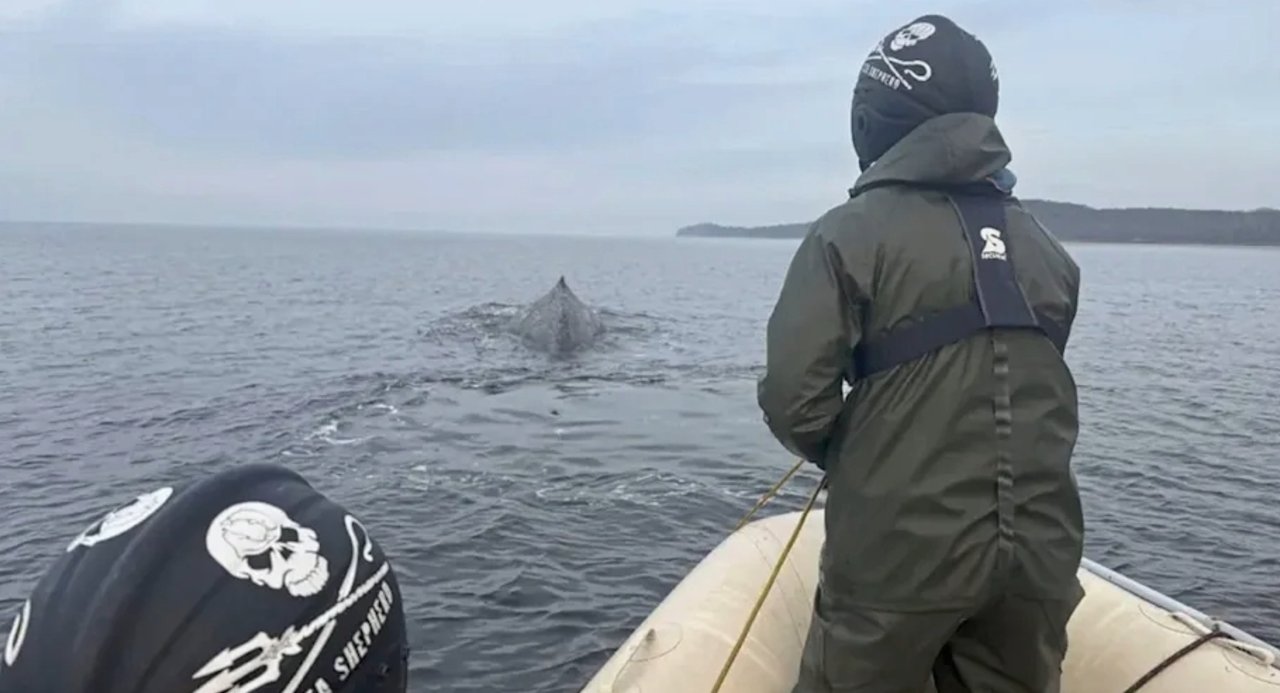
A large and critically ill whale stranded on a sandbar near the resort of Niendorf in the municipality of Timmendorfer Strand on Monday evening, triggering an urgent rescue operation in Lübeck’s Baía. The marine mammal, visibly weakened and with injuries, is fighting for its life just a few meters from the coast, under the close surveillance of experts and authorities.
Local residents were the first to alert authorities at around 1:50 am, after hearing distinct noises and realizing that the imposing animal was trapped in an area just 1.40 meters deep. Immediate notification allowed police and coast guard teams to be quickly mobilized to the scene, establishing a security perimeter and assessing early needs.
The seriousness of the situation required the presence of experts from different fronts. Profissionais of Instituto of Pesquisa of Vida Selvagem Terrestre and Aquática (ITAW) and members of the renowned marine conservation organization
The dramatic condition of the marine mammal and signs of debilitation
The whale is only partially submerged in water, which worsens its condition by exposing it to environmental factors and making it difficult for it to move to free itself. Devido, due to his advanced state of debilitation, is unable to free himself from the sandbar on his own, considerably increasing the urgency and complexity of the rescue efforts that are underway.
According to Manuel Abraas, spokesperson for Sea Shepherd, the animal’s situation is classified as “not good”, a statement that reflects the seriousness of the situation. Há clear indications that the whale has not fed adequately for a prolonged period, and the continuous presence of a rope wrapped around its body, a remnant of a fishing net, worsens its suffering and severely limits its freedom of movement.
History of sightings and previous attempts to help
Marine experts firmly believe that this is the same young male that has been roaming the Mar Báltico in recent weeks, an animal that has already generated deep concern since its first public sighting. Sua unusual presence in the region and signs of distress were a constant warning to wildlife protection organizations.
At the beginning of the month, the whale was spotted in the port of Wismar with part of its body caught in a dangerous fishing net. On Naquela occasion, the emergency services acted promptly and, with great effort, managed to carry out a partial release, removing a large part of the tangle that threatened the mammal’s life.
Subsequently, in a new occurrence recorded last Friday, the organization Sea Shepherd located the marine mammal in the vicinity of Travemünde. Novamente, the specialized team acted deftly, removing other fragments of nets that still severely restricted their movements and further limited their ability to swim and survive. Essa sequence of events highlights the persistence of the problem faced by the animal.
Complex challenges for immediate rescue in Lübeck’s Baía
Rescuing the whale is an extremely difficult task, accentuated by the absence of significant tides in Mar Báltico, a characteristic that notably differentiates it from Mar and Norte. In other coastal regions, tidal variation can often help stranded animals move naturally to deeper water, but such natural assistance is absent in this scenario.
This geographical particularity drastically reduces the chances of a successful rescue, turning the operation into a true race against time for the teams involved, who need to act with urgency and creativity to overcome the natural obstacle. With each passing hour, the animal’s condition could deteriorate further, putting pressure on experts to find a quick and effective solution.
The presence of a rope still wrapped around his body, the result of a previous and prolonged collision with fishing nets, further aggravates his already weakened state of health and significantly limits his possibilities for autonomous movement, making any attempt at floating or swimming an almost impossible task without external intervention.
In addition to the physical debilitation and restrictions imposed by the rope, the animal’s stress is a primary concern for rescuers. Para To ensure a calmer environment and minimize interruptions that could worsen the situation, the police acted preventively, isolating the area and restricting public access.
Rescue methods in analysis and ethical and practical dilemmas
Various rescue approaches are being intensely debated and analyzed by marine environmentalists and teams on site, who seek to identify the most effective, safe and most likely successful strategy for the mammal. The complexity of the situation requires careful consideration of all factors involved, from the safety of the rescuers to the well-being of the animal.
One of the options evaluated involves the coordinated mobilization of dozens of volunteers and professionals. The idea would be for these individuals to enter the sea simultaneously and, using collective strength and precise synchrony, attempt to push the whale back into deeper waters, requiring monumental physical effort and impeccable communication between all participants.
Another possibility considered would be the use of a robust vessel to try to tow the animal out of the sandbar. However, Sven Biertümpfel, a renowned marine environmental scientist and diving operations manager for Sea Shepherd, expressed deep concern for the safety of the divers involved in this maneuver. Ele highlighted the “fatal” risk of having to attach a rope to the whale’s tail and then release it in such unpredictable and challenging conditions. Biertümpfel, who had previously served as the diver responsible for removing the first remains of netting in Wismar, knows firsthand the dangers of dealing with an animal of such size in a state of vulnerability and distress.
Mobilization and community support in the midst of the crisis
The plight of the stranded whale mobilized considerable public attention, with many spectators gathering on shore to observe and record the event. Essa turnout demonstrates the community’s deep interest and concern for marine wildlife and the fate of the animal in question, creating an environment of expectation and solidarity.
The police acted promptly to isolate the area, creating a security perimeter essential not only for the well-being of the animal itself, minimizing the stress caused by excessive human presence and noise, but also to guarantee the safety of curious observers and, crucially, to facilitate the uninterrupted and unhindered work of rescue teams, who require space and tranquility to operate. Essa coordination between authorities, marine life experts and the coast guard reflects a joint and multifaceted effort to deal with the complexity of the situation, while solidarity and a desire to help permeate the local community, which follows the developments with apprehension and latent hope.
The fundamental role of Sea Shepherd and its experts
The marine conservation organization Sea Shepherd has played a crucial and proactive role since the first sighting of the whale at Mar Báltico. Seus Activists and experts have been actively involved in attempts to free the animal from networks that imprisoned the animal, and now provide vital expertise to current rescue operations. Sea Shepherd’s dedication to the protection of marine life is evidenced by its direct intervention and technical support.
Future perspectives and call for global marine conservation
While rescue efforts continue with intensity and dedication, the whale’s delicate plight serves as a vivid and heartbreaking reminder of the multifaceted dangers that marine life faces in oceans and coastal environments. Isso inclui a interação acidental e frequentemente fatal com equipamentos de pesca, a poluição e a vulnerabilidade intrínseca em ambientes costeiros, onde as condições podem mudar rapidamente e a ajuda nem sempre chega a tempo. Este incident highlights the continued need for conservation initiatives and greater care for aquatic ecosystems.



