
Kerosene cost soars and forces Asian airlines to increase global tickets
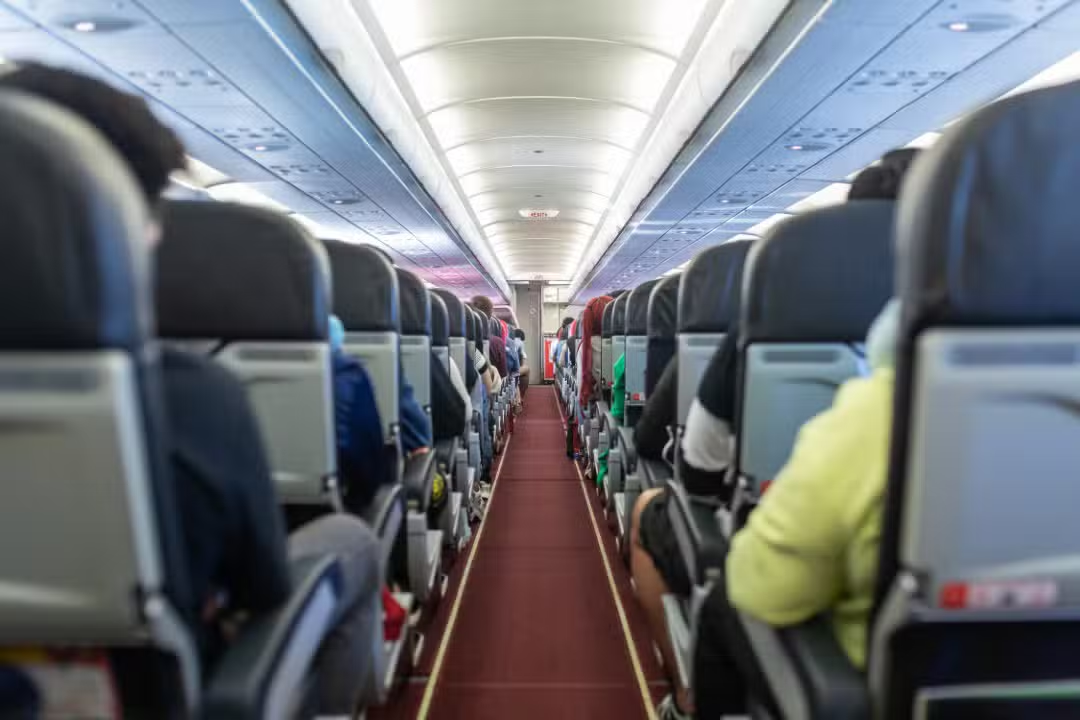
The aviation market on the Asian continent is facing severe financial pressure due to the continuous increase in aviation fuel prices. Empresas of the industry initiated a direct pass-through of these operating costs to consumers, resulting in higher fares for international flights. The measure directly affects passengers who depend on long-distance connections, changing the dynamics of corporate and tourism travel in the region. Gestores of fleets justify that maintaining operations requires immediate adjustments in pricing to avoid structural losses.
Economic factors behind the rise in fuel prices
The fluctuation in the values of refined oil directly affects the strategic planning of air carriers. Kerosene represents the largest fixed expense for aircraft maintenance on intercontinental routes.

Without immediate large-scale supply alternatives, companies absorb the initial shock before passing on the difference to the end customer. Essa margin of financial tolerance has decreased considerably in recent months.
Experts in the logistics sector point out that the lack of refining in strategic points in Ásia worsens the scenario. The dependence on imports of petroleum products makes the market highly vulnerable to external fluctuations.
Passing on additional costs and fees
To mitigate the impact on bills, operators have adopted fuel surcharges. Esse additional value is inserted variably when issuing the ticket, depending on the distance of the flight.
Applying this rate allows companies to adjust revenue without definitively changing the base value of the ticket. Frequent Passageiros people notice the difference mainly on routes that connect Ásia to Europa and América to Norte.
Route restructuring and flight cancellations
In addition to making tickets more expensive, the operational adjustment involves a complete review of the airline network. Voos with low occupancy rates become unsustainable under the current kerosene cost structure.
Secondary routes that previously operated with minimal profit margins are being temporarily suspended. The companies’ priority becomes maintaining direct flights between large financial centers and connecting hubs.
The reduction in flight frequency also affects seat availability, creating an environment of high demand and low supply. Esse natural imbalance puts even more upward pressure on prices during high season periods.
Fleet planning teams use advanced algorithms to determine which routes offer the best return per liter of fuel spent. Aeronaves Older and less efficient vehicles are withdrawn from circulation or relocated to short routes.
Changes in air cargo transportation
The cargo logistics sector also suffers the direct consequences of the increase in the cost of kerosene, since many goods are transported in the holds of commercial passenger flights. With the reduction in the frequency of international flights, the flow capacity of electronic products, automotive parts and pharmaceutical inputs manufactured in Ásia is compromised. Logistics companies need to compete for reduced space, which significantly increases the value of air freight and affects the global supply chain.
To overcome space limitations and high operational costs, logistics operators seek to consolidate loads and optimize the weight loaded on each aircraft. Strict planning requires that only goods with high added value or extreme urgency use the air transport. Produtos of less urgency are being redirected to maritime transport, even with longer transit times, changing delivery times from Asian suppliers to the rest of the world.



Search for energy efficiency in the current fleet
Faced with the impossibility of controlling the price of a barrel of oil, operations departments focus on reducing absolute fuel consumption through technical updates and optimized flight procedures. Pilotos receive rigorous instructions to apply continuous descent techniques and taxi with only one engine running after landing, saving precious gallons of kerosene with each cycle of operation. Paralelamente, engineering departments are accelerating the installation of aerodynamic devices on the wings, known as winglets, which reduce drag and improve the aircraft’s overall efficiency. Weight on board has also come under severe scrutiny, resulting in the replacement of traditional seats with lighter models, a reduction in the amount of drinking water carried on short flights and even the digitization of flight manuals to eliminate the weight of paper in the cockpit. Cada kilogram removed from the plane translates into tangible fuel savings over thousands of annual flight hours, demonstrating the continuous effort to maintain the economic viability of intercontinental operations.
Transition to sustainable fuels
The current crisis accelerates discussions about the adoption of Combustível Sustentável from Aviação, known by its acronym in English SAF. Produzido from agricultural residues and used oils, the product presents a viable alternative to reduce dependence on conventional oil.
Barriers to large-scale implementation
Despite the environmental and strategic benefits, SAF production still faces infrastructure limitations and high refining costs. The volume manufactured globally does not meet even a fraction of the daily demand at Asian airports.
Local governments are beginning to structure tax incentive policies to attract refineries specializing in biofuels. The industry’s goal is to ensure that a significant percentage of the fleet operates with sustainable mixtures in the coming years, stabilizing operating costs in the long term.
Adaptation of corporate passengers
The significant increase in fares directly affects the travel budget of large multinational corporations based on the continent. Departamentos financiers review their internal policies, restricting business class flights to high-ranking directors only.
In-person meetings that require long international journeys undergo strict necessity screening. The preference for videoconferences returns as a cost containment tool, impacting the revenue of airlines that depend on corporate passengers to maintain the profitability of their routes.
Operational measures at airports
To maintain the fluidity of daily operations, ground teams implement new fueling protocols. The guidelines include specific actions to avoid wasting fuel during aircraft preparation:
– Monitoramento computerization of the exact volume of kerosene injected into the tanks before takeoff.
– Redução of the use of the auxiliary power unit while the plane remains parked at the boarding gate.
– Otimização of towing routes on the runway to minimize main engine activation time.
Veja Tambem em News (EN)

Research reveals that parents are unaware of how their children use artificial intelligence

Samsung releases new system update with new features for Galaxy Watch 4 users

Digital retail reduces the value of the Galaxy S25 5G smartphone with bank bonuses and device exchange

Amazon’s wireless CarPlay adapter has a 50% discount and high approval ratings from drivers

Zach Cregger’s new Resident Evil ignores games and focuses on an unprecedented story with new characters

Rumor suggests that Nintendo is preparing a special edition of the Switch 2 with a remake of Ocarina of Time

Apple accelerates production of the iPhone 17e and develops new Air model with dual camera system

Epic Games platform releases twelve high-budget games at no permanent cost for PC users

PlayStation 5 Pro price drop accelerates digital retail sales and eliminates global stocks

New Galaxy Watch 9 firmware appears on server and confirms progress in software development

Apple’s commemorative project tests cell phone with 1.1 millimeter edge and curved screen for 2027
