
Samsung develops Galaxy Z Fold with a wider screen to compete with the future iPhone Fold

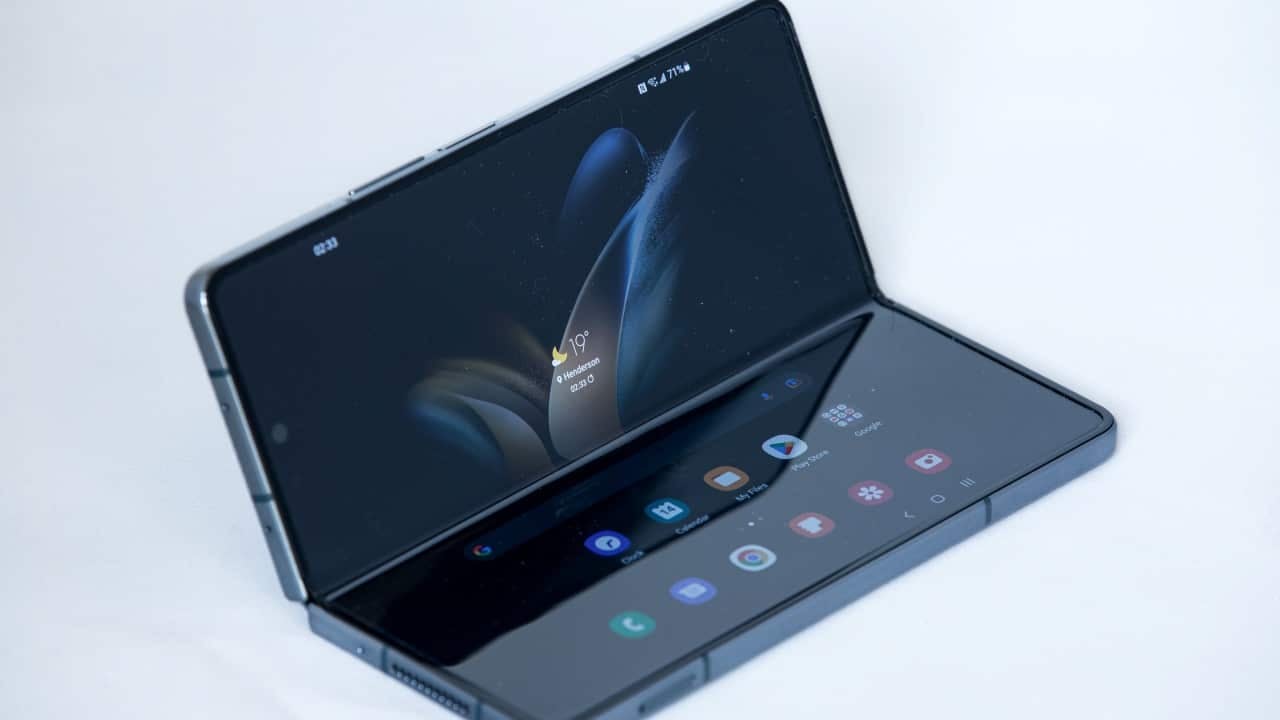
The South Korean technology giant is advancing the development of a new version of its foldable smartphone, focusing on a significantly wider design. Recent information indicates that the next device in the Galaxy Z Fold line will adopt redesigned screen proportions to optimize the user experience. The strategic move comes at a time of intense movement behind the scenes in the high-end mobile device industry.
The new device should feature a 7.6-inch main internal screen, but with a fundamental distinction in relation to the brand’s previous models: the prioritization of width. The aspect ratio designed for the flexible display should be 4:3 or 16:10, giving the smartphone an appearance much closer to that of a compact tablet when opened. Essa structural change aims to directly meet demands for greater visual comfort in productivity tasks and media consumption.
The change in format is widely interpreted by the technology market as an early response to rumors about the first foldable device from the main North American competitor. The adaptation to a more ergonomic format seeks to consolidate the Asian manufacturer’s leadership before new major competitors officially enter this specific segment of flexible screens.
New screen format prioritizes ergonomics and visual immersion
The concept of a device with a wider design aligns with the growing demand for devices that offer the portability of a traditional cell phone combined with the functionality of an expanded desktop. Essa architectural approach transforms the way users interact with complex applications, edit documents and view digital content, delivering superior immersion. The intention to make the external screen more ergonomic for everyday typing also demonstrates special attention to practical needs, correcting frequent complaints about external displays being too narrow that made it difficult to use the virtual keyboard accurately.
The wider aspect ratio promises to facilitate the use of multiple applications simultaneously, a native feature that becomes much more useful in panels optimized for screen splitting. Além of improved usability, the engineering behind the new format requires complex adaptations to the internal distribution of components, such as logic boards and cooling modules. Essas improvements represent a crucial advance in the perception of quality and durability of foldable smartphones, overcoming historical barriers of acceptance by the public who still saw these devices as fragile or impractical for continuous use throughout the day.
Direct competition with the long-awaited flexible model of the competition
The bet on an expanded format is clearly a positioning maneuver in relation to the long-awaited foldable model from the iOS system manufacturer. Speculation about the rival device suggests a 7.8-inch internal screen with a similar wide aspect ratio, indicating a strong convergence in flexible display design trends among the tech giants.
This direct rivalry promises to drive innovation in the mobile hardware sector, forcing both companies to deliver increasingly refined solutions in terms of hinge mechanics and material strength. The standardization of a wider form factor suggests that the industry has finally found the ideal balance between a pocket phone and a reading tablet.
The immediate benefit of this fierce dispute falls on consumers, who now have access to more robust options and cutting-edge technologies. The need to outperform the competition accelerates the research and development cycle, resulting in devices reaching retailers with specifications that would previously take years to become commercially viable.
Advances in panel engineering and crease reduction
One of the biggest technical obstacles in manufacturing flexible screens has always been the visible mark in the center of the panel, known as the crease. Rumores consistent with the supply chain points to a new lamination technology and a redesigned teardrop hinge mechanism capable of significantly minimizing this visual and tactile imperfection.
Newly discovered user interface animations in test versions of the operating system corroborate clues about the new opening mechanism and wider aspect ratio. Essas software discoveries include specific cutouts for front cameras on both displays, reinforcing the symmetry and functionality of the device’s planned design.
The continuous evolution in ultra-thin glass technology, focused on extreme durability and scratch resistance, is a central point in the strategy to popularize these devices. Materials engineering has advanced to ensure the screen can withstand hundreds of thousands of folds without experiencing structural fatigue or color degradation.
Overcoming the durability barrier is essential to justify the premium positioning and added value of the product in global retail. Consumer confidence in the longevity of the mechanism is the determining factor in the definitive transition from traditional rigid smartphones to changeable form factor models.
Cutting-edge processing with cutting-edge chips
In terms of computing power, the new flexible device will be equipped with cutting-edge silicon technologies to guarantee absolute performance in any usage scenario. Technical indications indicate that the device will integrate the Snapdragon 8 Elite Gen 5 processor, the same extremely high-performance component designed to equip the Galaxy S26 Ultra line.
There is also the possibility of using the Exynos 2600 chip, developed in-house, in specific sales regions around the world. Essa processor diversification strategy allows optimizing large-scale production and global distribution, adapting the offer to logistical conditions and semiconductor supply chains.
Battery life and energy optimization
Power capacity is a critical engineering factor for high-performance smartphones that power two high-resolution displays. The expected configuration for the new model should be around 4,800 mAh, which represents a considerable technical improvement compared to the 4,400 mAh found in previous generations of the same line.
Although it is not the largest energy cell on the market, falling below some Asian rivals that exceed 5,000 mAh, the energy efficiency of the new processors makes up for the physical difference. Deep optimizations in the operating system ensure intelligent management of resources in the background, delivering a seamless user experience that is satisfying throughout a full workday.
Photographic system inherits premium category sensors
The camera set of the new foldable device will undergo a substantial redesign, inheriting the most advanced photographic features ever seen in the brand’s traditional high-end models. The technical expectation is that the device will incorporate a 200 megapixel main sensor, allowing the capture of images with an impressive level of detail and very high resolution, even in unfavorable lighting conditions. Integrating a sensor of this magnitude into a foldable chassis, which naturally has severe thickness restrictions, requires a complete redesign of the lens and optical stabilization modules. Complementando the main camera, the photography hardware will feature a 50-megapixel ultrawide lens, designed to capture wide landscapes with minimal distortion at the edges, and a 10-megapixel telephoto lens dedicated to high-precision optical zoom. Essa triple configuration ensures that the user has total versatility for any shooting scenario, eliminating the old photographic gap that existed between flexible cell phones and premium rigid models. Artificial intelligence-assisted image processing will work in conjunction with these lenses to refine colors, contrast and dynamic range in real time.
Launch strategy focuses on Asian markets
Records in certification databases indicate that the launch of the new device will have global reach, following the company’s traditional schedule for the second half of the year, possibly in August. The Asian market, however, is treated as the central focus of this operation, given the intense competition from local brands that invest aggressively in the flexible screen segment. The strong presence in regions with high technological demand reaffirms the manufacturer’s pioneering spirit in maintaining its leadership in the sector.




