
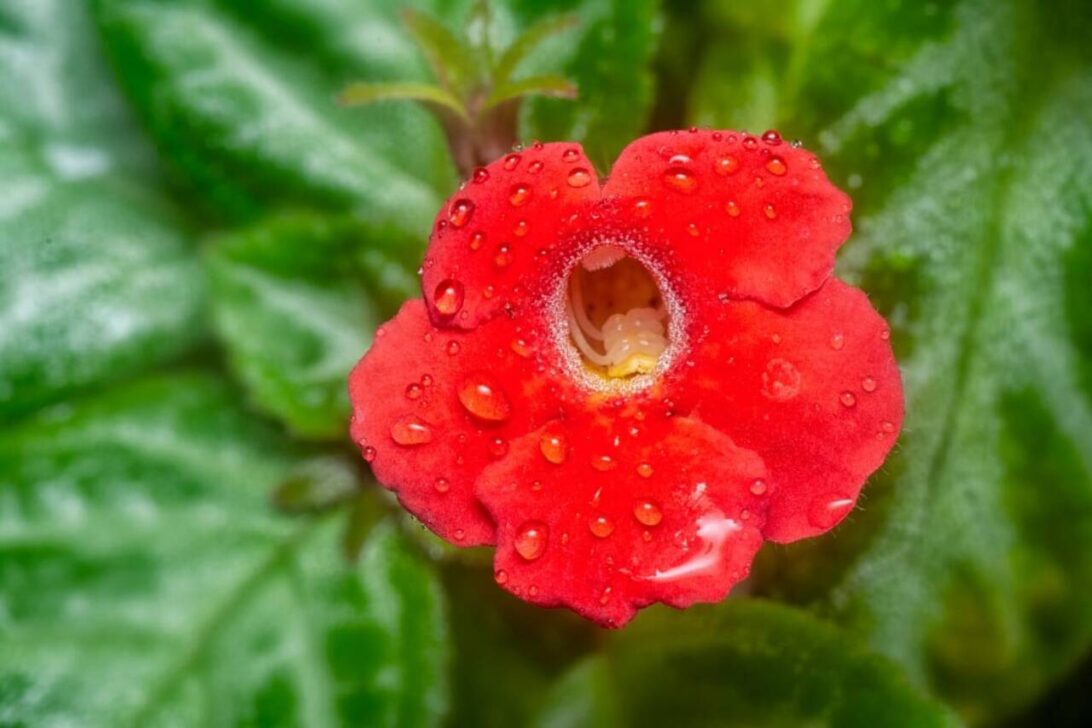
Scientists have documented a rare biological phenomenon in which a wild plant species managed to reverse its own population decline through direct changes to its DNA. The event occurred in response to one of the most severe weather periods ever recorded on the west coast of the Estados Unidos.
The species scientifically known as Mimulus cardinalis, which stands out for its red tubular flowers, underwent a process of genomic adaptation in an interval of just seven years. Essa transformation allowed several groups of the plant to resist extreme water stress.
Field monitoring confirmed that accelerated biological change prevented the local disappearance of the species in several regions. The data collected represents the first practical proof of a complete evolutionary rescue occurring naturally and without human intervention.
Impact of water stress on the natural habitat
Between 2012 and 2015, the state of Califórnia faced the worst water crisis in its last 1,200 years, an event that was part of a cycle of megadrought that began at the turn of the millennium. The prolonged lack of rain and rising temperatures have drastically altered the region’s landscape, resulting in the death of more than 100 million trees and the collapse of several plant species that used to dominate the local ecosystem. Durante During this critical period, the streams and springs that serve as a cradle for the Mimulus cardinalis dried up substantially, eliminating vital moisture for maintaining its reproductive cycle and structural development.
The environmental shock caused an immediate and severe reduction in the number of individuals of the species, with some areas recording demographic losses of more than 90% in a short space of time. Plantas neighbors, historically recognized for their high tolerance to aridity, withered and disappeared from observation areas. However, contrary to initial projections of local mass extinction, specific pockets of the scarlet monkey flower maintained viable populations, beginning a process of visible demographic recovery shortly after the peak of the climate crisis, which caught the attention of biologists monitoring the area.
Genomic mapping reveals adaptation in record time
Laboratory analysis of material collected in the field revealed that the surviving plants underwent genetic modifications distributed throughout their genome. The changes were not concentrated in a single gene, but involved a complex network of biological responses to heat and lack of water.
These genetic variations emerged and were consolidated in less than a decade, configuring a speed of evolution considered extremely high by the standards of botanical biology. Complete DNA sequencing demonstrated a direct alignment between the new genetic characteristics and traits found in plants from naturally more arid environments.
The researchers found that the speed of this change in the genetic code was the determining factor in the demographic success of the species. Grupos of plants that showed a faster rate of evolution were exactly the same ones that managed to avoid the total eradication of their original territories.
The geographic correspondence of the samples, which extended from the state of Oregon to the south of Califórnia and parts of México, strengthened the evidence that evolution occurred as a direct and exclusive response to the pressure imposed by prolonged drought.
Monitoring methodology covered dozens of populations
To ensure the accuracy of the results, the scientific team established a rigorous genetic baseline before the climate crisis worsened. The work involved continuously tracking 55 distinct populations of the plant over eight consecutive years.
Biologists performed physical measurements of population sizes in the field and collected plant tissue samples for sequencing in the laboratory. Essa double approach allowed demographic data to be crossed with the genomic information of each isolated group.
The consistency of the patterns observed along the entire American West Coast validated the correlation between the degree of evolution of each plant and its ability to grow and multiply again after the most acute phase of water scarcity.
Unprecedented proof of evolutionary rescue in nature
The concept of evolutionary rescue defines the situation in which a population in sharp decline manages to escape extinction thanks to rapid genetic adaptation to a new environmental stress factor. Até the publication of this monitoring, evidence of this phenomenon was limited to controlled laboratory experiments or theoretical models based on microorganisms.
The documentation of Mimulus cardinalis provides the first concrete, quantitative evidence that complex wild plants can utilize this mechanism in their natural habitat. The data unquestionably links the change in DNA to the real and measurable increase in the number of individuals in the environment.
Previous genetic variability acts as a biological shield
One of the most crucial findings of the biological survey is that the mutations responsible for saving the species did not arise spontaneously or randomly during years of extreme drought, but were already part of the plant’s vast genetic reservoir. Populations that carried greater diversity in their DNA before the climate event demonstrated a significantly greater likelihood of rapid adaptation. The drought acted as a relentless selective pressure filter, eliminating vulnerable individuals and favoring the exclusive reproduction of those that already possessed latent traits of resistance to aridity. Esse biological mechanism of natural selection operated with extreme efficiency, allowing the species to respond to stress on a very short time scale, without the need to wait for new mutations to emerge over multiple generations. The preservation of this broad initial genetic variability proved to be the decisive factor for the persistence of the species in the face of a scenario of imminent environmental collapse.
Ecological characteristics contrast with demonstrated resistance
The survival capacity of the scarlet monkey flower surprised experts precisely because it is a perennial species that strictly depends on waterlogged soils and proximity to watercourses. Sua natural biology, aimed at attracting specific pollinators such as hummingbirds through their bright red flowers, did not indicate an anatomical predisposition to endure long periods without adequate hydration.
Developments for the conservation of global flora
The biological response documented in this climate event serves as a fundamental model for understanding how other plant species may react to the planet’s ongoing climate change. The methodology applied sets precedents for similar investigations in different biomes facing desertification or accelerated warming processes.
Ongoing genomic mapping will help identify which specific genes drive drought stress tolerance. The maintenance of large wild populations with high DNA diversity is consolidated as the most effective natural strategy to guarantee the resilience of ecosystems in the face of extreme climate events.