
Astronomers map new G2t gas cloud 27,000 light-years away and reveal unprecedented orbital dynamics in Sagittarius A*

The team of researchers from Instituto Max Planck of Física Extraterrestre, based at Alemanha, recorded a historic milestone in space observation by identifying a new gaseous structure at the center of The cloud, officially cataloged as G2t, was detected in a direct orbital trajectory around the supermassive black hole Sagitário A*, which is located at a distance of approximately 27 thousand light years from the planet Terra.
The mapping of this new structure was made possible through advanced operations conducted with the Very Large Telescope, equipment belonging to the Observatório Europeu of the Sul and installed in the desert of the Atacama, in the Chile. Capturing high-resolution data allowed scientists to isolate the movement of G2t amid an extremely dense and chaotic space environment.

This recent detection provides the factual basis needed to resolve a long-running debate in the astrophysics community about the true nature of the neighboring gas clouds, known as G1 and G2. The measurements confirm that the three formations share almost identical orbital characteristics, pointing to a joint formation process and ruling out the hypothesis that they harbor hidden stars within their interiors.
Detailed investigation of gas structures
The identification of the G2t cloud occurred from the detailed analysis of a significant volume of recent data collected by the telescope’s infrared sensors. Astronomers noted that the new structure is positioned on a gravitational path that mirrors the already known paths of the G1 and G2 formations.
The differences between the trajectories of the three clouds are limited to small relative rotations and millimetric variations in their inclination angles. Essa extreme orbital similarity caught the attention of the experts responsible for processing the images at the German institute.
Based on these mathematical parameters, the scientific team concluded that it is statistically unlikely that each of these clouds contains an independent star at its core. The probability of three distinct stellar bodies adopting such close and synchronized trajectories around a black hole is considered practically zero.
Observations attest that this entire gas complex moves cohesively through an extremely compact region of space. Confirmation of the existence of G2t consolidates the theoretical model that these structures are purely composed of gas and cosmic dust.
Three-dimensional reconstruction of orbital routes
Continuous monitoring of the central region of the galaxy revealed that clouds G1, G2 and G2t did not appear randomly in outer space. The team of astrophysicists was able to measure the displacement speeds and exact positions of each fragment with an unprecedented level of precision.
These numerical data were fundamental for creating a complete three-dimensional movement model. The digital simulation demonstrates that the clouds occupy a restricted area in the telescope’s field of view, moving at high speed due to the massive gravitational attraction exerted by the galactic center.
Binary system as a source of matter emission
The direct correspondence between the orbits of the three clouds directed researchers to investigate a single source of origin for all the gaseous material. Astronomical surveys point to the binary system of massive stars called IRS16SW as the likely responsible for the continuous ejection of this matter.
This pair of large stars makes its own orbit around Sagitário A* and, during this journey, releases colossal volumes of gas into outer space. The force of the stellar winds generated by this binary system acts as a dispersion engine of matter in the central region of Via Láctea.
As the IRS16SW system moves through space, it ejects these gaseous masses at slightly different times in its orbital cycle. Essa temporal difference in material release perfectly explains the small rotation variations observed in the trajectories of G1, G2 and G2t.
Observation instrument technological advances
The success of this scientific endeavor is directly linked to the use of the ERIS instrument, a state-of-the-art equipment coupled to the main structure of the Very Large Telescope in the Chile. Este device combines very high-resolution image capture with advanced spectroscopy systems, allowing not only to visualize objects, but also to decompose the light they emit. Essa double technical capacity was the determining factor in enabling scientists to map the cloud orbits with a level of detail unprecedented in the history of Via Láctea exploration.
Through spectroscopic analysis provided by ERIS, astronomers have gained direct access to the chemical signatures and radial velocities of gaseous structures. The observations highlight the extreme turbulence of the environment near the supermassive black hole, validating the effectiveness of the tool for future studies focused on compact objects and high-energy phenomena occurring in the core of our galaxy.
Gravitational dynamics in the core of Via Láctea
The center of Via Láctea is one of the most extreme and dynamic environments in the entire observable universe, housing the supermassive black hole Sagitário A*, whose mass is estimated to be approximately four million times the mass of our Sol. The colossal gravitational force generated by this singularity relentlessly attracts stars, cosmic dust and gas clouds that venture into its surroundings, forcing these celestial bodies to reach dizzying speeds on increasingly tight trajectories. The region exhibits incessant astrophysical activity, characterized by violent interactions, collisions of stellar winds and the constant deformation of material structures due to tidal forces. The discovery of the G2t cloud adds a crucial layer of understanding to this complex cosmic gear, as it demonstrates how material ejected by neighboring stars ends up feeding the reservoir of gas orbiting the black hole. Esse continuous cycle of loss of stellar mass and accumulation of matter in the vicinity of Sagitário A* dictates the rhythm of radiation emissions and directly influences the processes of galactic evolution that occur thousands of light years away from Terra.
Visual mapping of the star cluster
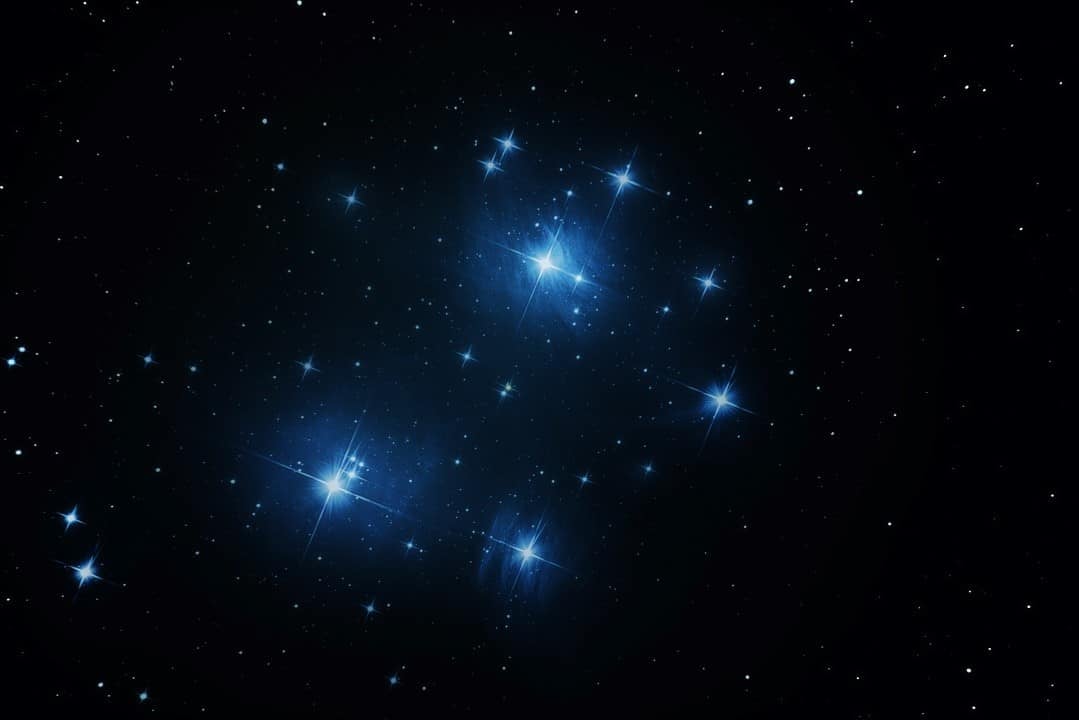
The photographic documentation processed by the European observatory shows an extremely dense cluster of stars and gaseous formations surrounding the exact position of Sagitário A*. While the black hole itself remains invisible to optical instruments, its dominant presence is undeniably evidenced by the accelerated movement and elliptical routes of the objects that make up its immediate neighborhood.
Impact of discoveries for space science
The visual integration of the G2t cloud into the orbital ensemble of G1 and G2 structures offers scientists a panoramic and contextualized view of the distribution of matter in the galactic nucleus. Precise mapping of these routes makes it possible to predict how these clouds will behave when they reach the point of closest approach to the black hole in the coming years.
Detailed recording of this dynamics reinforces the importance of maintaining and updating terrestrial astronomical complexes. The ability to observe such distant phenomena with absolute clarity ensures the continued advancement of astrophysics in understanding the fundamental forces that govern the universe.



