
Capcom defines ten-year plan for the Resident Evil franchise with a focus on remakes and new games

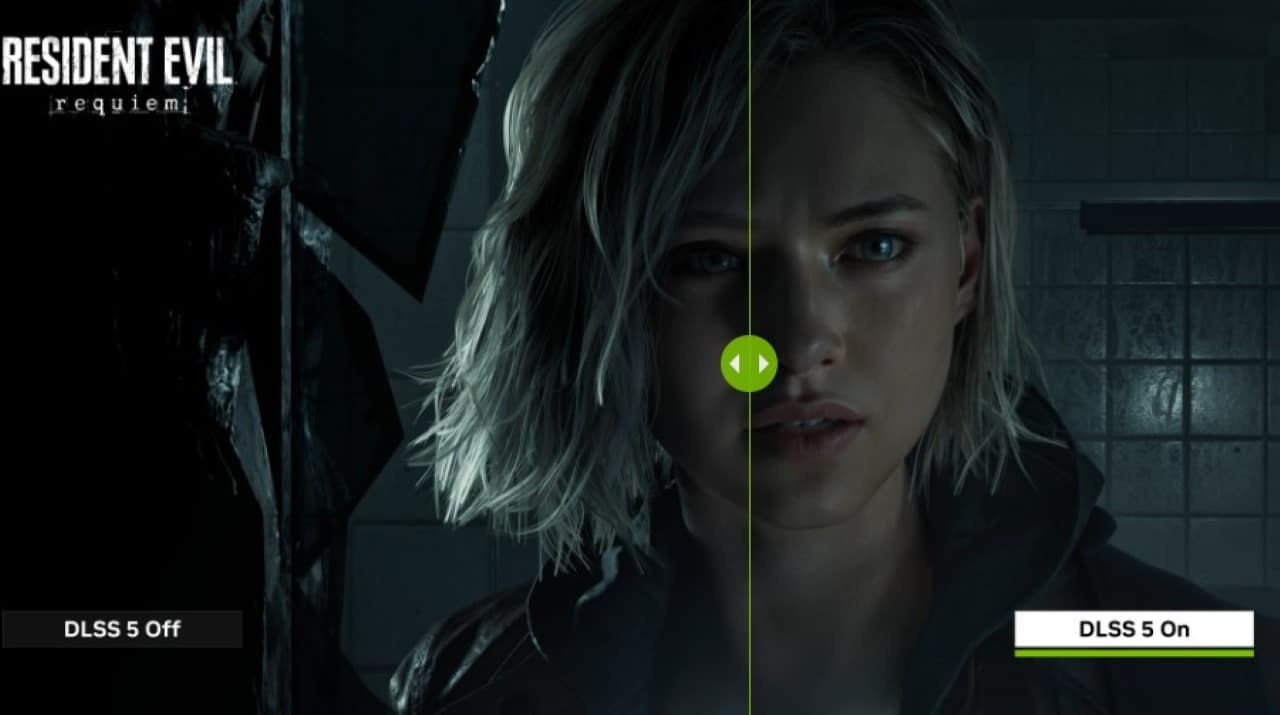
The Japanese developer has established long-term strategic planning focused on its flagship survival horror intellectual property. The project covers the next decade of productions, establishing clear guidelines for the brand’s continuity in the global digital entertainment market. The company seeks to consolidate its position in the industry through a constant stream of publications.
The core of this initiative is based on alternating between the creation of new titles and the recreation of classic works from the producer’s catalog. Esta approach aims to serve both the veteran consumer base, who have been following the series since the nineties, and the younger audience who recently joined the franchise’s universe. Executing this plan requires precise coordination between different internal studios.
To make this commercial vision viable, the corporation makes substantial investments in its technological infrastructure and in the expansion of its programming and design teams. The central objective is to ensure that technical and narrative quality remains high, avoiding prolonged periods without news for consumers and maintaining the relevance of intellectual property compared to competitors in the sector.
Continued expansion of the survival horror universe
The company’s current direction is based on the commercial and critical success achieved by modernized versions of its previous games. Recent recreations have demonstrated that there is a significant demand for nostalgic experiences adapted to contemporary visual and mechanical standards. The updating of controls, the implementation of free cameras and the reformulation of scenarios proved to be essential elements for the acceptance of these works in the current scenario. The producer uses the financial return from these projects to finance experiments in other areas of its portfolio.
In addition to the graphic update, the modernization process involves rewriting dialogues and deepening the personalities of the protagonists and antagonists. The writing team works to eliminate past narrative inconsistencies, creating a more cohesive timeline for the series’ universe. Esta literary restructuring facilitates the introduction of new consumers, who can understand the complexity of the plot without the need to resort to external supplementary materials or old manuals.
Development of new narratives for the main series
In parallel with rescuing the past, the creative division is moving forward with the production of original chapters that continue the most recent events in the official timeline. The introduction of new central characters allows the exploration of different themes within the horror genre, temporarily moving away from the traditional figures already known to the public.
Variation in gameplay perspective has become an important tool for renewing the atmosphere of tension. The alternation between the first-person view, which favors immersion and psychological terror, and the third-person camera, focused on tactical action, offers diversity to the catalog. Esta mechanical flexibility caters to different player profiles.
Art directors seek inspiration from various aspects of cinema and suspense literature to compose new scenarios. The transition from devastated urban environments to isolated villages or remote scientific facilities ensures that each launch has a unique visual identity, avoiding aesthetic brand fatigue.
Technological update based on proprietary graphics engine
The backbone of all of the corporation’s development planning is its unique graphics engine, designed in-house to optimize the creation of digital assets. Esta software tool allows engineers to achieve high levels of photorealism, fundamental to the effectiveness of the visual horror proposed by the works.
The engine architecture is designed to be highly scalable, making it easy to adapt games to different hardware platforms, from high-end desktop consoles to high-performance computers. Esta versatility significantly reduces the time required to convert codes between different systems.
The use of advanced photogrammetry and real-time motion capture elevates the quality of virtual models’ facial and body animations. Dynamic lighting and particle physics contribute to the construction of dense and immersive atmospheres, crucial elements for user engagement while exploring maps.
The standardization of work tools between the company’s various studios allows employees to quickly transfer between different projects. Quando a team needs support in the final phase of production, professionals from other sectors can intervene without the need for long periods of training on new software.
Adaptation strategies for audiovisual media
The brand’s presence extends beyond video games, encompassing film productions in digital animation format and television series with real actors. Estas adaptations function as extensions of the main narrative or as reinterpretations of classic events, reaching viewers who do not normally consume interactive entertainment.
The management of these audiovisual licenses is handled rigorously by the Japanese headquarters, which supervises the scripts and visual characterization to guarantee fidelity to the source material. The launch of these productions often coincides with the arrival of new games in stores, creating a commercial synergy that boosts sales in both sectors.
Preserving legacy through modern platforms
Making the back catalog available in contemporary digital stores represents an important part of the audience retention strategy. The company makes minimal technical adaptations to ensure that titles from past decades work properly on modern operating systems and televisions, preserving the history of interactive media.
This accessibility prevents the original works from becoming inaccessible collector’s items, allowing researchers, critics and new enthusiasts to analyze the mechanical and narrative evolution of the series over the years. Maintaining this digital collection reinforces the producer’s authority in the genre it helped to popularize.
Internal restructuring to sustain the flow of publications
To maintain the regularity of launches required by a ten-year plan, the corporation implemented a profound reorganization of its human resources and project management structure. The development division has been fragmented into multiple autonomous teams that operate in parallel and overlapping production cycles. Enquanto one group finalizes the polishing details of a title about to hit the shelves, another team is already in the pre-production phase of the next game, developing art concepts and mechanic prototypes. Este production conveyor model eliminates the software industry’s traditional idle gaps, ensuring the workforce is constantly engaged in productive tasks. Adicionalmente, the company instituted rigorous internal training programs to level the technical knowledge of its programmers in relation to constant updates to the proprietary graphics engine. Interdepartmental communication was optimized through new agile management platforms, allowing creative directors to share design solutions and source codes between different projects, avoiding rework and accelerating the error debugging process before sending the final product for certification by hardware manufacturers.
Financial positioning in light of market demands
The predictability generated by this long-term roadmap offers security to the company’s investors and shareholders, stabilizing the corporation’s market value. The diversification of revenue sources, coming from both direct software sales and brand licensing, establishes a solid economic foundation for financing future technological innovations in the entertainment sector.



