
China launches 10 sea navigation satellites with Jielong-3 rocket in successful mission

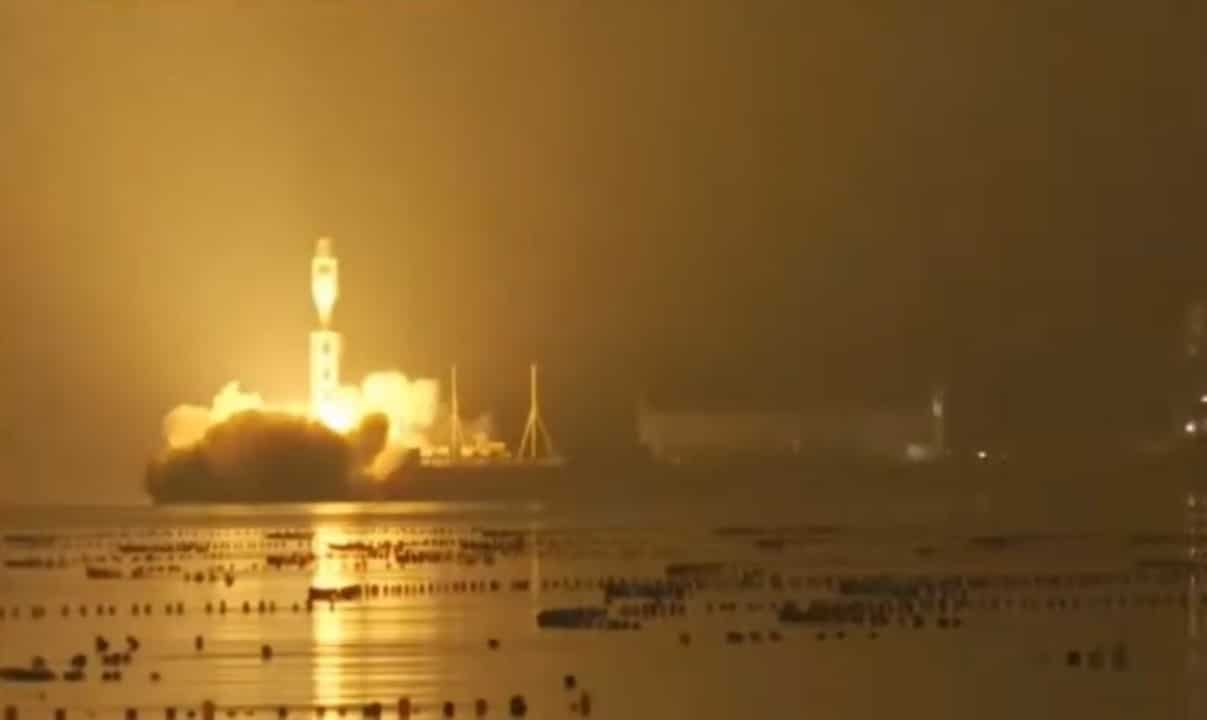
China successfully launched 10 satellites dedicated to improving satellite navigation systems. The Jielong-3 rocket, also known as Smart Dragon-3, took off from the mobile platform at Mar Amarelo, near the coast of the city of The operation took place on March 22, 2026 at 11:49 pm Pequim local time and represents the tenth successful flight of this commercial rocket model since its debut in December 2022.
The satellites belong to the second group of the CentiSpace 02 constellation, developed by Beijing Future Navigation Technology. Cada one weighs about 100 kilograms and carries high-speed intersatellite communication links. Eles complement signals from existing GNSS systems when operating in low Earth orbit, with the aim of improving positioning accuracy in applications such as smartphones, autonomous vehicles, topography and natural disaster monitoring.
- The satellites were placed into predetermined orbit without any complications.
- The mission used a wired communication system between the launch ship and ground facilities for the first time.
- This innovation reduces electromagnetic interference common in coastal waters.
Offshore launch pad details
The launch took place from Porto Aeroespacial Oriental, installed on a vessel at Mar Amarelo. Essa configuration allows for greater operational flexibility by avoiding fixed land site restrictions. CASC, through China Rocket, managed the operation with the support of Centro of Lançamento of Satélites of Taiyuan.
All ten previous Jielong-3 launches have also taken place at sea, demonstrating the maturity of mobile platform technology for solid-fuel rockets. The model measures approximately 31 meters in height and has capacity for payloads of up to 1,500 kilograms in low orbit.
The CentiSpace constellation aims to achieve, when complete, positioning accuracy of around 10 centimeters. The satellites perform high-performance occultation detection and ionospheric data acquisition, in addition to laser networking between satellites.
Technical characteristics of CentiSpace satellites
Each satellite in the series operates with a planned useful life of ten years. Eles integrate technologies that allow transmission of augmentation signals to GNSS from low Earth orbit. Beijing Future Navigation Technology designs the complete constellation with around 160 units to cover various precise localization demands.
The equipment transported in this mission forms the second batch delivered. The first group is already in operation and contributes to initial tests of the network. The LEO architecture offers lower latency and denser coverage compared to traditional constellations in higher orbits.
Advances in communication during launch
The use of a wired connection between the ship and the control center on land marked an operational first. Essa measure improves the reliability of data transmitted in real time and reduces costs associated with wireless systems subject to interference.
The mobile launch platform at sea allows for rapid azimuth adjustments and reduces environmental impacts in densely populated land areas. China continues to invest in commercial launch capabilities to meet growing demands from the private and government space sector.
Navigation Constellation Perspectives
CentiSpace 02 satellites support location services for smartphones and autonomous vehicles. Eles also assist in precision surveying tasks and early warning systems for disasters. Quando the network reaches the planned number of units, the combined accuracy should reach centimeter levels on a global scale.
Jielong-3 has already placed a cumulative total of 93 satellites into orbit over its ten missions. Essa brand reinforces China’s position as one of the main players in the small and medium commercial launcher segment.
The operation once again confirmed the effectiveness of the rocket model developed by the CASC subsidiary. Futuros launches should keep pace to expand similar commercial constellations.
Strategic importance of sea launch
The consecutive success on an offshore platform demonstrates the ability to execute in variable sea conditions. The choice of Mar Amarelo allows for quick accessibility from coastal facilities in the province of Shandong.
Experts are following the development of this technology because it expands options for commercial operators seeking independence from congested land sites. The solid-fuel rocket facilitates more agile preparations before takeoff.
The integration of new communications technologies during the mission indicates continued evolution in launch procedures. Esses advances contribute to reducing risks and optimizing resources in future operations.



