
Chinese manufacturer Honor announces smartphone with unprecedented 10,080mAh battery and high-resolution screen

The technology company Honor confirmed the official launch of its latest mobile device, focused on delivering autonomy outside the conventional standards of the telephone market. The new device arrives to redefine consumers’ expectations regarding usage time away from sockets, integrating advanced hardware components with an engineering project aimed at extreme energy efficiency.
The main highlight of the equipment lies in its energy storage capacity, which reaches a historic mark for the manufacturer of 10,080mAh. Essa technical specification places the model in a differentiated category within the mid-range smartphone segment, directly meeting a growing demand for devices capable of supporting long working hours, media consumption and browsing without the need for frequent recharges throughout the day.
To achieve this technical feat without turning the phone into an excessively heavy or thick device, the company adopted fourth-generation silicon-carbon battery technology. Esse advancement in the chemistry of the internal components allows for a significantly higher energy density when compared to traditional lithium-ion batteries, resulting in a final product that maintains ergonomic proportions acceptable for daily use.
The set of fundamental features of the new model includes the following technical points:
– Bateria of very high capacity with support for 80W fast charging.
– Processador unprecedented focused on resource optimization and multitasking.
– Tela high definition with brightness levels adapted for outdoor environments.
– Photographic Sistema headed by a high-resolution main sensor.
Physical architecture and finishing options
The structural development of the device prioritized the accommodation of the large energy module without sacrificing the contemporary aesthetics demanded by consumers. The manufacturer chose to use flat frames made of metal, providing greater torsional rigidity to the phone’s chassis and ensuring the protection of internal components against accidental impacts.
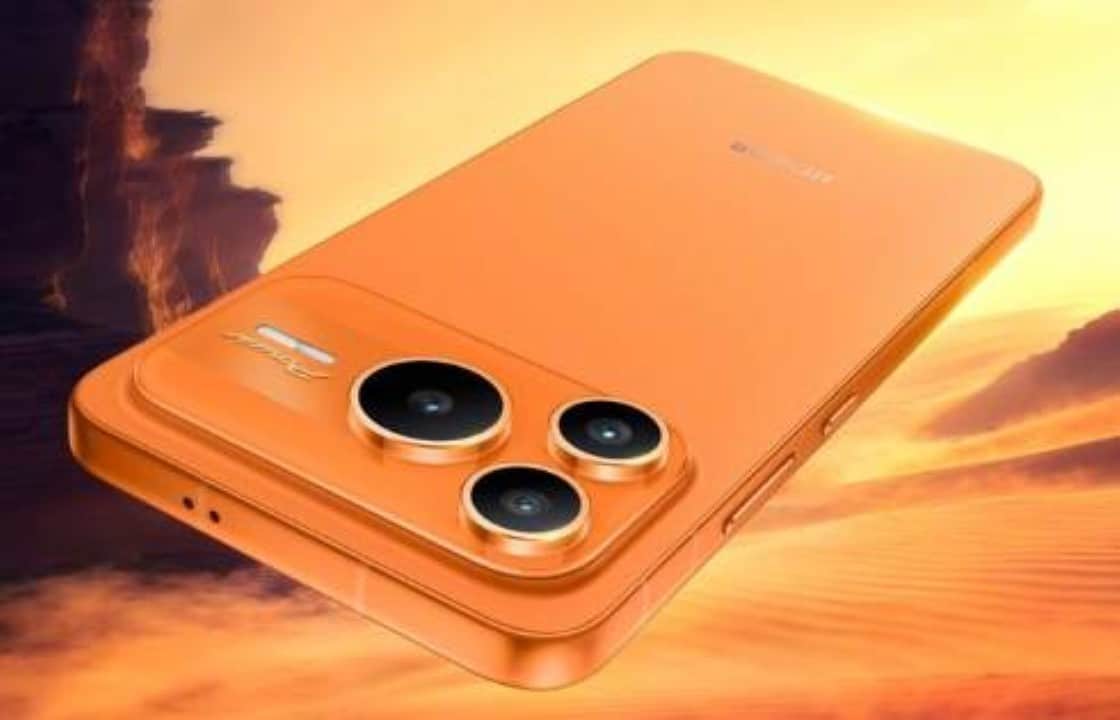
On the back, the design is marked by a rectangular camera module that extends across the entire width of the device, housing the optical sensors in three distinct circular cutouts. Essa choice of layout not only organizes the photographic elements, but also creates its own visual identity that refers to equipment from higher categories.
Despite the massive battery, the engineers managed to keep the phone’s thickness at around 7.98 millimeters, a surprising number for this energy capacity class. The total weight of the device is 216 grams, which represents a notable balance between the robustness necessary for everyday life and the portability expected of a modern smartphone.
The color portfolio available to the market covers three distinct options, commercially named Rising Sun Orange, Magic Night Black and Snow White. Essas shade variations aim to cater to users who prefer a more discreet and traditional look to those looking for a device with a more vibrant and eye-catching appearance.
Dashboard specifications and visual display
The user’s main interaction interface with the system occurs through a 6.79-inch LTPS OLED screen, which delivers a resolution rated at 1.5K. Esse panel was designed to offer a fluid visual experience, supporting a 120Hz refresh rate, which ensures smooth image transitions when navigating the operating system interface, scrolling through web pages and playing electronic games compatible with this frame rate. The OLED technology used ensures absolute contrast levels, with deep blacks and vibrant colors, increasing the quality of video and photo consumption.



One of the most impressive technical aspects of the display is its ability to reach a peak brightness of up to 8,000 nits when operating in HDR mode under specific lighting conditions. Essa specification ensures that the content displayed on the screen remains perfectly readable even under direct sunlight, solving a common problem faced by users who frequently use their devices outdoors. Além In addition, the manufacturer implemented additional layers of protection on the front glass to mitigate the risks of scratches and damage resulting from accidental drops, increasing the overall durability of the device’s most sensitive component.
Processor and memory performance
The smartphone’s processing core is controlled by the MediaTek Dimensity 8500 Elite chipset, a component that makes its global debut in this device. Essa computing platform was developed with a focus on energy efficiency and performance gains in tasks that require multiple cores operating simultaneously, ensuring an agile response from the operating system.
To complement the processor, the hardware has 12 GB of RAM, a generous amount that allows dozens of applications to be kept open in the background without the need for constant reloading. Essa setting eliminates stuttering when switching between heavy tasks such as photo editing and navigating maps with GPS enabled.
In terms of internal storage, consumers will be able to choose between versions equipped with 256 GB or 512 GB of disk space. It is important to note that the project does not include memory expansion via external cards, which makes the choice of initial capacity a determining factor for users who tend to store large volumes of videos and files locally.
Energy capacity and fast charging
The 10,080mAh battery acts as this model’s true competitive differentiator, redefining autonomy standards for the mid-range category and easily surpassing recent launches from the brand itself and its direct competitors. Testes internal laboratories conducted by the manufacturer indicate that the device is capable of supporting up to 20.3 hours of continuous active screen time in standard browsing, 22 hours of uninterrupted high definition video playback or 14.2 hours of playing demanding electronic games. Para To manage the replenishment of this vast energy reserve, the system integrates support for 80W fast charging via the USB-C port, allowing the user to recover hours of use with just a few minutes connected to the socket. Embora the project does not include magnetic induction wireless charging technology, the speed of wired charging compensates for this absence, focusing on an audience that prioritizes the prolonged durability of the charge and efficiency when refueling the silicon-carbon based energy cell.
Camera and image capture system
The rear photographic set is led by a 50 megapixel main sensor, designed to capture images with a high level of detail in scenarios with good availability of natural or artificial light. Image signal processing built into the chipset works in conjunction with the lens to optimize dynamic range, reduce visual noise in night photos, and ensure true-to-life color reproduction.
Accompanying the primary camera, there is a 5 megapixel auxiliary sensor intended for complementary functions, such as calculating depth of field for portrait mode. On the front of the device, housed in a small cutout on the screen, there is a 16 megapixel camera calibrated to meet the demands of high definition video calls and capturing self-portraits with quality suitable for social networks.
Software and user interface
The management of all hardware resources is the responsibility of the Android 16 operating system, which runs under the customized MagicOS 10 interface, developed by the manufacturer itself. Essa software layer introduces a series of unique visual customization tools, as well as advanced artificial intelligence algorithms that learn owner usage patterns to further optimize battery consumption and dynamically allocate processing resources.
Dynamics of the mobile phone segment
The launch of this equipment highlights a clear movement by the technology industry towards devices that offer greater energy independence to users. The adoption of batteries with capacities greater than 10,000mAh is beginning to consolidate itself as a viable standard for the next product cycles, driven by the cheaper and improved silicon-carbon cells.
By introducing a device with these specifications in the intermediate segment, the manufacturer increases competition and puts pressure on other global brands to review their engineering projects. The strategy of combining a massive battery with an efficient processor and a high-quality screen demonstrates a precise understanding of the current needs of the smartphone consumer market.
Veja Tambem em News (EN)

Research reveals that parents are unaware of how their children use artificial intelligence

Samsung releases new system update with new features for Galaxy Watch 4 users

Digital retail reduces the value of the Galaxy S25 5G smartphone with bank bonuses and device exchange

Amazon’s wireless CarPlay adapter has a 50% discount and high approval ratings from drivers

Zach Cregger’s new Resident Evil ignores games and focuses on an unprecedented story with new characters

Rumor suggests that Nintendo is preparing a special edition of the Switch 2 with a remake of Ocarina of Time

Apple accelerates production of the iPhone 17e and develops new Air model with dual camera system

Epic Games platform releases twelve high-budget games at no permanent cost for PC users

PlayStation 5 Pro price drop accelerates digital retail sales and eliminates global stocks

New Galaxy Watch 9 firmware appears on server and confirms progress in software development

Apple’s commemorative project tests cell phone with 1.1 millimeter edge and curved screen for 2027
