
Industry projects the arrival of the iPhone 18 Pro with a transparent back and 5200 mAh battery
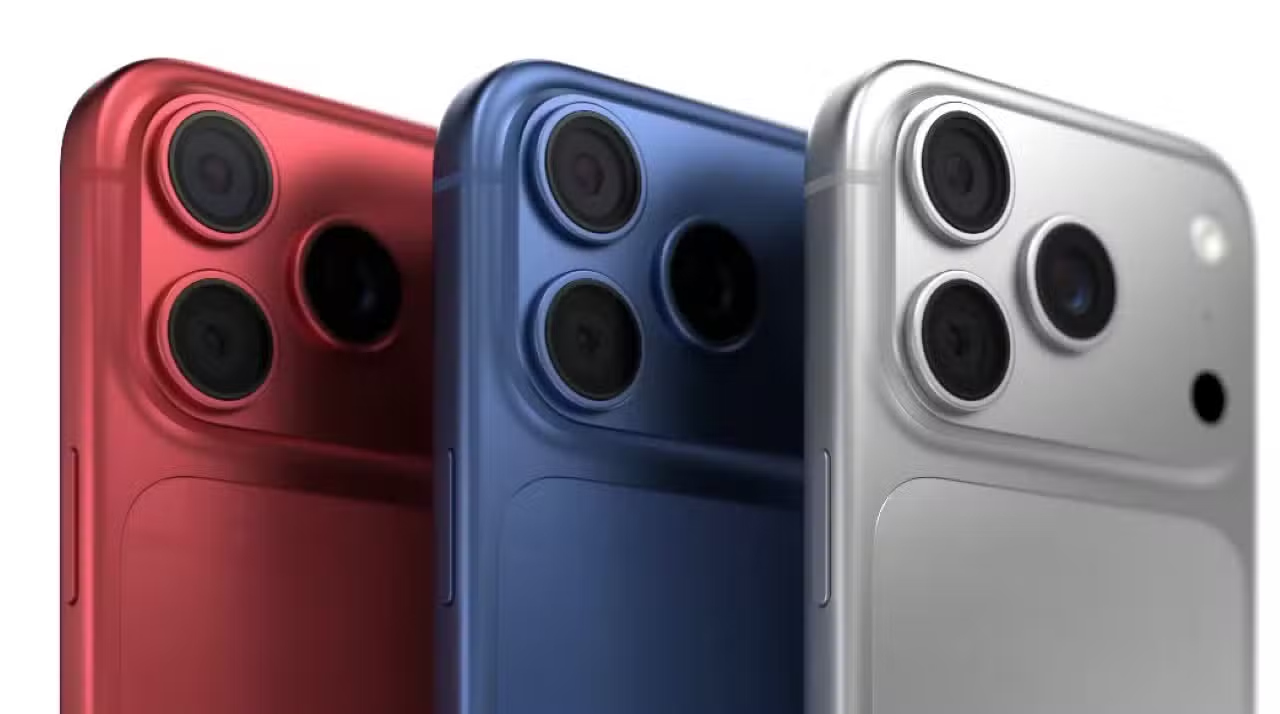
The mobile technology market is following the final preparations for the introduction of a new generation of high-end smartphones, with a launch schedule set for September. The engineering and design teams work on validating equipment that changes the aesthetic and functional standards in force in the telecommunications industry.
The main structural change involves replacing the traditional opaque metal covers with a rear chassis entirely made from high-strength glass material. Essa modification requires a profound restructuring of the layout of internal components, which will become visible to users permanently.
The decision to expose the interior of the device represents a complex technical challenge for global assembly lines. The partner manufacturers located at Ásia have already started the testing phase with the first functional prototypes, evaluating the durability of the tempered glass and the efficiency of the new spatial organization of the electronic circuits.
Technical requirements on the assembly line and quality control
The Asian supply chain is currently receiving initial production orders to ensure the necessary inventory volume at the time of global distribution. The factories undergo rigorous adaptations to their physical facilities and daily operating protocols.
The transparency of the device requires that all internal parts, including logic boards, connectors and charging modules, present an impeccable visual finish, without soldering marks or industrial residues. Qualquer millimeter failure in assembly would be immediately evident to consumers, which forces production lines to operate in clean room environments with quality control standards significantly higher than those required in previous generations of mobile phones.
The new project presents specific technical characteristics that guide mass production and define the new level of requirements for suppliers of electronic components. The assembly needs to integrate extremely high-performance elements in a reduced space, maintaining the visual symmetry required by the transparent design. Entre the confirmed specifications for the production line, the following structural elements stand out:
– 5200 mAh Bateria with optimized L-shaped design.
– Telas with updated dimensions of 6.3 inches and 6.9 inches.
– Memória 12 GB RAM aimed at advanced data processing.
– Estrutura glass back with special double ion exchange chemical treatment.
Structural modifications to display panels
The front panels of the new equipment arrive with direct modifications in their proportions, offering the option of 6.3 inches in the standard version and reaching 6.9 inches in the larger model. The expansion of the useful viewing area occurs without a proportional increase in the physical size of the chassis, resulting from a drastic reduction in the edges surrounding the display.
The OLED technology used to manufacture the screens allows for a higher level of brightness and greater efficiency in daily energy consumption. The panel’s lamination process was improved by engineering to reduce the total thickness of the component, freeing up precious millimeters inside the device that are immediately occupied by cooling systems.
Glass architecture reveals the inside of the device
The adoption of transparent glass on the back of the phone definitively replaces the aluminum and titanium alloys used in previous years, creating a unique visual identity in the premium segment. Através From this high-strength window, users can observe mechanical details such as the wireless charging coil.
This specific induction component has received a detailed aesthetic treatment, featuring darkened copper wires and polished metallic details that complement the appliance’s industrial design. Internal aesthetics began to be treated with the same technical importance as external finishing.



To ensure that the exposure of components does not compromise hardware security, the manufacturer developed a high-precision internal shielding system. Placas protection with a graphite finish covers the most sensitive circuits, preventing damage caused by exposure to direct sunlight or external electromagnetic interference.
Energy autonomy reaches unprecedented levels in the sector
The continuous use capacity receives the biggest update recorded in the history of the line, marked by the integration of a 5200 mAh battery in the 6.9-inch model. Testes laboratory tests indicate that the new energy density of the cells allows it to support high-performance hardware without compromising the final thickness of the phone.
To accommodate this massive power cell, the development team opted to permanently remove the physical tray for carrier chips in all global markets. The unique transition to eSIM connectivity technology frees up considerable internal space in the metal and glass chassis.
The battery shape has also undergone important structural changes, adopting an L-shaped design that fills the empty spaces around the main board and camera array. Essa optimized geometry guarantees maximum use of the internal volume available under the transparent cover.
The energy management system uses advanced algorithms to optimize daily charge and discharge cycles. Fast charging support has been expanded, allowing the battery to recover much of its capacity within a few minutes of plugging it into a power outlet.
Update of the photographic set and light capture
The rear camera module features a new 24-megapixel main sensor, specifically designed to capture a greater volume of light in low-light environments or nighttime scenarios. The six-element lens receives a special anti-reflective coating that minimizes optical distortions and unwanted reflections when photographing direct light sources. The physical arrangement of the lenses has been reorganized to harmoniously integrate with the new transparent design, featuring stainless steel protection rings that stand out visually against the glassy background of the device.
Image processing software works in sync with new photography hardware to deliver a faster autofocus system and improved optical stabilization during motion recording. Updated depth Sensores allow for more precise three-dimensional mapping of the environment around the user, significantly improving the performance of applications based on augmented reality and ensuring more defined cropping in portrait mode, even in situations that involve rapid movement of the photographed subjects.
Processing performance and thermal dissipation
The internal architecture of the smartphone is controlled by a state-of-the-art processor, manufactured using an advanced lithography process that guarantees greater speed in executing simultaneous tasks with considerably lower energy consumption. Acompanhado with 12 GB of RAM, the device has plenty of capacity to keep multiple heavy applications open in the background and run complex artificial intelligence processes directly on the device, eliminating the constant need to send private data to cloud servers. However, the combination of this high computational performance with the new glass back creates a significant thermal challenge for hardware engineering. Para To solve this physical issue, the designers implemented an innovative passive cooling system that uses high thermal conductivity graphene blankets combined with an enlarged vapor chamber. Esse set of materials dissipates the heat generated by the central processor and the high-capacity battery, distributing high temperatures evenly across the device’s side metal structure, which prevents abrupt drops in performance during prolonged gaming sessions with intensive graphics or during continuous recording of videos in very high resolution.
Satellite connectivity in remote areas
The satellite connectivity system was improved with the installation of new pickup antennas positioned at the ends of the chassis, allowing not only the sending of emergency alerts, but also the exchange of conventional texts and short voice messages in geographic regions lacking traditional cellular network coverage.
Durability and resistance of new materials
The glass used in the rear cover goes through an industrial double ion exchange process, exponentially increasing its resistance against accidental falls and deep scratches caused by daily use. The structural integrity of the device was tested in laboratories under extreme conditions of pressure and mechanical impact.
In addition to physical resistance, a new generation oleophobic coating has been applied over the transparent surface to prevent excessive accumulation of fingerprints and body fat. Essa chemical technology maintains the device’s crystal clear transparency and clean appearance even after hours of uninterrupted handling by the user.
Veja Tambem em News (EN)

Research reveals that parents are unaware of how their children use artificial intelligence

Samsung releases new system update with new features for Galaxy Watch 4 users

Digital retail reduces the value of the Galaxy S25 5G smartphone with bank bonuses and device exchange

Amazon’s wireless CarPlay adapter has a 50% discount and high approval ratings from drivers

Zach Cregger’s new Resident Evil ignores games and focuses on an unprecedented story with new characters

Rumor suggests that Nintendo is preparing a special edition of the Switch 2 with a remake of Ocarina of Time

Apple accelerates production of the iPhone 17e and develops new Air model with dual camera system

Epic Games platform releases twelve high-budget games at no permanent cost for PC users

PlayStation 5 Pro price drop accelerates digital retail sales and eliminates global stocks

New Galaxy Watch 9 firmware appears on server and confirms progress in software development

Apple’s commemorative project tests cell phone with 1.1 millimeter edge and curved screen for 2027
