Leapmotor launches D19 electric crossover with 1000V system and range of up to 720 kilometers

The global automotive industry is following the introduction of a new competitor in the luxury sports utility vehicle segment, with the officialization of the technical specifications of the latest top-of-the-line model of Asian origin. Automaker Leapmotor detailed the characteristics of the D19 crossover, a vehicle designed to rival traditional European and North American brands through an advanced technological package. The utility combines a very high voltage electrical architecture with a cabin focused on extreme comfort for the occupants.
The first units of the vehicle are expected to reach consumers during the first half of the year, a period in which the manufacturer intends to consolidate its international expansion strategy. The opening of the pre-order period is already moving the sector, indicating an initial positive reception from buyers looking for alternatives in the premium market. The project moves away from the old perception of basic vehicles, delivering an unprecedented level of material sophistication to the company’s assembly line.
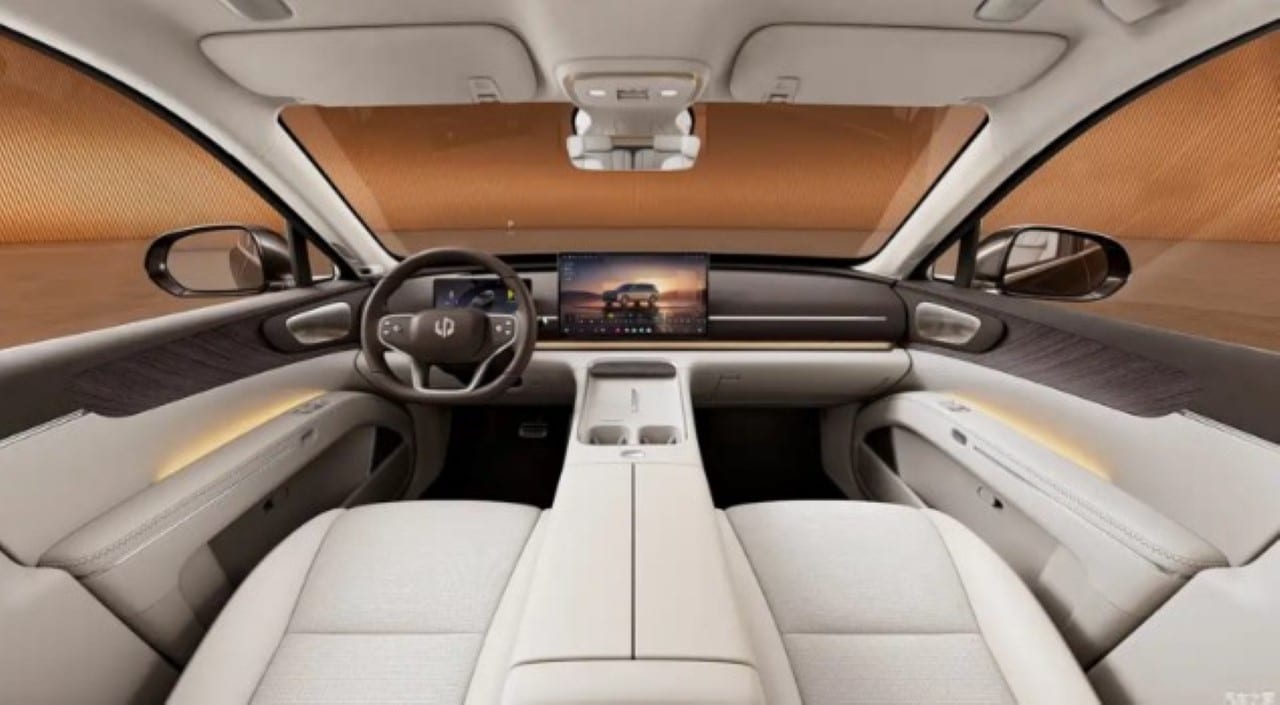
The development of the sports utility vehicle prioritized energy efficiency combined with an immersive user experience, transforming the cabin into an environment of continuous connectivity. The engineering applied to the model promises to redefine waiting times at public charging stations, a decisive factor in the adoption of large electric vehicles. The combination of cutting-edge hardware and functional design sets a new level of demand for the category.
Robust proportions and presence in urban traffic
The exterior design of the sports utility vehicle was conceived to convey solidity and guarantee ample interior space, reflecting the demands of consumers who prioritize comfort on family trips. The total length of the body exceeds 5.2 meters, while the width approaches 2 meters, dimensions that give the vehicle an imposing stance on the roads. The distance between the axles, greater than 3.1 meters, is the main factor responsible for the spaciousness of the cabin, allowing for a seating arrangement that favors freedom of movement.
To meet different aesthetic profiles, the initial color palette made available by the automaker includes five distinct options, varying between classic and contemporary tones. Buyers will be able to choose between finishes in white, silver, gray, black and an exclusive shade of green, all applied with highly durable painting processes. Essa variety seeks to attract everyone from the executive who prefers discretion to the customer who wants a bolder look for their luxury utility vehicle.
Tactile sophistication and interior engineering
The crossover’s cabin was structured to offer a superior sensory experience, using selected raw materials and rigorous manufacturing processes. The automaker chose to apply semi-aniline leather in the first layer of the coverings, a material treated using tanning techniques without the use of chrome. Essa technical choice not only increases the durability of the finish, but also meets strict environmental sustainability standards in the automotive production chain.
The attention to detail is evidenced by the presence of approximately 25 square meters of soft-touch surfaces distributed throughout the cabin. Praticamente all frequent contact points for passengers and the driver received padded treatment, eliminating the presence of rigid plastics in areas of direct visibility. The interior design incorporates perforations with a pearlescent pattern and elaborate V-shaped seams, elements that refer to the artisanal assembly characteristic of ultra-luxury vehicles.
Ergonomics were extensively studied to ensure that modern aesthetics did not compromise the functionality of the controls and well-being during prolonged use. The seats were designed to provide optimized lumbar and lateral support, reducing the driver’s muscular fatigue on long road journeys. The quality of the edge finishing and the precision of the fittings demonstrate the advancement of the quality control processes implemented in the manufacturer’s production lines.
Advanced scanning and high-resolution displays
The communication interface between the vehicle and occupants is centralized in a complex digital ecosystem designed to minimize distractions and maximize access to critical driving information. The main technological highlight of the panel is the augmented reality display projected directly onto the windshield, known as AR-HUD, which covers a viewing area equivalent to 60 inches. Este sistema projeta dados de navegação, velocidade e alertas de segurança na linha de visão do motorista, possuindo resistência total contra intempéries e ofuscamento por excesso de luminosidade externa. Complementando this technology, the command post has a 10.25-inch digital instrument panel and a 17.3-inch floating central screen, responsible for managing the climate functions, media and dynamic chassis settings. The concern with entertainment extends to the rear seat occupants, who have at their disposal a 21.4-inch motorized screen with 3K resolution, capable of reproducing content in high graphic fidelity, in addition to a dedicated 6-inch control panel built into the central armrest.
Data processing and continuous connectivity
The fluid operation of all visual interfaces and driving assistance systems is guaranteed by an extremely robust data processing architecture. The automaker equipped the vehicle with two high-performance Qualcomm Snapdragon 8797 chips, ensuring that the infotainment system supports multiple simultaneous tasks without slowing down. Integration with mobile devices and cloud-based services occurs natively, allowing remote software updates and complete customization of the digital environment according to the preferences of each user registered in the car system.



Innovation in charging and electrical architecture
The sports utility vehicle’s engine was divided into two main configurations, aiming to serve both the strictly urban public and drivers who make frequent trips. The purely electric version is powered by a high-density battery pack with a capacity of 115 kWh, designed to withstand intense cycles of use. Esta variant delivers an estimated range of up to 720 kilometers on a full charge, a number that positions the model among the most efficient in its category on the global market.
The major technological difference of the mechanical platform is the adoption of a 1000 volt electrical architecture, an innovation that drastically changes the supply dynamics. The system was designed to support charging powers of up to 540 kW in ultra-fast stations compatible with this cutting-edge technology. In practice, this technical capacity allows the vehicle to recover approximately 350 kilometers of range in just 15 minutes when plugged in.
The charging speed provided by the 1000V network acts directly in eliminating range anxiety, one of the main obstacles to the popularization of electric cars. Motoristas on long road routes they can make short stops, equivalent to the time of a conventional liquid fuel supply, to continue the journey safely. The advanced thermal management of the battery cells ensures that the high power received does not degrade the chemical components in the long term.
The manufacturer maintains a rigorous running test program to validate the efficiency of the charging system under different climatic and mechanical stress conditions. Continuous monitoring of the power pack temperature during ultra-fast charging prevents overheating, keeping the power curve stable throughout most of the process. Essa technical reliability is essential to retain customers who depend on public supply infrastructure for their daily commutes.
Thermal Efficiency and Auxiliary Generator System
For consumers who live in regions with charging infrastructure still under development, the automaker offers the extended autonomy variant, which combines electric propulsion with an internal combustion generator. Nesta configuration, the vehicle is capable of traveling around 500 kilometers using exclusively the energy stored in the batteries, guaranteeing zero pollutant emissions in urban routine. The combustion engine acts independently of the wheels, functioning solely as an electricity generator to recharge the main system when the load reaches critical levels during long journeys.
Energy flow management is controlled by on-board artificial intelligence that optimizes the exact moment at which the auxiliary generator is activated. The software prioritizes the efficient depletion of the battery before requesting intervention from the combustion engine, ensuring that fuel burning always occurs in the rotational range with the highest thermal efficiency. Essa series hybrid solution represents a safe and economical transition, maintaining the convenience of liquid fueling while delivering the smoothness and instantaneous torque characteristic of pure electric drive.
Acoustic insulation and intelligent air conditioning
Comfort on board the utility vehicle is complemented by an intelligent climate control system that works in sync with the insulating materials applied to the body structure. The covering of the roof and doors has thermal properties that reduce heat exchange with the external environment, reducing the workload of the air conditioning and, consequently, saving battery energy. The breathability of the semi-aniline leather on the seats helps maintain a pleasant temperature in contact with the passengers’ bodies, regardless of external weather conditions.
The acoustic engineering received meticulous treatment to isolate the cabin from the noise generated by the wind and the friction of the tires with the asphalt, factors that become more evident in the absence of the sound of a traditional engine. The installation of double laminated glazing and the strategic application of sound-absorbing materials on the floor and wheel arches create an extremely quiet driving environment. Este insulation improves the clarity of conversations between occupants and enhances the sound quality of the vehicle’s integrated high-fidelity audio system.
Veja Tambem em News (EN)

Research reveals that parents are unaware of how their children use artificial intelligence

Samsung releases new system update with new features for Galaxy Watch 4 users

Digital retail reduces the value of the Galaxy S25 5G smartphone with bank bonuses and device exchange
Amazon’s wireless CarPlay adapter has a 50% discount and high approval ratings from drivers

Zach Cregger’s new Resident Evil ignores games and focuses on an unprecedented story with new characters

Rumor suggests that Nintendo is preparing a special edition of the Switch 2 with a remake of Ocarina of Time

Apple accelerates production of the iPhone 17e and develops new Air model with dual camera system

Epic Games platform releases twelve high-budget games at no permanent cost for PC users

PlayStation 5 Pro price drop accelerates digital retail sales and eliminates global stocks

New Galaxy Watch 9 firmware appears on server and confirms progress in software development

Apple’s commemorative project tests cell phone with 1.1 millimeter edge and curved screen for 2027