
Live war: United States reinforces military presence in the Middle East; Lebanon declares existential crisis

The scenario of instability in the Oriente Médio intensifies with the recent decision by the Estados Unidos to send thousands of additional soldiers to the region, according to press reports. Este movement comes amid an escalation of tensions that shake Líbano, where a local authority describes the situation as an “existential crisis”, and in the face of a persistent conflict involving Israel and Irã. The complex and volatile situation requires constant attention and mobilizes international actors.
The information indicates that the American measure seeks to reinforce military capacity in an area already saturated by conflicts and geopolitical disputes. The strategic move raises questions about the future of regional security and the possible implications for global stability. Ações military, even if defensive, can be interpreted as an escalation and further worsen the already fragile environment.
Meanwhile, the Líbano faces devastating consequences, with Israeli attacks causing widespread destruction and a significant number of casualties. The country’s political and economic fragility is accentuated in the face of the crisis, placing the population in a situation of extreme vulnerability and uncertainty about the near future.
American military deployments in the East
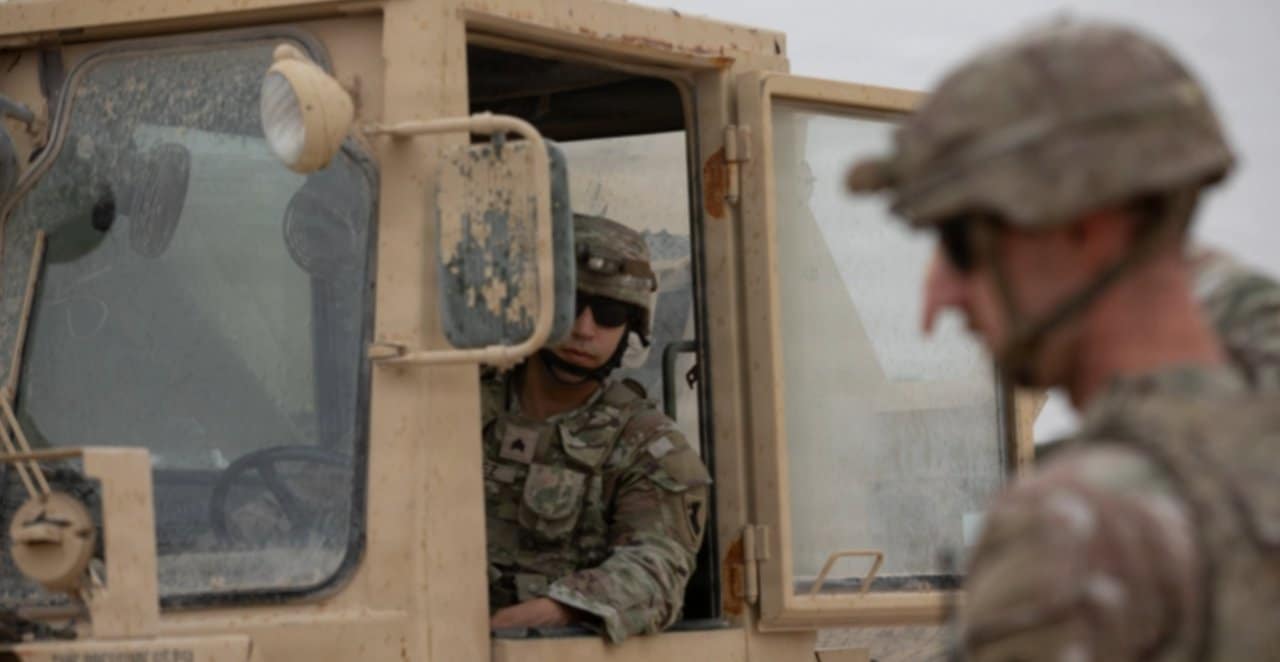
The Pentágono plans to send approximately 3,000 soldiers from the elite 82nd Divisão Aerotransportada to the Oriente Médio, as disclosed by sources linked to the matter and reported by international agencies. Esta decision adds to an already substantial increase in the US military presence in the region, which is taking place even with the president’s administration apparently seeking avenues of dialogue with the Irã. The written order for the deployment of these troops was expected in the next few hours, according to information from American authorities.
The exact locations where these troops will be sent nor the precise date of their arrival have not yet been specified. Este new contingent follows the deployment of around 5,000 marines and sailors, accompanied by an amphibious assault ship, who had already been mobilized to the area days earlier. The president has reiterated that he does not want “American boots on the ground” in Irã, but he has also not completely ruled out such a possibility, which maintains ambiguity about the next steps.
Critical situation at Líbano
Líbano, one of the countries most affected by the wave of conflicts, is on the brink of an “existential crisis”, according to statements by Lebanese authorities, who describe the destruction caused by the Israeli attacks as “disastrous”. Mais of 1,070 Lebanese citizens have been killed since the start of the war, a number that highlights the dimension of the humanitarian and structural tragedy that is plaguing the country. Israel’s intention to control part of the south of Líbano, reaching as far as the Litani river, is seen by Hezbollah as an “existential threat”, promising vigorous resistance. Esta Israeli position aims, according to Tel Aviv, to establish a “security zone”, but has severe implications for Lebanese sovereignty and population. Basic infrastructure and local communities have been severely compromised, leading to mass displacement and a growing call for humanitarian aid. Prolonged instability impedes economic and social recovery, deepening civilian suffering.
Escalation of tensions with Irã
Iranian military rhetoric has strengthened, with the army promising to fight until it achieves “complete victory” in regional conflicts. Recentemente, an Iranian missile was reportedly intercepted over Lebanese airspace, raising concerns about the spread of the confrontation and the security of neighboring nations. Essa interception highlights the complexity of the alliance network and the risk of incidents that can quickly escalate.
Furthermore, reports indicate that the Irã has been charging certain vessels fees for safe passage through the strategic Estreito of Ormuz. Essa measure could have broad repercussions for global trade and maritime security, especially considering that a significant portion of the world’s oil transits through this route. The charging of fees not only adds a layer of economic tension, but also suggests a more assertive stance by the Irã in managing its maritime borders.
Regional diplomatic efforts
Amid the intensification of fighting, several diplomatic initiatives are underway to try to de-escalate the crisis. The head of the Paquistão army, for example, made telephone contact with the president, seeking to broker peace talks between the Estados Unidos and the Irã. Essas attempts at mediation are crucial to opening channels of communication at a time of extreme polarization and hostility.
American press reports further indicate that the Estados Unidos and a group of regional mediators are discussing the possibility of holding high-level peace talks with the Irã. Figuras American politicians, like the senator, could be considered to lead these negotiations, if they move forward. The viability of these talks, however, remains uncertain due to the complexity of the interests involved and mutual distrust.
Impacts on global security and energy
The prolonged crisis at Oriente Médio has already caused a collapse in the security system at Golfo, as pointed out by authorities at Catar. The fragility of alliances and the unpredictability of conflicts have destabilized an already sensitive region, raising concerns about the global security architecture. Líderes Europeans, such as the German president, also stated that the American and Israeli stance in relation to Irã constitutes a “violation of international law”, intensifying the debate on the legality of military actions.
At the same time, the global energy crisis is worsening, impacting economies around the world. As Filipinas, for example, declared a national energy emergency in response to the war in Irã, while Vietnã announced cuts to domestic flights due to jet fuel shortages. Esses events highlight the interconnectedness of geopolitical crises with the global economy, highlighting how regional conflicts can have large-scale ramifications.
Swings in financial and commodity markets are a direct response to instability. Embora stocks have recovered and the oil price has reacted positively after the extension of the American ultimatum to Irã, volatility persists. Uncertainty regarding the security of energy supplies and trade flow continues to influence investment decisions and global economic policies, keeping markets on alert and reacting quickly to each new development.
Direct clashes in the region
The skies over Iraque were the scene of intense fighting, with British troops shooting down 14 drones overnight in defense operations. Este incident highlights the constant threat of air attacks and the complexity of security operations in conflict-torn regions. The presence of international forces seeks to mitigate these risks, but the frequency of these events demonstrates the persistence of the danger.
In addition to the drones, an airstrike on Iraque resulted in the deaths of at least 15 fighters, with the Estados Unidos being blamed. The recurrence of such attacks worsens the humanitarian situation and the internal political instability of the Iraque, which already faces significant challenges in maintaining order and the security of its population.
The city of Tel Aviv, in Israel, was also the target of attacks, with reports of at least six injuries, four of which were due to an Iranian missile attack. Esses incidents highlight the scope of hostilities and the vulnerability of urban centers to cross-border attacks. Civil life is constantly threatened by these clashes, generating fear and trauma in communities.
Simultaneously, an Israeli attack on the outskirts of Beirute, the capital of Líbano, caused the death of two people, as reported by the Lebanese Ministério. The reciprocity of attacks between the belligerent parties intensifies the spiral of violence, making any prospect of a truce or peaceful resolution of the conflict difficult. The escalation keeps the region in a cycle of retaliation and suffering.
Analysis of the current geopolitical scenario
Oriente Médio remains a critical flashpoint, where the interaction of multiple actors and interests generates an unprecedented tangle of geopolitical challenges. The robust military presence of global powers, long-standing religious and territorial tensions, and the struggle for strategic resources such as oil contribute to an environment of continued unpredictability. Recent troop movements and failed diplomatic attempts highlight the difficulty in forging a path to stability. The Líbano, in particular, symbolizes the fragility of nations that find themselves at the epicenter of major disputes, suffering the harshest consequences of violence and social disintegration. The ramifications of this conflict extend beyond regional borders, affecting the global economy, supply chains and energy security, making it a central challenge for the international community.



