
New Guinness complex in London receives visit from King Charles III for official opening

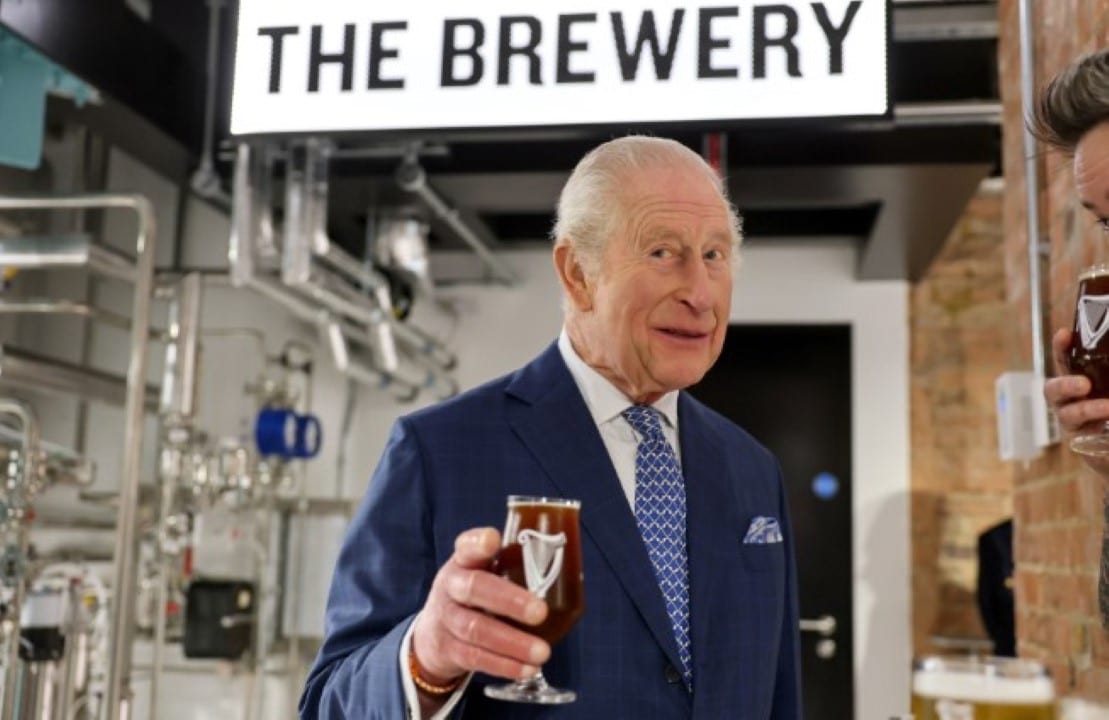
The boss of Estado from Reino Unido was present in one of the busiest neighborhoods in the English capital to officially open a new gastronomic and beverage hub. The ceremony took place in the historic Old Brewer’s Yard, a space that dates back to the 18th century and now houses modern facilities focused on artisanal production.
During the visit to the complex located in Covent Garden, the royal authority got to know the manufacturing stages up close, interacted with brewmasters and participated in practical activities. The project represents a significant financial contribution of 73 million pounds sterling from the multinational Diageo.
The new structure is not limited to just manufacturing drinks, it also encompasses common areas, restaurants and spaces dedicated to cultural events. The initiative aims to strengthen the local service sector and generate hundreds of direct jobs in the hospitality sector.
Return of the brewing tradition to the urban center
The installation of the new production unit revives an old vocation of the central region of the city, which historically housed large producers of fermented drinks. The architectural design preserved the original characteristics of the historic courtyard, integrating state-of-the-art equipment for the formulation of exclusive recipes that are not found in other parts of the world. The brand’s presence in the location reinforces the cultural connection between the fermentation technique and urban development.
The space was designed to offer complete immersion to visitors, combining the theory of manufacturing with the practice of guided tasting. The structure has precision equipment that allows experts to test new ingredients and maturation times, creating a rotating portfolio of drinks.
The operation of the new hub brings significant numbers to the economy and tourism in the central region:
- Immediate generation of more than 250 direct jobs in the service and gastronomy sector.
- Projection of receiving more than half a million visitors during the first year of operation.
- Currently, one in every seven pint drinks served in bars in the English capital belongs to the brand.
Exclusive tasting of artisanal labels
Received by the president of Diageo, Sir John Manzoni, the monarch was led on a detailed technical tour of the microbrewery’s facilities. Brewmaster Hollie Stephenson guided the tour, explaining the nuances of each fermentation tank and the chemical processes involved in creating new flavors.
On the occasion, creations developed specifically for the London address were presented, such as the Old Brewer’s Yard Porter, the Winter Warmer and the Apricot Sour. The royal official tried the samples and spoke to the technical team about the importance of innovation in the seasonal drinks market.
Traditional technique for serving the perfect drink
The visit itinerary included a stop at bar 232, whose name makes direct reference to the exact temperature in degrees Celsius used for roasting barley. Esse rigorous thermal process is responsible for giving the dark color and slightly bitter flavor characteristic of the brand’s products.
Guided by a specialist at the establishment, the chef of Estado learned the classic method of serving the drink in a pint glass, which requires a specific angle and a mandatory resting time before finishing. The execution of the technique was praised by the professionals present at the counter.
In addition to the traditional service, there was a demonstration of technology applied to gastronomy, with the printing of images on the drink’s foam. Utilizando edible inks made from plant extracts, the monarch printed an end-of-year commemorative message before making the official toast.
Professional training in the hospitality sector
The newly opened complex also serves as the main headquarters in the southern Reino Unido region for the Learning for Life educational program, supported by the parent company. The initiative’s main objective is to provide free training and technical qualifications for young people looking to enter the job market.
During the visit to the training center, there was a meeting with students who had recently graduated from the service excellence course. Students shared their learning experiences and expectations for starting their careers in high-end restaurants and hotels.
The agenda also included conversations with participants in a social development program linked to King’s Foundation. Essa philanthropic institution works to promote practical skills and preserve traditional crafts, aligning with the objectives of the new educational hub.
The partnership between private entities and social support foundations reflects a business model focused on economic sustainability. Projetos similar ones have already been successfully implemented in other regions of the country, such as in Escócia, demonstrating the effectiveness of the union between training and employability.
Historic restoration of the old production yard
The choice of address for the installation of the microbrewery carries significant historical weight for the European beverage industry. The place formerly housed Combe & Co., one of the greatest brewing powers of the 18th century, responsible for popularizing the porter style among workers at the time. Foi It was precisely the success of this dark and full-bodied style in the English capital that inspired Arthur Guinness to develop his own version of the recipe in Dublin, forever changing the global fermented market.
Commercial records indicate that exports of the Irish drink to British territory began in 1796, establishing a lasting trade route. At the beginning of the 20th century, around 1901, the same yard in Covent Garden was used for bottling the Extra Stout version. The reopening of the space as a modern production center acts as a tribute to this centuries-old trajectory, giving local residents back a tangible part of their industrial heritage.
Local party with partners and artists from the region
To celebrate the official opening of the doors, the central courtyard was transformed into a festive space that brought together local suppliers, neighborhood businesspeople and representatives of community groups. The environment was decorated with elements that refer to traditional pub culture, while visual artist Mason London revealed a large mural painted exclusively for the complex, illustrating the evolution of beer production over the centuries. The stalls set up around the courtyard offered a sample of the cuisine that will be served in the complex’s restaurants, highlighting dishes that use the dark drink as the main ingredient, including artisanal meat pies, fresh oysters and decorated cakes. The culmination of the event occurred when the commemorative inauguration plaque was publicly unveiled, sealing the company’s commitment to the cultural and commercial development of the neighborhood.
International expansion of the Irish brand
The London unit consolidates the company’s global growth strategy, becoming the fourth address of the Open Gate Brewery line in the world. The concept, which already operates successfully in cities such as Dublin, Baltimore and Chicago, is based on the fusion of Irish technical expertise with the cultural influences and ingredients specific to each host location.
Focus on innovations and experimental recipes
Unlike the headquarters located at Irlanda, which focuses on large-scale production of the classic recipe, the new British facility focuses exclusively on experimentation and the creation of limited batches. Brewmasters have the freedom to test new hops, malts and yeasts, resulting in a drinks menu that caters to the most demanding and curious palates.
The establishment’s initial portfolio has four permanent options on tap, which include a premium lager, a session IPA, a pale ale and a traditional porter. Além of these, the menu offers low-alcohol variations and seasonal editions that change based on the availability of fresh ingredients at the local farmers market.
Promotion of trade and tourism in the central region
The multinational’s management emphasizes that the million-dollar investment in the new complex acts as a catalyst for the recovery and strengthening of the services sector, which includes pubs, hotels and independent restaurants. The presence of a large tourist attraction attracts a constant flow of visitors, indirectly benefiting all surrounding businesses.
As part of its commitment to the community, the space provides free areas for holding events organized by residents’ associations and cultural groups. The integration of cuisine designed by renowned chefs, combined with the appreciation of local producers, positions the address as a new entertainment and business landmark in the metropolis.



