
New route for the Artemis program moves the first manned landing on the surface of the Moon to 2028

The Estados Unidos space agency has restructured the schedule of its missions aimed at exploring deep space, establishing new guidelines for the return of humans to the lunar environment. The strategic decision involves significant operational adjustments to ensure crew safety and the technical viability of equipment developed in partnership with the private sector.
The updated planning transfers the long-awaited descent of astronauts to the surface of the Terra natural satellite to the year 2028, during the execution of the Artemis 4 mission.
The move reflects an ongoing effort to mitigate risks associated with the development of new spacesuits and commercial landing systems. Engenheiros and flight directors work daily to align current technological capabilities with the requirements of a sustainable human presence beyond our planet.
Adjustments to the space launch calendar
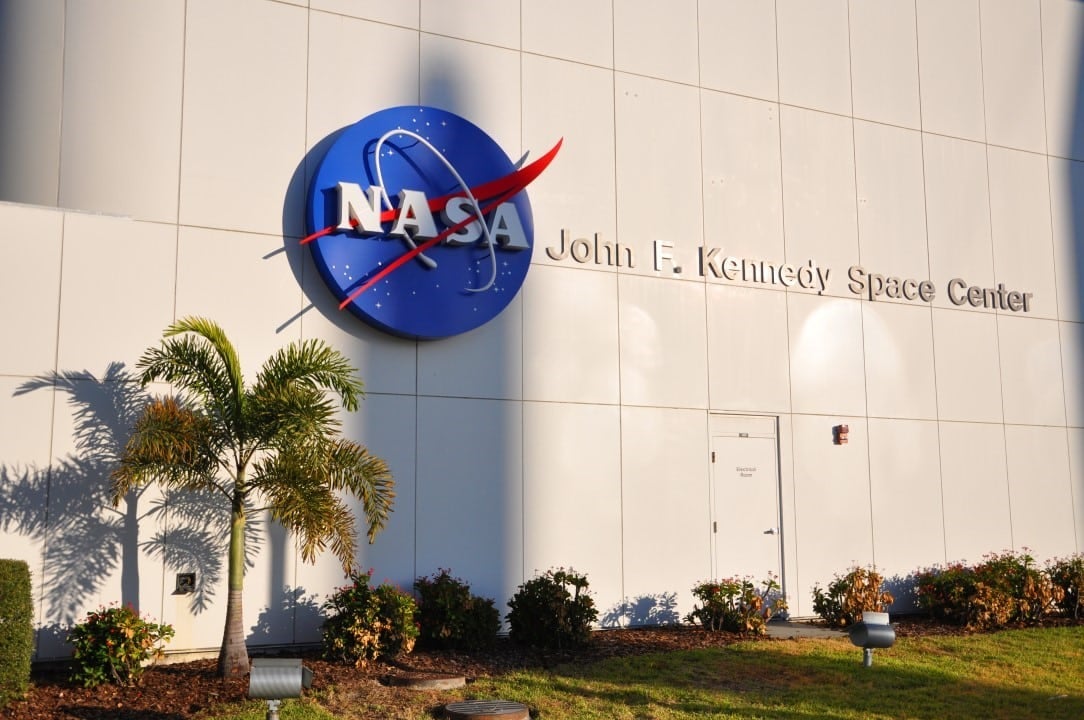
The revised schedule places considerable weight on the Artemis 2 mission, which is scheduled to launch in early April 2026. The Space Launch System rocket will depart from Centro Espacial Kennedy, located in the state of Flórida, carrying the Orion capsule for a fundamental testing journey.
This specific expedition does not include a descent to lunar soil, but rather an orbital trajectory that will last approximately ten days in outer space. The crew assigned to this flight is made up of commander Reid Wiseman, pilot Victor Glover and mission specialist Christina Koch, in addition to Canadian astronaut Jeremy Hansen.
During the journey, the four professionals will carry out a series of manual and automated checks on the spacecraft’s life support and navigation systems. The main objective is to certify that the Orion capsule has full capacity to safely house human beings before more complex missions are authorized by safety committees.
Detailed satellite surface observation
While orbiting the celestial body, astronauts will dedicate blocks of up to six hours to direct observation of specific regions, including the far side and the poles. Human visual perception will be used to identify variations in relief, soil tones and lighting conditions that often go unnoticed by automated robotic sensors.
To assist in this visual recognition task, the crew will use high-resolution portable cameras and tablets equipped with an interactive atlas specially developed for the mission. The information collected visually by the astronauts will serve to complement the telemetry and mapping data already obtained by unmanned probes that have been orbiting the region for years.
Intensive training for data collection
Preparing the selected team for the orbital flight required three years of exclusive dedication to theoretical and practical training in various government and private facilities. The instructional curriculum was heavily inspired by field geology techniques used during past decades, adapted for contemporary technologies.
Instructors focused on developing scientific observation skills, teaching astronauts to describe with extreme precision geological formations seen from kilometers away. Essa Technical communication skills are vital so that scientists based in the control center can correctly interpret the characteristics of the terrain they fly over.
Flight simulations and exercises in virtual reality environments allowed the crew to become familiar with planned orbital routes and solar incidence angles. Lighting at the lunar south pole is notoriously challenging, with long shadows that can hide deep craters or distort observers’ depth perception.
All photographic and descriptive material generated during Artemis 2 will be cataloged and integrated into the databases that will guide subsequent landings. The accuracy of these initial reports will dictate the level of confidence engineers have when programming the exact coordinates for the descent of commercial modules in the future.
Integration with commercial partners and new tests
The restructuring of the space program also introduced the need for an interim mission in 2027, focused exclusively on testing complex maneuvers in the low Terra orbit. Esta additional stage was designed to validate the docking systems between the Orion capsule and the landing modules developed by private companies, such as SpaceX and Blue Origin. The complexity of transferring crew between different ships in the vacuum of space requires rigorous safety protocols and impeccable sealing mechanisms, elements that will be exhaustively tested before any trip towards the lunar south pole.
By relaxing certain design requirements and orbital trajectories, the American space agency has allowed its industrial partners to optimize the development of its landing vehicles. Essa collaborative approach aims to reduce production bottlenecks and increase the technical viability of equipment, ensuring that commercial landers can transport heavy loads and astronauts efficiently. Adapting government requirements to the realities of modern aerospace manufacturing demonstrates a paradigm shift in the way interplanetary exploration is currently managed.
Prior robotic exploration and operational risk mitigation
Before the Artemis 4 mission receives authorization to begin its landing journey in 2028, a fleet of probes and robotic vehicles will be sent to the south polar region to carry out topographic surveys and chemical analyzes of the regolith. Starting in 2027, these unmanned missions will be responsible for mapping the exact distribution of subsurface water ice, measuring extreme temperature variations within permanently shadowed craters, and testing the communications infrastructure needed to maintain uninterrupted contact with mission control on Terra. The continuous collection of this environmental data is a non-negotiable step towards reducing operational uncertainties, since the polar environment presents thermal and radiation challenges far greater than those faced in past equatorial missions. Além In addition, the prior dispatch of autonomous equipment allows the validation of precision landing technologies, ensuring that manned modules are able to avoid boulders and steep slopes autonomously during the final minutes of the descent. Todo this robotic exploration ecosystem acts as a fundamental safety net, paving the way for human presence to become not only possible, but lasting and scientifically productive over the coming decades.
Continuous updating of routes and procedures
Navigation planning and scientific observation targets are not static and will undergo constant updates even after the spacecraft are launched. The interactive atlas used by the crew will receive data packets in real time, adapting photographic recording priorities according to the exact trajectory achieved by the capsule and the space meteorological conditions at the time.
Establishing a sustainable foundation
The long-term goal remains focused on building an infrastructure that supports annual missions to the surface of the natural satellite after the success of the first commercial landing. The development of new extravehicular spacesuits, capable of withstanding the abrasiveness of lunar dust and freezing temperatures, is progressing in parallel with propulsion tests.
The alignment between government technical rigor and private sector innovation forms the backbone of this new era of exploration. The move to the end of the decade reflects an unwavering commitment to crew integrity and scientific excellence, ensuring that humanity’s next steps in space are firm and definitive.



