
New Starfield video showcases Nvidia’s DLSS 5 technology with jump in frame rate and graphics

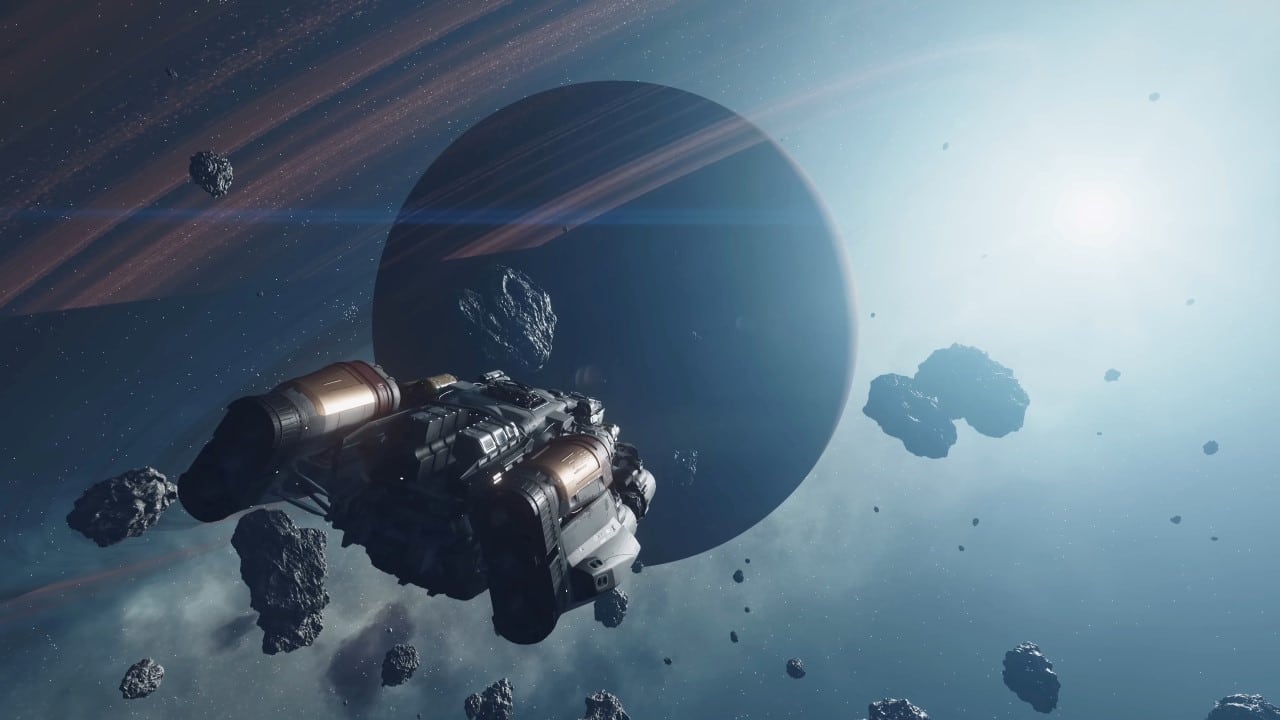
A 12-minute gameplay-focused audiovisual record brought unprecedented technical details about the application of next-generation image scaling technology in Bethesda’s space RPG. The demonstration focuses on the operational capabilities of the Nvidia artificial intelligence system, highlighting profound changes in the way the graphics engine handles the rendering of complex scenarios. The material points to a restructuring in visual processing, delivering significantly higher frame rates without the need for additional hardware.
The deep learning supersampling tool works directly to reduce the computational load required by video cards. The software renders the virtual environment at a lower base resolution and uses trained neural networks to reconstruct the final image at native resolutions, such as 4K. In the context of a massive digital universe that requires the constant loading of high-fidelity textures and detailed three-dimensional models, this technical approach alleviates processing bottlenecks that affect the fluidity of navigation.
The focus of the presentation is on performance stability in densely populated urban areas and during space combat sequences. Technical analysis of the video reveals that the integration of the new algorithm minimizes sudden frame drops, a technical issue frequently reported by users on intermediate hardware configurations. Optimization allows the system to maintain a constant update rate, an essential factor for the accuracy of commands and for maintaining visual coherence during rapid camera movements.
– Otimização direct use of the tensor cores of modern video cards.
– Reconstrução of edges and elimination of aliasing on distant objects.
– Improved Sincronização between the central processor and the graphics unit.
Direct impact on hardware performance
The architecture of the new scaling system is based on an exponentially larger volume of training data compared to previous iterations of the software. Essa database allows artificial intelligence to predict with mathematical precision the color and position of each pixel on the screen, even in scenes of high geometric complexity. The practical result is a sharp image that does not require traditional edge-smoothing methods, which tend to consume a lot of resources and make the screen blurry.
Equipment that previously operated at the limit of its thermal and processing capacity to maintain the game at high graphics settings presents a notable operational slack. Offloading the heavy lifting of raw rendering to dedicated AI cores results in lower power consumption and lower operating temperatures, extending component life and ensuring silent system execution.
Image reconstruction and artificial intelligence
Fine detail reconstruction is one of the most demanding aspects of modern computer graphics. The video demonstrates the effectiveness of the algorithm when dealing with elements such as foliage on alien planets, metallic meshes on ship fuselages and particle effects generated by laser weapon fire. The neural network identifies these visual patterns and reconstructs them with a clarity that rivals native rendering.
The handling of temporal visual artifacts has also received significant adjustments. Versões Previous scaling technologies occasionally generated ghost trails behind fast-moving objects or flickering in very fine textures. The new version of the software analyzes multiple previous frames and motion vectors to ensure each pixel remains stable, eliminating unwanted visual distractions.
Global illumination and dynamic reflections, elements crucial to the atmosphere of space exploration, are processed with greater precision. Light emitted by distant stars interacts realistically with the surfaces of planets and characters’ spacesuits, maintaining the physical integrity of the light even when the image is artificially enlarged by the algorithm.
Frame generation and visual fluidity
In addition to increasing resolution, the technology incorporates an advanced image interpolation system. Artificial intelligence analyzes the current frame and the previous frame to generate an entirely new intermediate image. Esse process effectively multiplies the frame rate displayed on the monitor, providing extremely smooth motion perception.
During ground combat demonstrations, frame generation proved critical to target tracking. The additional fluidity allows players to follow enemy movements more easily, improving reaction time and shooting accuracy. The transition between exploring on foot and using jet packs occurs without any hitches in the refresh rate.
The presentation highlighted side-by-side comparisons, highlighting the difference in performance in computational stress scenarios. In battles involving multiple spaceships, explosions and floating debris, the system maintained frame rate consistency, avoiding momentary stutters that harm gameplay.
To mitigate the natural input lag that occurs with artificial frame generation, the software package includes latency reduction technologies. Essas tools optimize the operating system’s render queue, ensuring that a mouse click or control actuation is reflected on the screen in the shortest possible time.
Bethesda graphics engine optimization
Effective implementation of artificial intelligence tools requires close technical collaboration with the game’s graphics engine. Creation Engine 2, responsible for managing the physics of thousands of independent objects and the routine of non-playable characters across multiple star systems, has been adjusted to perfectly integrate the data generated by the graphics card. Essa optimization in the rendering pipeline prevents processing conflicts and ensures that frame generation occurs in sync with the game’s internal logic.
The ability to render planetary-scale environments without compromising visual fidelity represents a milestone in software engineering aimed at digital entertainment. Intelligent distribution of workload between the main processor and graphics card allows the game to maintain complex simulations in the background, such as the orbit of moons and the rotation of planets, while artificial intelligence ensures that the visual presentation on the user’s screen remains flawless and fluid.
Lighting details and spatial textures
The visual representation of outer space and planetary surfaces requires rigorous treatment of textures and shading maps. The demonstration video shows that the deep learning algorithm can preserve the integrity of complex materials, such as porous rocks, reflective ice and weathered metal alloys. Quando the player’s ship performs atmospheric reentry maneuvers, the effects of friction and heat are rendered with high volumetric precision, without presenting the pixelation common in lower resolutions. The technology works directly to preserve the developers’ original artistic intent, ensuring that the color palette, contrast and atmospheric density of each biome are displayed exactly as designed, regardless of the internal resolution at which the game is being rendered by the hardware.
Reduced command latency
Immediate response to player commands is maintained through rigorous hardware synchronization protocols. The system constantly monitors the response time between the CPU and GPU, eliminating unnecessary frame queues and ensuring that physical action on the controller is translated into digital movement in a matter of milliseconds.
Expanding access to high resolutions
The advancement of image reconstruction techniques democratizes access to cutting-edge graphics. Usuários who do not have the most expensive equipment on the market can configure the game to resolutions such as 1440p or 4K, activating scaling to obtain a premium visual experience.
The technical barrier that previously limited high-fidelity graphics to a narrow niche of consumers is significantly reduced. Artificial intelligence acts as a performance equalizer, maximizing the potential of different hardware architectures.
Dynamics of exploration and immersion
The seamless transition between outer space and the surface of planets is one of the game’s core mechanics. Loading real-time data during these transitions is demanding on the storage system and video memory. Using scaling relieves pressure on memory bandwidth, allowing textures to be loaded and displayed more efficiently, preventing visual pop-ins where objects suddenly appear on screen.
The technical stability provided by these optimizations reinforces immersion in the virtual universe. Sem distractions caused by frame drops, blurred textures or delays in commands, the player’s attention remains focused on exploring star systems, collecting resources and interacting with the various factions that make up the game’s narrative. Rendering technology acts invisibly, supporting the complexity of the digital world in a robust and reliable way.



