
North Korea reinforces nuclear arsenal under Kim Jong-un and threatens South Koreans after re-election

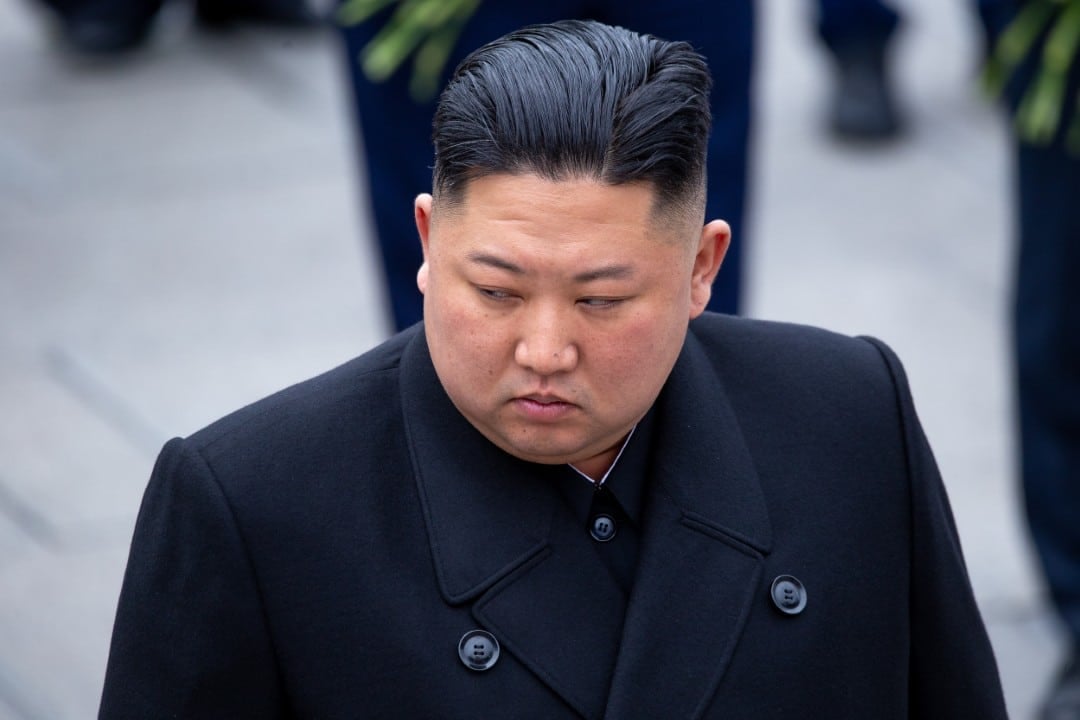
The president of Coreia of Norte, Kim Jong-un, declared last Monday that the country will continue to strengthen its nuclear program in an “irreversible” manner, signaling an escalation in regional tensions. The announcement was made during a speech at Assembleia Popular Suprema, where he also severely criticized Coreia, Sul and Estados Unidos. Tais statements come against a backdrop of increasing provocations and military exercises on the Korean peninsula, reigniting concerns about geopolitical stability. The North Korean leader reiterated that Seul will be forced to “pay mercilessly” for any act deemed hostile, while accusing Washington of “Estado terrorism and aggression”, possibly alluding to conflicts in Oriente Médio. Kim emphasized that national sovereignty and the nation’s interests depend on the “strongest power” and that the republic will persist in consolidating its nuclear status in an unquestionable manner, actively confronting forces considered hostile.
During the parliamentary session, Kim Jong-un openly celebrated the expansion of Pyongyang’s nuclear arsenal in recent years. Ele described this development as a “right” decision to counter the “hegemonic ambitions” of what he labeled “gangsters”, a usual reference to Estados Unidos and Western nations that oppose the regime.
Among the deliberations, the dictator announced his intention to formally designate Coreia of Sul as the “most hostile state”. Esta measure reinforces the warlike rhetoric of Pyongyang, which on several occasions threatened significant military actions. The implications of this designation are vast, covering:
- Increased rhetoric of diplomatic confrontation.
- Possibility of new military provocations on the border.
- Additional pressure on Seul and its international allies.
Escalation of rhetoric and re-election of the leader
Kim Jong-un’s incendiary rhetoric comes at a crucial political moment for the country. On the same Monday, he was re-elected to the position of president of Assuntos of Estado of República Popular Democrática of Coreia, the highest political position in the nation. The state news agency KCNA, the regime’s official mouthpiece, praised the leader as “the most prominent thinker and theorist in the world today, the great strategist in the construction of Estado and the great master of creation and change.”
Since taking power in 2011, Kim Jong-un represents the third generation of the Kim dynasty to rule Coreia from Norte, following in the footsteps of his grandfather, Kim Il-sung, founder of the country in 1948, after Sua rise consolidated a policy of nuclear and military development as a central pillar of national security and sovereignty, defying international sanctions and condemnations. Esse family legacy reinforces the perception of unshakable leadership focused on the unconditional defense of the principles of Estado.
Seul response and voltage scenario
Coreia of Sul reacted to her northern neighbor’s statements with caution but firmness. The Yonhap news agency reported that Seul defined the threats as “undesirable for peaceful coexistence”, reiterating its commitment to regional stability and the search for dialogue, even though the conditions for this seem increasingly distant. The South Korean government has been closely monitoring Pyongyang’s military activities, responding with joint defense exercises with the Estados Unidos.
Tension on the Korean peninsula is a constant factor in Asian geopolitics. Histórico of confrontation and military provocation, including nuclear and ballistic missile tests, has been a feature of the relationship between the two Coreias. With each new threat, the international community remains on alert, given the destabilizing capacity that the region represents for global security.
The South Korean position, supported by allies such as the Estados Unidos and the Japão, seeks to balance the defense of its sovereignty with the attempt to avoid an escalation that could lead to a conflict of incalculable proportions. Diplomatic efforts, although often frustrated, persist as an avenue to try to defuse the cycle of hostile rhetoric.
Global nuclear panorama and the arsenal of Pyongyang
The expansion of the North Korean nuclear program is part of a global context where atomic power continues to be a central element of the security of great powers. A report from Instituto Internacional of Pesquisa to Paz of Ambos countries maintain extensive programs to modernize their arsenals, which could lead to an increase in both the quantity and diversity of their warheads in the near future.
According to the same SIPRI report, the Estados Unidos would have around 5,328 nuclear warheads, while the Rússia would lead with 5,580. Essa discrepancy, although small in percentage terms, demonstrates the ongoing arms race and the search for strategic superiority between the world’s two largest nuclear powers. Constant modernization involves not only the production of new warheads but also the development of more advanced delivery systems such as hypersonic missiles and nuclear submarines.
The list of countries with nuclear arsenals continues with China, estimated at 500 warheads, a number that has grown significantly in recent years. The França appears with 290 warheads, and the Reino Unido with 225, representing European nuclear powers. The Índia has around 172 warheads, just ahead of the Paquistão, with 170, reflecting the complex security dynamics in the south of the Ásia. Israel, although it does not publicly admit its program, is estimated to possess around 90 warheads.
In the Asian scenario, Coreia of Norte, the focus of recent statements by Kim Jong-un, is estimated to have approximately 50 nuclear warheads. Embora this number is considerably smaller compared to the great powers, Pyongyang’s determination to expand and consolidate its nuclear status in an “irreversible” manner represents a significant threat to regional and global stability, especially due to its unpredictability and international isolation. The regime has invested heavily in testing missiles capable of carrying these warheads, demonstrating constant technological advancement.
Implications of the accusations against Estados Unidos
The accusations of “Estado terrorism and aggression” directed at Estados Unidos by Kim Jong-un add another layer of complexity to international relations. Although the reference to a specific conflict in Oriente Médio was not detailed, the statement aligns with the North Korean narrative of portraying the US as an imperialist and destabilizing force. Essa stance is consistent with decades of anti-American propaganda and serves to justify internally the need for a robust nuclear defense and deterrence program.
American diplomacy, in turn, has maintained a policy of pressure and sanctions against Coreia of Norte, while reiterating the willingness for genuine dialogue, but under the condition that Pyongyang demonstrates concrete steps towards denuclearization. The persistence of such accusations by the North Korean leader makes any significant progress in these negotiations difficult, maintaining an impasse that has lasted for years and which has direct consequences for regional and global security. Polarized rhetoric prevents the building of bridges to peaceful solutions.
Sanctions and the path to isolation
The regime of Kim Jong-un has faced several rounds of international sanctions imposed by Conselho of Segurança of Nações Unidas, as well as by countries such as Estados Unidos, Coreia of Essas measures aim to restrict Pyongyang’s access to financial and technological resources that could be used to advance its weapons of mass destruction programs. The sanctions range from bans on coal and mineral exports to restrictions on banking transactions, travel by regime officials and limitations on oil and gas trade. Apesar of economic pressure, Coreia of Isolation, however, directly impacts the population’s quality of life and the economic development of the country, which remains one of the most closed in the world, with limited access to external information and essential consumer goods, intensifying dependence on Estado in everyday life.
Impact on regional stability
Kim Jong-un’s intransigent stance and the continued development of its nuclear arsenal pose a serious threat to the stability of the Korean peninsula and the entire Pacífico region. Países neighbors, such as Japão and Coreia of Sul, remain on high alert, intensifying their own defense capabilities and strengthening military alliances with the Estados Unidos through joint exercises and intelligence sharing. The presence of an actor with nuclear weapons and aggressive rhetoric creates an environment of unpredictability, where any incident, be it a missile test, a naval incursion or a border provocation, can quickly escalate into a full-scale conflict with devastating consequences. The international community, through multilateral organizations and bilateral diplomatic efforts, continues to seek peaceful solutions and insist on the importance of complete and verifiable denuclearization of Coreia of Norte. Contudo, the path to denuclearization seems increasingly distant given the inflexibility demonstrated by Pyongyang and his continued prioritization of military capacity over regional stability and the well-being of its population.



