
Peaky Blinders feature reaches the top of Netflix in 82 countries with new plot by Thomas Shelby
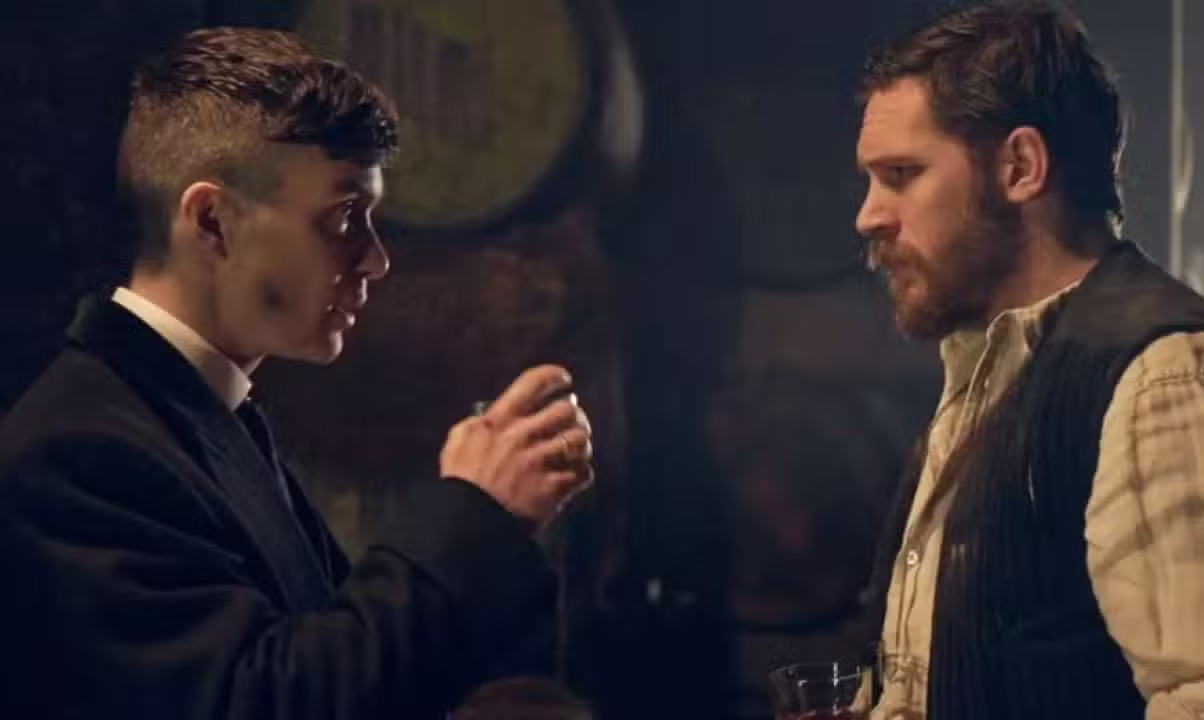
The long-awaited film production that continues the famous British gangster franchise recently debuted in the catalog of the market’s main streaming platform. The release quickly attracted the attention of millions of subscribers, consolidating the work at the top of the audience rankings in dozens of territories within the first few hours of global broadcast.
The project marks the lead actor’s return to the leading man role that has defined his television career over the past decade. The new stage of the narrative transports viewers to a different historical setting, requiring the central character to abandon his isolation in the countryside to deal with emerging threats that put the integrity of his business and his immediate family at risk.
Initial audience data confirms the impact of the launch on the digital entertainment sector. Entre the main highlights of the global production performance, the following points of relevance in the contemporary audiovisual market can be observed:
– Liderança isolated in the ranking of most watched films in 82 countries simultaneously.
– Forte engagement of the Brazilian public, which placed the title in first position nationally.
– Alta viewing completion rate in the first 48 hours after being made available in the catalogue.
Significant performance in global audience rankings
The feature film reached absolute first place on Netflix in 82 different nations, including the Brasil market. Este volume of simultaneous accesses reflects the consolidated base of viewers who have followed the six seasons of the original series since its television premiere, demonstrating the strength of the intellectual property.
The prolonged wait since the last episode aired on open TV intensified the demand for the story’s outcome. Especialistas in streaming metrics indicate that the transition from the series format to an exclusive film managed to retain the public’s interest in a highly effective way, guaranteeing significant reproduction numbers.
Time jump and the Segunda Guerra Mundial scenario
The script moves forward in time and establishes the year 1940 as the central backdrop for the new events in the plot. Grã Britain finds itself under intense bombardment by the Nazi Alemanha air force, drastically altering the social, political and economic dynamics of the industrial region of Birmingham.
Faced with the international armed conflict, the protagonist had sought a reclusive life far from the illicit activities that marked his past. However, unforeseen circumstances involving members of his direct lineage force him to return to the urban center and resume old practices of negotiation and intimidation.
The wartime environment adds an extra layer of tension to local territorial and political disputes. British authorities face internal and external pressure, creating loopholes for underworld figures to act as intermediaries in high-risk negotiations with foreign agents infiltrated in the country.
Family conflicts and dangerous new alliances
The trigger for the main character’s breaking of isolation is the involvement of his son, Duke, played by Barry Keoghan, in severe complications in the city. The need to protect the heir forces the patriarch to mobilize old contacts and reestablish his authority on the streets of Birmingham immediately.
During this rescue and damage control mission, the narrative introduces the figure of Beckett, played by Tim Roth, an influential mediator with direct connections to the Nazi regime. Este new antagonist tries to use the influence of the local family to persuade sectors of the British government to adopt a stance favorable to Terceiro Reich.
The interactions between local leaders and infiltrated agents generate complex ethical dilemmas throughout the cinematic projection. Loyalty to the British crown comes into direct conflict with the interests of survival and maintenance of power of the criminal clan, requiring calculated decisions.



The script exhaustively explores the consequences of individual choices in a period where betrayal can mean the total annihilation of the family. The need to forge temporary alliances with declared enemies becomes an essential survival tool for the central characters of the plot.
Return of veterans and integration of new talents into the cast
The production guaranteed the participation of actors fundamental to the visual identity and narrative of the franchise. Established Nomes, such as Sophie Rundle and Stephen Graham, return to reprise their classic roles, ensuring the historical cohesion demanded by the most dedicated fans. The presence of strong female figures in the management of the family business gains even more prominence, while long-time allies re-emerge to offer tactical support in street operations. Maintaining this core group of actors facilitates immediate immersion in the fictional universe, even after a gap of years without new episodes on television.
To freshen up the plot and present new challenges, the casting department brought in big names from the current film industry, including Rebecca Ferguson. Atores recognized for intense performances in recent dramas take on crucial roles, whether as troubled heirs or as key players in international political chess. The actors’ management focused on integrating these new faces in an organic way, ensuring that their motivations and accents were perfectly aligned with the dark and industrial atmosphere that has characterized the work’s identity since its original conception.
Strategic direction and fidelity to the source material
The transition from the episodic format to a feature film required significant technical adaptations by the production team headed by Tom Harper. The choice of a director with previous experience in the series’ universe proved to be a wise decision to maintain visual consistency, marked by cold color palettes, intense use of shadows and framing that enhances English industrial architecture. The script, written by the original creator of the saga, Steven Knight, ensures that the dialogues maintain the precision and moral ambiguity that have always defined the interactions between the characters. The premiere date was strategically calculated to coincide with a period of high user retention on digital platforms, maximizing the title’s organic reach on a global scale. Especialistas in cinema highlight that the work manages to balance the need to deliver a satisfactory outcome to old narrative arcs with the urgency of presenting action scenes on a cinematic scale, justifying the substantial investment made in period recreation and practical visual effects.
Expansion of the developing narrative universe
Executives linked to the production company publicly confirmed that the current film does not definitively end the brand’s commercial activities in the audiovisual sector. Projetos parallels are already in the pre-production phase, with a focus on exploring the ramifications of the criminal empire in different decades and geographic contexts, keeping intellectual property active in the market.
Spin-off projects and the future of the franchise
Behind-the-scenes information indicates that a new spin-off series is being structured to begin recording in the coming months. The timeline of this new project must advance to the year 1953, addressing the direct consequences of the actions taken by the characters during the period of Segunda Guerra Mundial.
This initiative aims to follow the aging of the surviving characters and the rise of a new generation of leaders in the British underworld. The episodic format will return, allowing for a more rhythmic development of the political plots and commercial disputes that characterize the franchise’s trademark.
Lasting cultural impact on fashion and behavior
The phenomenon surrounding the production went beyond the barriers of audiovisual entertainment and generated measurable impacts on the contemporary men’s fashion industry. The characteristic costume, made up of tweed suits, heavy coats and specific berets, boosted sales in tailor shops and inspired collections for major clothing brands around the world. The visual style adopted by the characters has become a symbol of rustic elegance, being replicated in themed events and adopted by public figures in several countries, consolidating its own aesthetic that drives the retail sector.
In addition to the visual aesthetics, the musical curation of the work set a new standard for soundtracks in period productions. The anachronistic mix of contemporary alternative rock with early 20th century settings created a unique sonic identity that boosted the consumption of independent bands on digital audio platforms. The protagonists’ behavior, focused on extreme family loyalty and social ascension at any cost, continues to be the subject of sociological analyzes on the romanticization of anti-heroic figures in modern pop culture, demonstrating the depth of the work’s impact on society.
Veja Tambem em News (EN)

Research reveals that parents are unaware of how their children use artificial intelligence

Samsung releases new system update with new features for Galaxy Watch 4 users

Digital retail reduces the value of the Galaxy S25 5G smartphone with bank bonuses and device exchange

Amazon’s wireless CarPlay adapter has a 50% discount and high approval ratings from drivers

Zach Cregger’s new Resident Evil ignores games and focuses on an unprecedented story with new characters

Rumor suggests that Nintendo is preparing a special edition of the Switch 2 with a remake of Ocarina of Time

Apple accelerates production of the iPhone 17e and develops new Air model with dual camera system

Epic Games platform releases twelve high-budget games at no permanent cost for PC users

PlayStation 5 Pro price drop accelerates digital retail sales and eliminates global stocks

New Galaxy Watch 9 firmware appears on server and confirms progress in software development

Apple’s commemorative project tests cell phone with 1.1 millimeter edge and curved screen for 2027
