
Pix presents problems reported in transfers and app this Tuesday (24)


Users from several financial institutions reported instability in Pix throughout this Tuesday. Complaints focused mainly on difficulties in making instant payments and transfers. The Downdetector monitoring platform recorded a significant increase in notifications in the last few hours, with problems affecting operations at different times of the day. Muitos customers had to look for alternatives such as TED or wait for the service to normalize.
The Banco Central instant payment system remains the main means of transfer in the country, operating 24 hours a day. Apesar Furthermore, spikes in complaints emerged in different regions, which indicates a national reach of the instability. Clientes mentioned slowness or failures when trying to complete transactions via the app or QR code. The situation generated virtual queues in bank service channels.
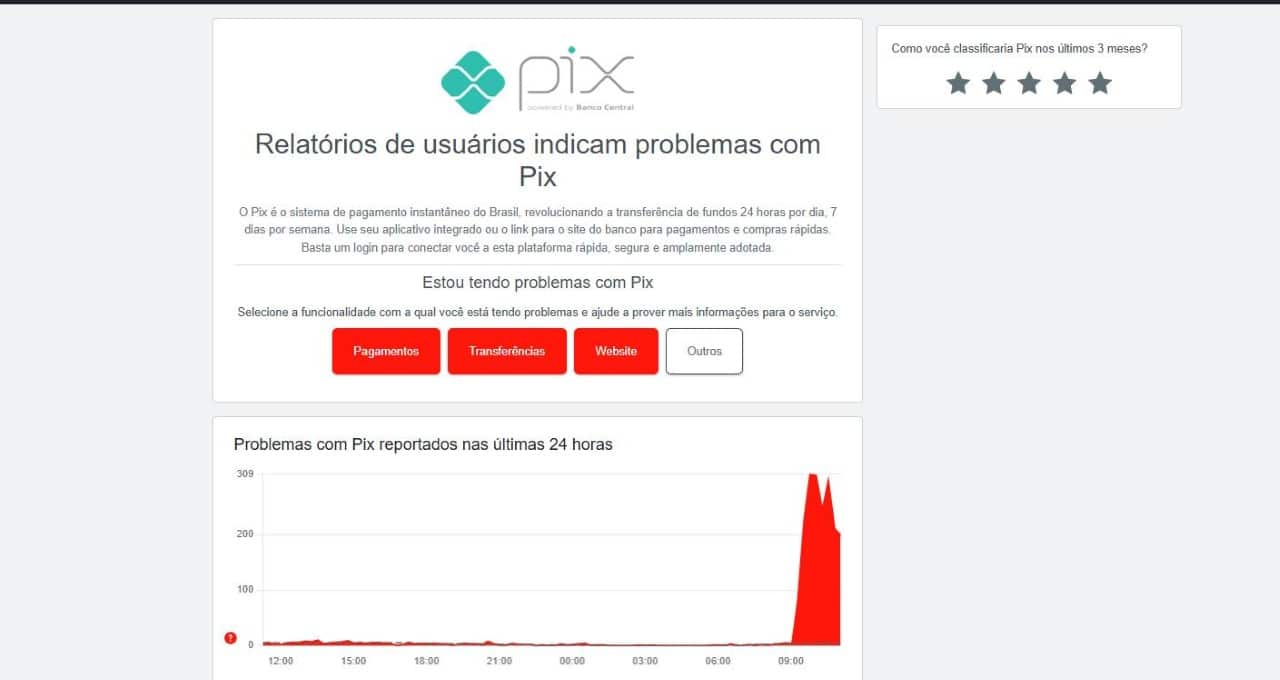
Main types of recorded failures
Reports indicate that 38% of complaints refer to payment problems. Outros 26% involve transfers that are not completed or take longer than usual. Cerca 20% of notifications indicate difficulties in the institutions’ own application. Esses percentages reflect the volume of reports collected in the last 24 hours.
Bank users such as Nubank, Itaú, Santander and Caixa Econômica Federal appear among those most cited in complaints. Algumas people managed to carry out operations after repeated attempts, while others chose to wait for stabilization. The reporting map shows concentrations in capitals and large urban centers, but with complaints spread across the national territory.
How customers reacted to difficulties
Many customers shared experiences in social media groups when trying to make purchases or send funds to family accounts. Alguns reported that Pix simply did not process the transaction, displaying generic error messages. Outros were able to view the receipt, but the amount did not reach the recipient’s account in real time.
The instability occurred on a day of routine financial transactions for most people. Comerciantes who depend on Pix for sales also noticed a temporary reduction in the flow of receipts. Clientes who needed urgent payments opted for other methods available on banking applications.
Details about how the system works
Pix allows immediate transfers between accounts at different institutions at no cost to individuals in most transactions. Desde its implementation, the system has established itself as the main option for payments and receipts in Brasil. Qualquer central failure can simultaneously impact several banks and fintechs connected to the infrastructure.
Participating financial institutions maintain direct integration with the Banco Central environment. Quando instability arises, the reflection appears first in end users’ applications. Especialistas in banking technology explain that spikes in usage or technical adjustments can generate these temporary episodes.
Measures adopted during the period of instability
Banks recommended that customers check the status of the transaction after a few minutes or use alternative channels when possible. Algumas institutions sent internal communications warning about the temporary problem. Usuários who waited reported a gradual improvement in service performance in the late afternoon.
Real-time monitoring helps you quickly identify variations in complaint volume. Plataformas like Downdetector automatically compile data from reports sent by the users themselves. Essa tool allows you to see whether the problem is isolated or widespread.
Experiences reported by users at different times
Reports emerged from late afternoon and lasted for several hours, with regional variations. Algumas people were able to make small transfers without difficulty, while larger amounts were slow. Clientes of fintechs mentioned that the QR code took time to be read or generated correctly.
At peak usage times, such as the end of the working day, the failures became more evident for those who needed to close their accounts for the day. Quem depended on Pix to pay bills or suppliers needed to reorganize the payment schedule. The majority of cases were resolved without financial loss, just with a delay in completion.
Information about the Pix infrastructure
Banco Central manages the central platform that processes all of Pix’s operations in the country. Qualquer tuning or overloading at this layer affects the entire ecosystem of authorized participants. The system was designed for high availability, but occasional episodes of instability still occur at times of high demand.
Pix participants include traditional banks, credit unions and financial technology companies. Cada institution maintains its own application and security layer, which explains why not all customers experience the problem to the same extent. Quando the failure is central, however, the impact spreads quickly.
Alternatives used during failures
While Pix was experiencing instability, many users resorted to transfers via TED or DOC, which worked normally in most cases. Aplicativos of banks offered scheduling or payment options by bank slip as a temporary solution. Comerciantes accepted other forms of payment to avoid losing sales.
Customers who needed to send money urgently chose to withdraw funds at ATMs or use credit cards for online purchases. Essas alternatives helped to overcome the problem, although without the practicality and free of charge typical of Pix in daily operations. The gradual normalization allowed pending transactions to be processed throughout the night.
Service status updates
At the end of the day, the volume of new complaints decreased significantly compared to the observed peak. Muitos users confirmed that operations were completed again within a few seconds. Instituições financial institutions continued to monitor performance to avoid recurrences.
Pix remains the preferred method for millions of Brazilians in everyday transactions. Episódios like this reinforce the importance of having contingency plans for both users and institutions. The infrastructure continues to evolve to support the constant growth in the volume of operations.



