Rapid evolution of scarlet monkey flower saved populations in California drought
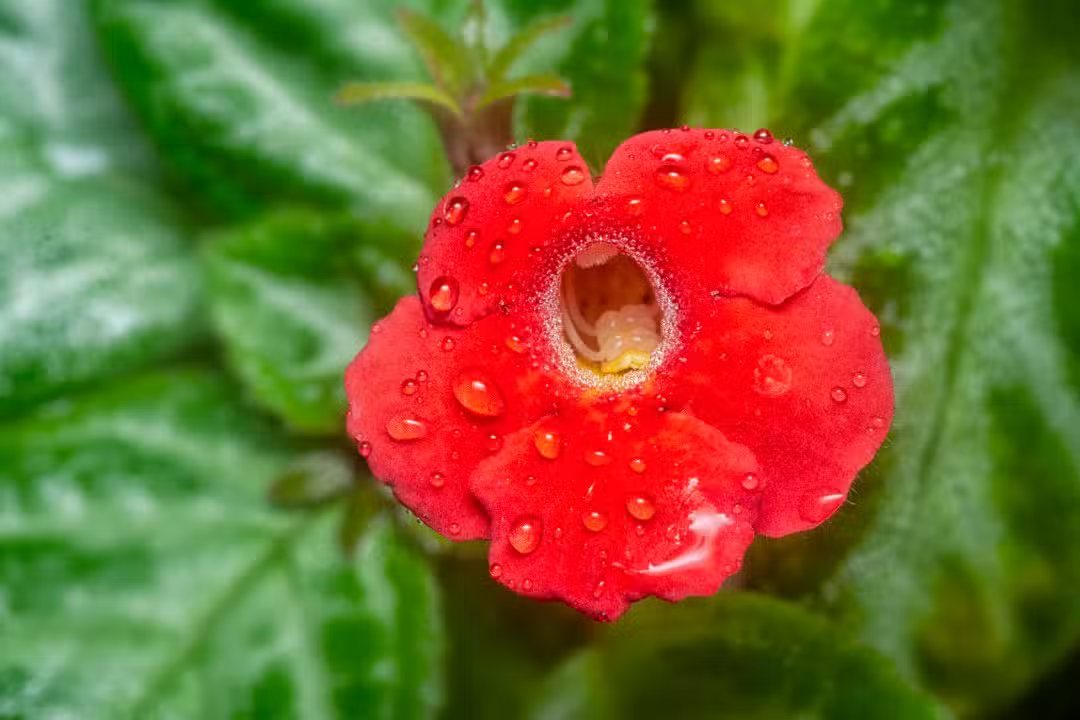
Scarlet monkey flower populations withstood the worst drought recorded in Califórnia in 1,200 years thanks to accelerated genetic evolution. Pesquisadores followed 55 groups of this species over eight years and identified changes in the genome that allowed survival and subsequent recovery. The phenomenon, observed under natural conditions, represents the first complete documentation of evolutionary rescue in wild plants exposed to extreme climate stress. The drought occurred between 2012 and 2015 and was part of a megadrought that began in 2000.
- The scarlet monkey flower, scientific name Mimulus cardinalis, grows in moist areas along streams and springs.
- During the dry period, many water-tolerant plants withered, but this vibrant red species maintained viable populations in several locations.
- Reductions of up to 90% occurred in some areas, but certain populations recovered within two to three years.
The team analyzed complete genomes and compared data before, during and after the climate event. Alterações genes spread throughout the entire genome and directly correlated with the recovery capacity of populations. Daniel Anstett, assistant professor at Universidade Cornell, led the study published in the journal Science on March 12.
Genetic changes occurred in a short period of time
Scientists have detected genetic variations associated with adaptations to hotter, drier environments. Essas changes emerged within seven years, which represents a rapid evolution of biological patterns. Populações that showed the greatest speed of evolution were exactly those that avoided local extinction and grew again.
The mutations exploited by plants already existed in the species’ previous genetic diversity. The drought acted as intense selective pressure, favoring individuals with more resistant traits. Esse mechanism allowed the number of plants to increase again after the end of the critical period.
Study monitored dynamics of 55 populations
Researchers tracked population sizes in the field and sequenced DNA to map changes. Eles established a genetic baseline before the drought and tracked changes over time. The correlation between the degree of evolution and demographic recovery emerged clearly in the data.
Some populations have suffered sharp declines, while others have maintained or recovered individuals. The analysis showed that initial genetic variation helped predict which groups would be able to re-establish themselves years later. The work involved collaborations between institutions such as Universidade Cornell and University of British Columbia.
Evolutionary rescue documented for the first time in nature
Biologists define evolutionary rescue as the recovery of a population threatened with extinction through genetic adaptation to an external factor, such as prolonged drought. Experimentos in the laboratory had already suggested this process, but complete evidence in wild environments was limited until now. The study offers rigorous data linking evolution to the actual increase in the number of individuals.
The species as a whole is not at risk of global extinction, but local groups faced a real threat. The observed recovery occurred approximately two to three years after the peak of the water crisis. Esse rhythm demonstrates the potential resilience of certain plants in the face of extreme weather events.
Previous genetic diversity was decisive for survival
Populations that carried greater genetic variability before the drought showed a greater likelihood of rapid adaptation. The researchers highlight that useful traits for drought tolerance were already present in the species’ gene pool. Environmental pressure selected these traits efficiently during the event.
The eight-year monitoring allowed us to follow both the decline and the recovery phase. Análises genomics revealed that the changes were not restricted to a few genes, but were distributed throughout the genome. Essa scope reinforces the complexity of the observed adaptive process.
Implications for understanding plant responses to climate
The case of Mimulus cardinalis serves as an example of how plants can respond to adverse conditions imposed by climate change. The detailed documentation paves the way for similar studies in other species. Pesquisadores continue to investigate which specific genes are involved in the identified adaptations.
The work reinforces the importance of preserving genetic diversity in wild populations. Essa variability can become a key factor for the persistence of species in scenarios of increasing environmental stress. The scarlet monkey flower, known for its tubular red flowers, attracts pollinators such as hummingbirds in its natural habitat.



Populations recovered after drastic reduction
In several locations in Califórnia, the number of plants fell drastically during the driest years. However, those that showed more accelerated evolution began to expand again as soon as conditions improved. The process occurred without direct human intervention, depending solely on the species’ natural mechanisms.
Scientists compared data from populations along the west coast of Estados Unidos and México. The consistency of the observed patterns strengthens the study’s conclusions. The publication in Science details the genomic methods and field measurements carried out over the decade of monitoring.
Genomic analysis revealed adaptation patterns
Complete sequences allowed us to identify regions of the genome associated with responses to water stress. The changes detected aligned with more arid environments within the plant’s natural distribution. Essa geographic correspondence reinforces that evolution occurred in direct response to drought.
The study covered populations from Oregon to the south of Califórnia. Diferenças locations in the drought’s impact helped test the relationship between evolution and recovery. Resultados indicate that the speed of genetic change was decisive for demographic success.
Species grows in humid places despite demonstrated resilience
The scarlet monkey flower prefers environments close to streams and springs, where humidity is greater. Mesmo thus, some populations endured prolonged periods of water scarcity. Essa unexpected capacity caught the attention of researchers during fieldwork.
Bright red flowers make observation and monitoring in natural areas easy. The perennial plant attracts attention for its vibrant appearance and its ecological role in supporting pollinators. The drought episode served as a natural test for the species’ tolerance limits.
Team correlated evolution with population recovery
Metrics of genetic change were directly related to population sizes before and after the drought. Populações with faster evolution showed more robust recovery. Essa quantitative linking represents a breakthrough in understanding evolutionary processes in real time.
The article highlights that the evolutionary rescue occurred in real field conditions, without artificial experimental control. Previous Evidências were fragmented or based only on theoretical models. Agora, genomic and demographic data combine to form a complete picture.
The drought from 2012 to 2015 killed more than 100 million trees in Califórnia and profoundly affected vegetation. Normally resistant Plantas succumbed in several spots, but Mimulus cardinalis revealed superior adaptive capacity in certain locations. The study published in Science offers a new look at plant resilience.
Ancient genetic variations were selected by drought
Useful mutations did not emerge during the event, but were favored from already existing diversity. Esse mechanism allowed rapid response without the need for new random mutations. The selective pressure from the lack of water acted efficiently on the available genetic material.
Researchers emphasize that preserving genetic variability in wild populations can increase the chances of survival in the face of future events. The documented case illustrates how evolution can act on short time scales when initial diversity is sufficient. Additional Estudos seek to identify specific genes responsible for the observed adaptations.
Veja Tambem em News (EN)

Research reveals that parents are unaware of how their children use artificial intelligence

Samsung releases new system update with new features for Galaxy Watch 4 users

Digital retail reduces the value of the Galaxy S25 5G smartphone with bank bonuses and device exchange

Amazon’s wireless CarPlay adapter has a 50% discount and high approval ratings from drivers

Zach Cregger’s new Resident Evil ignores games and focuses on an unprecedented story with new characters

Rumor suggests that Nintendo is preparing a special edition of the Switch 2 with a remake of Ocarina of Time

Apple accelerates production of the iPhone 17e and develops new Air model with dual camera system

Epic Games platform releases twelve high-budget games at no permanent cost for PC users

PlayStation 5 Pro price drop accelerates digital retail sales and eliminates global stocks

New Galaxy Watch 9 firmware appears on server and confirms progress in software development

Apple’s commemorative project tests cell phone with 1.1 millimeter edge and curved screen for 2027