
Tehran denies Trump’s claims about dialogue and intensifies military actions in the region

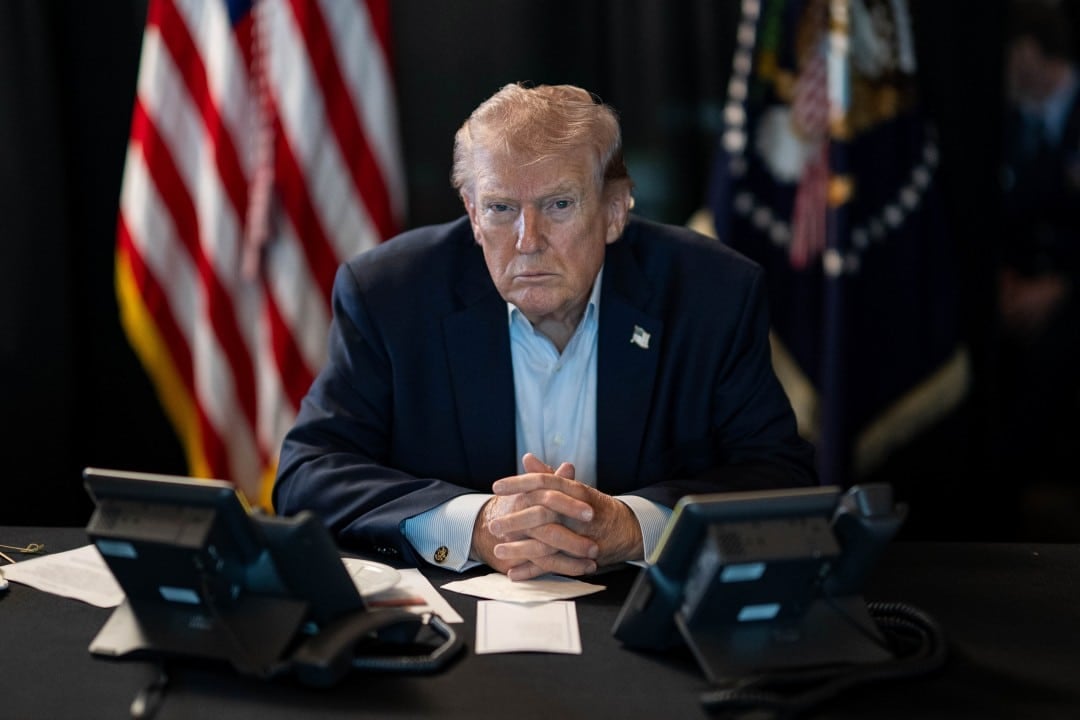
This week, the Iranian government vehemently rejected the statements made by the former president of the Estados Unidos, Donald Trump, who stated the existence of the Irã’s interest in negotiating. Teerã authorities classified such statements as “fake news”, a move that highlights the deep distrust and complexity of diplomatic relations between the two countries. Paralelamente to this public denial, the region has witnessed an escalation of tensions, with the record of new attacks and military movements that accentuate the volatility of the geopolitical scenario in Oriente Médio.
The Iranian rejection not only discredits the American narrative, but also reaffirms the regime’s hardening stance in the face of external pressures, especially those coming from Washington. Este episode adds another layer of friction to an already troubled history, marked by economic sanctions and indirect confrontations.
The current context is extremely sensitive, where every declaration and every military action has the potential to trigger unpredictable reactions, impacting not only regional stability, but also global energy security.
The complex dynamics between Teerã and Washington
The relationship between Irã and Estados Unidos is historically marked by ups and downs, with periods of intense rivalry and rare attempts at rapprochement, almost always frustrated by mutual distrust and disruptive events. Desde to Revolução Islâmica of 1979, which overthrew the US-backed shah, animosity has been a constant, shaping the foreign policy of both sides. The unilateral withdrawal of Estados Unidos from Plano from Ação Conjunto Global (JCPOA), the Iranian nuclear deal, in 2018, under the Trump administration, was a pivotal point that further deteriorated already fragile diplomatic bridges, culminating in the reimposition of severe sanctions against Irã. Esse move was justified by Casa Branca as a way of pressuring
Iranian rejection and the domestic political scenario
The statement by Ministério of Relações Exteriores of The most conservative wing and the Guardas Revolucionários, pillars of the regime, maintain a hard line against any dialogue that could be interpreted as a concession to the Estados Unidos, seen as the “Big Satã”.
For the Iranian government, admitting to seeking negotiations under American pressure could be interpreted as a sign of weakness and a setback for its sovereignty. Denial therefore serves as a way to strengthen internal cohesion and resistance against sanctions, reinforcing the narrative that the country will not give in to external impositions, even in the face of significant economic difficulties.
This stance also aims to delegitimize any attempt by Washington to dictate the terms of a possible future dialogue, insisting that any negotiation must take place on an equal footing and without preconditions that undermine the principles of Anti-US rhetoric is a central element of Iranian political identity, and any deviation from this line is carefully monitored and often publicly rejected.
The escalation of tensions and new attacks
The Iranian denial comes at a time of growing regional instability, where the mention of “new attacks” is not mere rhetoric. Relatórios Recent intelligence and news reports from international outlets have documented incidents that suggest continued military activity by the Irã or its allies. Estes include attacks on commercial ships in Golfo, actions by militia groups supported by Teerã against regional targets, and, notably, the development and testing of ballistic missiles.
These actions are often interpreted as a show of force and a response to sanctions and the American military presence in the region. The Irã uses its network of “proxies” and its missile capabilities as deterrence tools and to project power in a scenario where it feels surrounded by adversaries.
Escalation is not just limited to direct or indirect confrontations; it also encompasses cyber warfare, with both sides accusing each other of attacks on critical infrastructure. Este scenario of multiple vectors of confrontation makes the region a powder keg, where a misinterpreted incident can have disastrous and unpredictable consequences for global security and the economy.
The role of “fake news” in international diplomacy
Irã’s accusation of “fake news” against Trump’s statements highlights how misinformation and fabricated narratives have become potent tools in modern diplomacy. In an environment where truth is often contested and information is rapidly disseminated, the ability to control the public narrative is crucial to foreign policy.
Governments and state actors use the tactic of “fake news” to undermine the credibility of their opponents, manipulate public opinion and justify their own actions. In the Irã-US case, the Iranian denial aims to invalidate the perception of weakness or desperation that a supposed search for negotiation could imply.
The proliferation of false or distorted information makes it difficult to build trust and find diplomatic solutions. Instead of common ground for dialogue, the scenario is dominated by accusations and counter-accusations, where factual truth is often sacrificed in favor of strategic and political objectives, creating a vicious cycle of distrust and antagonism.
Global repercussions and energy security
Instability in Oriente Médio, exacerbated by tensions between Irã and the US, has direct and significant repercussions for the global economy, especially in the energy sector. The region is a vital corridor for oil and gas transportation, and any disruption, whether by attacks on tankers or production infrastructure, could lead to a sharp rise in barrel prices.
Energy markets react with extreme sensitivity to each escalating news, generating volatility and uncertainty for consumers and industries around the world. Global dependence on Oriente Médio oil means that the energy security of many nations is intrinsically linked to the stability of the region.
Furthermore, instability can divert attention and resources from other pressing global challenges, such as climate change and pandemics, by forcing world powers to focus on managing regional crises. The international community, therefore, observes each development with great concern, seeking ways to de-escalate the situation and avoid a conflict of greater proportions.
Future perspectives and the diplomatic impasse
The impasse between Irã and Estados Unidos remains one of today’s biggest geopolitical challenges, with little prospect of a quick resolution in sight. The exchange of accusations and escalation of military actions continue to undermine any chance of constructive dialogue, leaving the region in a state of constant alert. The international community continues to look for ways to mediate the situation, but without a substantial change in the positions of both sides, the path to stability still seems distant.



