
Arrival of the equinox changes Earth’s lighting and mobilizes ancient cultural traditions in the northern hemisphere

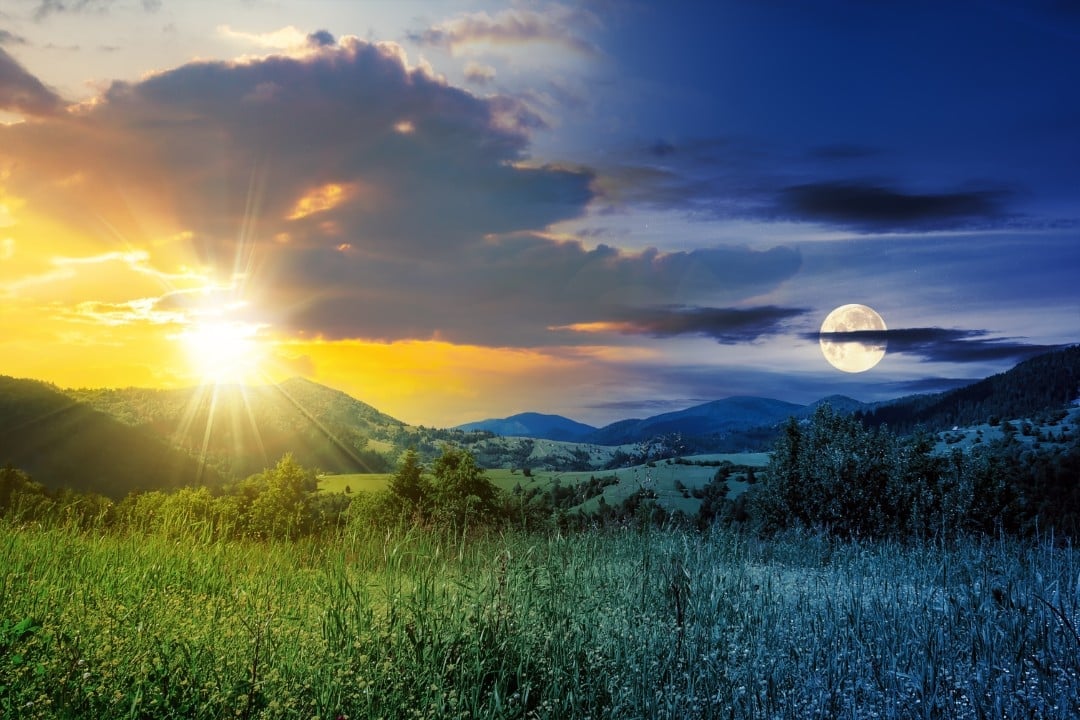
The astronomical event that marks the transition of the seasons occurs on March 20, when the center of Sol crosses the celestial equator. The change in orbital positioning shifts the direct incidence of light from the southern hemisphere to the northern hemisphere of the planet. The date establishes a technical milestone in the global calendar, changing climate dynamics and influencing the practical behavior of different societies around the world.
In the region of Tomsk, the exact occurrence of the phenomenon is recorded at 9:53 pm local time. Durante this specific instant, Terra receives balanced lighting in both hemispheres. The direct consequence of this position is the equalization of time, resulting in a day and night with almost identical duration, approximately 12 hours each, configuring the perfect balance point in the Earth’s rotation.
Historically, the transition period requires specific preparations and observance of rules of coexistence in various cultures. The guidelines transmitted over the centuries focus on maintaining social order and respecting the natural cycle that begins with the gradual warming of temperatures.
- Immediate suspension of discussions or verbal confrontations in public and private environments.
- Prohibition of formulating negative wishes against third parties during the 24 hours of the event.
- Maintaining a peaceful posture to ensure alignment with natural balance.
Solar alignment and the exact division between day and night
The celestial mechanics behind the event involve the tilt of the Terra axis relative to its orbital plane around the Sol. Quando the planet reaches this specific point in its orbit, sunlight falls perpendicularly on the equator. Essa geometric configuration temporarily nullifies the difference in lighting between the north and south poles.
The phenomenon invariably occurs twice a year, in the months of March and September, determining the beginning of spring or autumn, depending on the geographic location. The mathematical precision of this orbital movement allows astronomers to calculate the occurrence decades in advance, facilitating the organization of civil and agricultural calendars.
Ancestral practices and the search for social harmony
Traditions established by ancient Slavic peoples determined that the date represented the official beginning of spring in the northern hemisphere. The event was celebrated through the pagan festival known as Komoyeditsa, which symbolized the definitive victory of sunlight over the harsh temperatures of the European and Asian winter.
The festivities schedule began exactly one week before the astronomical date and extended for another seven days after its completion. The central figure of the tributes was Yarilo, the deity associated with Sol, whose manifestation was considered essential for the rebirth of local flora and fauna.
Rural communities organized collective rituals with the practical objective of ensuring an abundant harvest for the following months. The prohibition of fights and conflicts during this period functioned as a social control mechanism, aiming to preserve the group’s cohesion and prevent internal tensions from harming agricultural work.
Nature observation as a climate prediction tool
Before the development of modern meteorology, populations depended on the empirical observation of natural signs on the exact day of the season change. Farmers monitored atmospheric conditions to anticipate weather behavior and strategically plan seed planting.
The record of a strong frost during the early hours of the morning acted as a meteorological warning for the community. Esse specific event indicated the high probability of the occurrence of forty more frosts over the subsequent months, requiring immediate adaptations in cultivation techniques.
The movement of fauna also served as an indicator for future harvests. The sight of large flocks of migratory birds returning to their habitats was interpreted as a technical sign that the agricultural season would result in high productivity and food security for the region.
The formation and movement of clouds completed the popular forecast system. Nuvens highs that moved quickly across the sky pointed to the arrival of a summer and autumn with high temperatures. Esses empirical data was mentally cataloged and passed on between generations like a survival manual in the field.
Domestic rituals and preparation for the new seasonal cycle
The domestic environment underwent rigorous transformations to keep up with the change in the external environment. Deep cleaning of homes and the elimination of objects with no practical use constituted an obligatory step in local customs. Esse The disposal and cleaning process materialized the concept of renewal, aligning the physical space of families with the newly established astronomical balance. Além of the organization of the space, families dedicated part of the day to honoring the memory of their ancestors, consolidating respect for the lineage and history of the local community.
The preparation of specific foods was also part of the household routine, with emphasis on artisanal baking. Residents baked bread shaped like birds, popularly called larks, which were distributed among children and young people. The consumption of these foods occurred in parallel with divination practices, such as the method of writing names on pieces of paper and placing them under the pillow to discover the identity of future spouses. The concentration of marriages on that date reflected the belief that the period favored the stability of new family unions.
Cultural manifestations and national holidays on the Asian continent
The astronomical transition acts as the trigger for the celebration of Nowruz, an event that marks the beginning of the new year in a vast region that encompasses Afeganistão, Irã, Iraque, Tadjiquistão, Cazaquistão, Quirguistão and Uzbequistão. Durante this official holiday, social dynamics are reconfigured to prioritize the resolution of old conflicts and the settlement of outstanding financial debts between citizens. Communities organize large banquets in public and private spaces, serving traditional dishes that vary depending on the geography of each country, but which share the objective of promoting unity. Social protocol requires people to ask each other’s forgiveness for past offenses, establishing an environment of general pacification. Na China, the calendar of activities extends until the fifteenth day after the change of season, when the population plants new trees and consumes dyed eggs. Chinese practices emphasize respect for the continuous cycle of life and the need to maintain structural harmony between the opposing and complementary forces of Yin and Yang in everyday life.
Public celebrations at Índia and Japão
In Indian territory, the solar alignment coincides with the Holi festival, internationally recognized as the festival of colors. Cidadãos from all social backgrounds take to the streets to throw colored powders made from local spices, in an activity that temporarily suspends traditional hierarchies and promotes civil equality.
The Japanese government classifies the date as an official national holiday, designated Shunbun in the Hi. Durante the week known as Higan, the population travels to visit the graves of their ancestors, in a period that coincides with the cherry blossoms and encourages silent contemplation of nature in urban parks.
Precise calculations and observation in local planetariums
The exact timing of the transition depends on complex mathematical calculations that consider variations in the calendar year, including necessary adjustments during leap years. Astronomer Evgeny Parfenov, researcher of Planetário of




