

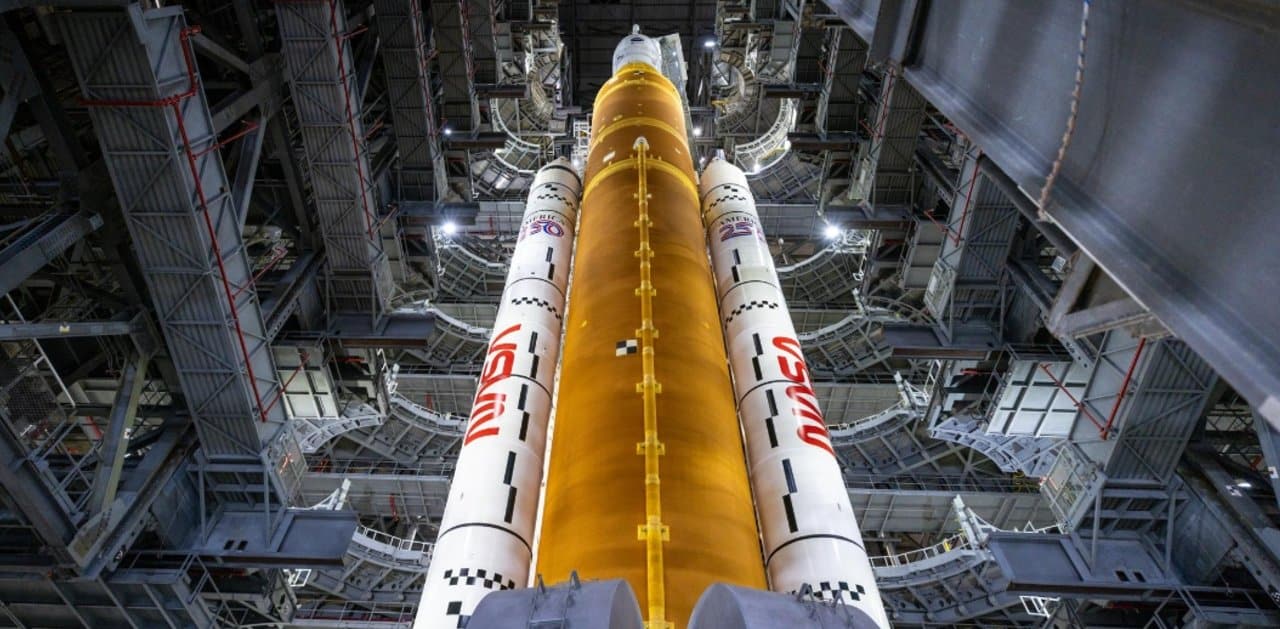
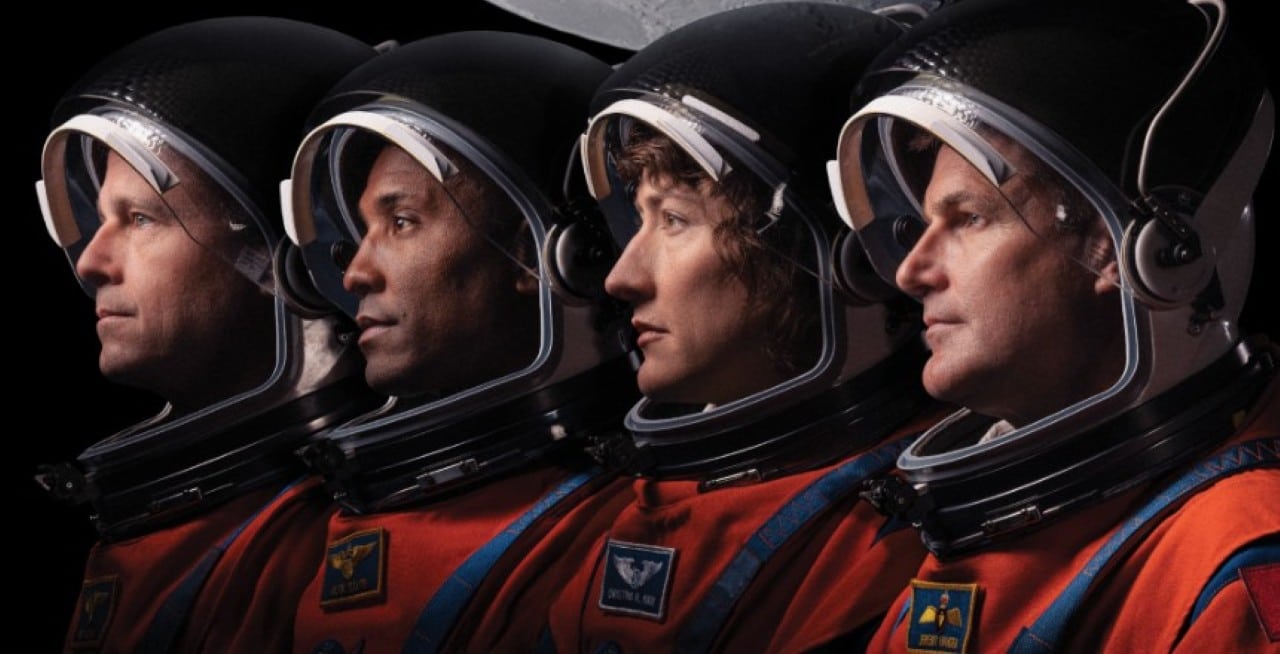
Four astronauts from Nasa and the Canadian Space Agency are set to make the first manned trip around Lua in more than 50 years. The Artemis II mission, scheduled to launch in early April from Flórida, will test the Orion spacecraft and SLS rocket in real deep space flight conditions. The crew will spend around 10 days on a journey that will take participants to distances exceeding 800,000 kilometers from Terra, surpassing any previous record of human flight.
Preparations are progressing with the rocket already positioned on the launch platform. The team went into quarantine to ensure everyone’s health before the flight. Essa stage represents the return of manned lunar exploration and paves the way for future missions that include landing on the lunar surface.
- Commander Reid Wiseman, with six months experience in space.
- Pilot Victor Glover, veteran of missions in Estação Espacial Internacional.
- Specialist Christina Koch, who performed the first all-female spacewalk.
- Specialist Jeremy Hansen, from the Canadian Space Agency, on his first space trip.
Crew composition and accumulated experience
The four astronauts have been training together for more than two years and have decades of combined experience in space operations. Reid Wiseman acts as commander and has a history in Marinha of the Estados Unidos. Victor Glover serves as a pilot and has already completed a six-month mission in Earth orbit.
Christina Koch contributes as a mission specialist and has made significant advances in human health research in space. Jeremy Hansen, the only Canadian on the team, adds expertise in fighter aviation and will participate in a space flight for the first time. The group demonstrates heightened attunement after long periods of joint training.
Launch preparations and rocket systems
The Sistema rocket, 98 meters high, represents the most powerful vehicle ever developed by Nasa for lunar missions. Ele includes two solid booster rockets and four main engines that use liquid hydrogen and oxygen in large quantities. The system carries the Orion capsule at the top, where the astronauts will remain throughout the journey.
In case of failure in the early stages, the abort mechanism will activate thrusters to direct the crew to a safe zone. The launch took place unmanned in 2022 during Artemis I, which allowed several components to be validated before the human version. Engenheiros made recent adjustments to the heat shield after detailed analysis of previous data.
Challenges of life aboard the Orion
The Orion capsule offers space equivalent to a minibus, measuring around five meters wide. Astronauts retract their seats after launch to gain useful space and access all surfaces in a microgravity environment. An exercise system with a flywheel allows cardiovascular and resistance activities for 30 minutes daily.
The crew has a water dispenser and individually selected meal options. The bathroom, installed under the floor, was specifically designed for vacuum operations and represents an improvement over the Apollo missions. Limited privacy requires collective adaptation during the 10 days of confinement.
Initial phases of the mission after liftoff
The spacecraft will orbit Terra at high altitude during the first day, reaching around 70 thousand kilometers. The astronauts will check life support systems and perform test maneuvers with the rocket’s upper stage. Essa sequence allows you to practice docking procedures necessary for future missions.
The decision to perform the translunar injection occurs after confirming all parameters. Once this burning begins, Orion follows an irreversible trajectory towards Lua. The crew continuously monitors equipment performance and collects data on the impact of radiation on the human body.
Health monitoring and scientific experiments
Astronauts use dosimeters to measure exposure to solar radiation during their journey. Eles practice quick access to the anti-radiation shelter installed in the capsule in case of solar storms. Amostras of saliva collected before, during and after the flight will help analyze changes in the immune system.
Tests assess balance, muscular performance, eye and brain health in deep flight conditions. Esses data directly contributes to the planning of longer missions, including stays on the lunar surface. The crew acts as real-time research subjects while performing operational tasks.
Lunar flyby and observations of the far side
Orion will pass approximately 6,500 to 9,500 kilometers from the lunar surface and fly over the far side of the satellite. The astronauts will dedicate three hours to photographs and observations that support geological studies and preparation for future landings. The spacecraft will point instruments to capture images in different lighting conditions.
During part of the flyby, communication with Terra will be interrupted for up to 50 minutes due to the relative position of the celestial bodies. The crew will bring personal items to record the moment, such as notepaper, family objects and representative symbols. The simultaneous view of Terra and Lua through the windows will mark a highlight of the journey.
Risks and procedures for returning to Terra
The reentry phase represents one of the most critical moments of the mission. The crew module separates from service and rotates to position the heat shield against temperatures reaching about 2,700 degrees Celsius. Engenheiros adjusted the entry angle based on data from the previous mission to protect the structure.
After crossing the atmosphere at 40 thousand kilometers per hour, a sequence of parachutes decelerates the capsule. Landing will take place at Oceano Pacífico near the coast of Califórnia, where rescue teams are waiting. Airbags inflatables guarantee stabilization regardless of the final orientation of the capsule.
Contributions to the Artemis program
The Artemis II validates propulsion, navigation and life support systems in a distant lunar environment. The results will guide the development of a sustainable base at Lua and future expeditions to Marte. Canadian participation reinforces international collaboration in the program.
Each crew member highlighted the importance of executing all tests accurately. The flight represents a technical and scientific milestone that expands the limits of human presence in deep space. The information collected during the 10 days will support progressive advances in the next stages of the project.



