
Capcom sets decade-long timeline for Resident Evil with focus on remakes and new titles
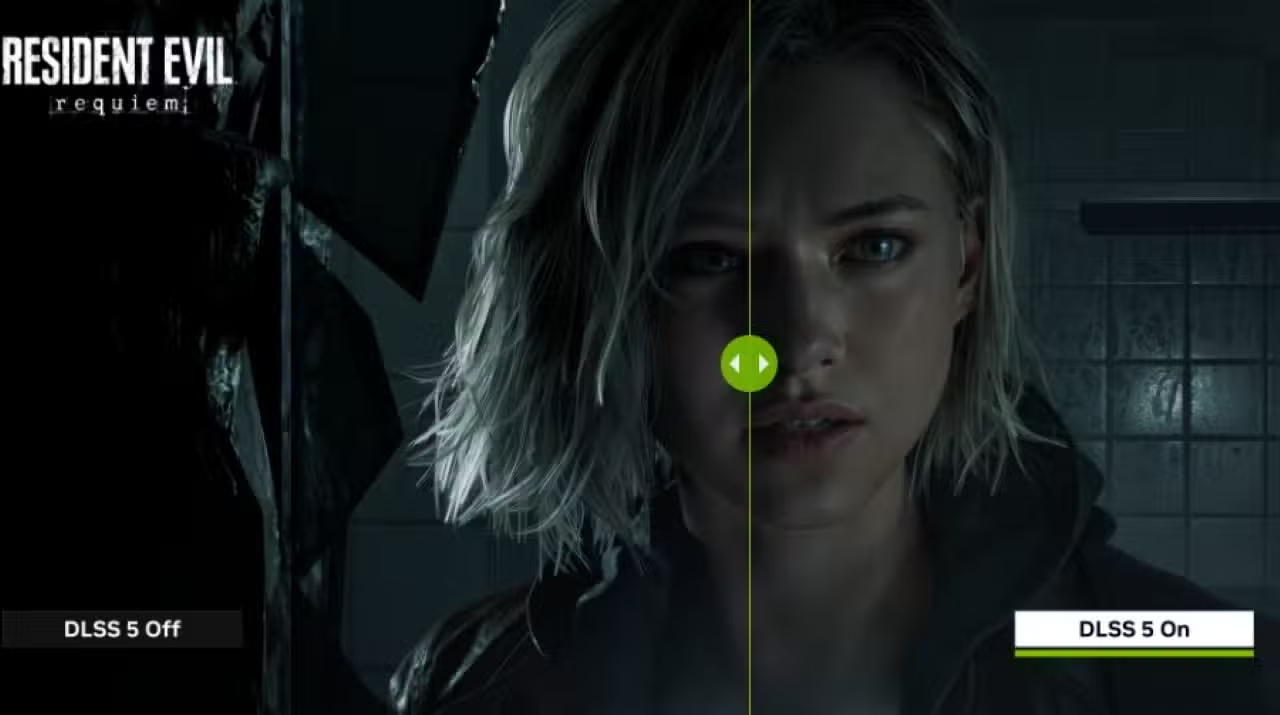
Japanese developer Capcom has established a new strategic direction for the Resident Evil survival horror game series, designing a release calendar that will span a ten-year period. Corporate planning aims to consolidate the brand in the global digital entertainment market, mixing the creation of completely new narratives with the recreation of classic works that marked previous generations of consoles. The decision comes at a time of high profitability for the company, driven by the positive commercial performance of the latest installments in the saga, which attracted both nostalgic audiences and new consumers interested in modern mechanics of exploration and combat against biological threats.
The business model adopted by the company reflects an adaptation to the current demands of the video game industry, where the cost of producing high-budget titles requires guarantees of financial return. Investing in already established intellectual properties reduces the commercial risks associated with launching new brands in the competitive technology and entertainment market.
To sustain this decade of continuous releases, the company’s strategy is based on specific operational pillars that guide the work of the development studios:
– Atualização graphics and mechanics of old games from the catalog.
– Desenvolvimento of direct sequences to the main narrative line.
– Expansão of intellectual property for other audiovisual media.
Strategy for recreating classic works from the franchise
The process of modernizing old games has become one of the most profitable fronts for the Asian developer in recent years. Previous Projetos have demonstrated the feasibility of rebuilding scenarios and control systems from scratch, adapting products originally launched in the nineties to contemporary usability standards.
The technical approach goes beyond a simple improvement in image resolution or frame rate per second. The programming and level design teams restructure the artificial intelligence of the enemies, modify the arrangement of items in the scenarios and adjust the rhythm of the narrative to ensure that the player’s progression occurs fluidly and without technical interruptions.
The consumer market responded positively to this methodology, resulting in significant numbers of physical and digital sales on multiple platforms. Esse financial performance validated the continuity of the recreation format within the long-term schedule, guaranteeing financing for new internal projects.
Investors and technology sector analysts monitor the company’s next choices, evaluating which chapters of the original catalog will receive the modernization treatment. The producer’s vast library offers several options to fill the release calendar, allowing rotation between production teams to avoid creative burnout.
Development of new narratives and sequels
In parallel with the historical recovery work, the company’s internal studios remain focused on the progression of the series’ main timeline. The introduction of new protagonists and the exploration of different scenarios have been essential to avoid the erosion of the survival horror formula. The creation of original stories allows writers to address contemporary themes and use recent motion capture and facial expression technologies, delivering more realistic and immersive performances for users looking for single-player campaigns.
The transition between console generations also requires new projects to take advantage of the machines’ updated processing power. Tempos Reduced loading times via solid-state storage drives, three-dimensional audio and support for high resolutions are technical requirements that the development team needs to integrate into new adventures. Maintaining public interest depends on the company’s ability to innovate in survival mechanics, resource management and puzzle solving, elements that define the product’s identity since its initial conception.
Proprietary graphics engine and technological advances
The technical feasibility of the ten-year planning is directly linked to the use of the graphics engine developed internally by the company. The software tool enables the fast and efficient creation of high-fidelity digital assets, optimizing rendering times for textures and complex three-dimensional models.



Standardizing the development environment reduces operational costs and facilitates the training of new employees joining the studios. The flexibility of the engine makes it possible to apply it to different genres and camera perspectives, from the first-person view to the traditional third-person over-the-shoulder format.
The software architecture also makes it easier to adapt games to virtual reality platforms. Essa modalidade de imersão tem recebido investimentos contínuos por parte da indústria de hardware, oferecendo uma alternativa de consumo para os usuários que buscam interações mais diretas com os ambientes virtuais projetados pelos desenvolvedores.
Brand expansion into the audiovisual sector
The company’s strategic planning transcends the video game market, encompassing the production of content for cinema and streaming platforms. The sale of adaptation rights generates additional revenue and expands the reach of intellectual property to audiences who do not regularly consume electronic games.
The coordination between game launches and audiovisual production premieres creates an integrated marketing ecosystem. The consumption of one media encourages the search for the other, feeding back the engagement of the consumer base and keeping the brand highlighted in search algorithms and social networks.
Commercial impact on the digital entertainment industry
Releasing a long-term roadmap establishes a level of transparency uncommon in the game development industry. The practice provides security to shareholders and commercial partners who invest in the physical and digital distribution of products on a global scale.
Direct competitors observe the portfolio management model adopted by the Japanese company. The ability to intersperse new releases with recreations guarantees a constant presence on shelves and in digital stores, making it difficult for other franchises in the action and horror genre to lose market space.
Team management and allocation of internal resources
The execution of multiple simultaneous projects requires a restructuring of the way the producer manages its human and technological resources. The division of tasks between different studios, including partnerships with third-party companies for support in 3D modeling, international dubbing and quality control, has become standard practice to meet the strict deadlines set by the board of directors. Maintaining a continuous workflow avoids the long periods of downtime that used to occur between major industry releases in the past. Além In addition, the retention of talent specialized in sound design, dynamic lighting and artificial intelligence programming is treated as a priority, as the technical quality of the final products directly depends on the experience accumulated by these professionals over the years of working in the same software infrastructure.
Maintaining an active consumer base
Ongoing engagement from the gaming community is supported by software updates, performance fixes and additional downloadable content. Direct communication through official channels allows the company to collect telemetric data on the public’s preferences, adjusting the difficulty balance and the development of upcoming titles according to the behavior metrics recorded on the company’s servers.
Veja Tambem em News (EN)

Research reveals that parents are unaware of how their children use artificial intelligence

Samsung releases new system update with new features for Galaxy Watch 4 users

Digital retail reduces the value of the Galaxy S25 5G smartphone with bank bonuses and device exchange

Amazon’s wireless CarPlay adapter has a 50% discount and high approval ratings from drivers

Zach Cregger’s new Resident Evil ignores games and focuses on an unprecedented story with new characters

Rumor suggests that Nintendo is preparing a special edition of the Switch 2 with a remake of Ocarina of Time

Apple accelerates production of the iPhone 17e and develops new Air model with dual camera system

Epic Games platform releases twelve high-budget games at no permanent cost for PC users

PlayStation 5 Pro price drop accelerates digital retail sales and eliminates global stocks

New Galaxy Watch 9 firmware appears on server and confirms progress in software development

Apple’s commemorative project tests cell phone with 1.1 millimeter edge and curved screen for 2027
