The Serviço Internacional of Rotação of Terra and Sistemas of Technicians identify small discrepancies and, when necessary, insert an additional second into the coordinated universal time to maintain alignment. Esse procedure has occurred 27 times since 1972, but the pattern of slowdown has become less predictable in recent decades.
Researchers note that traditional factors, such as the gravitational pull of Lua on the oceans, explained much of the previous variation. Agora, another force increasingly interferes with the planet’s rotational dynamics. The redistribution of mass caused by the movement of surface water changes the moment of inertia of the Terra in a measurable way.
Mass redistribution accelerates lengthening of days
The accelerated melting of polar ice caps and mountain glaciers releases significant volumes of water that flow from the poles towards the equator. Essa migration increases the planet’s equatorial bulge, similar to the effect seen when a figure skater extends her arms and reduces her turning speed. The basic physics of moment of inertia explains the phenomenon directly.
Between 2000 and 2020, the process occurred at a particularly high pace, according to analyzes by researchers at Universidade, Viena and ETH Zurich. The rate of increase in day length reached 1.33 milliseconds per century due solely to climatic factors. Nenhum another recent interval showed comparable variation in oceanic mass redistribution.
- Melting polar ice raises sea levels and shifts mass to lower latitudes.
- This change moves the material away from the axis of rotation and slows down the planet’s rotation.
- The effect accumulates over decades and requires constant technical adjustments.
Study reconstructs historical variation with marine fossils
Scientists analyzed fossilized shells of benthic foraminifera to reconstruct sea level fluctuations over the past 3.6 million years. The chemical composition of these microfossils made it possible to calculate the corresponding changes in Earth’s rotation over geological time. The method combined paleoclimate data with robust algorithms that consider uncertainties inherent in ancient records.
The results, published in Journal of Geophysical Research, indicate that the day’s current lengthening rate stands out in the full record. Períodos of natural melting in Quaternário caused variations in day length, but none reached the speed recently observed. Apenas an episode that occurred around two million years ago approached, albeit at a slightly lower intensity.
The team led by Mostafa Kiani Shahvandi and Benedikt Soja highlighted that modern acceleration puts climate change into clear geological perspective. Human influence on mass redistribution surpasses natural patterns documented since the end of Plioceno. The researchers emphasize that the phenomenon is a direct result of global warming and accelerated melting.
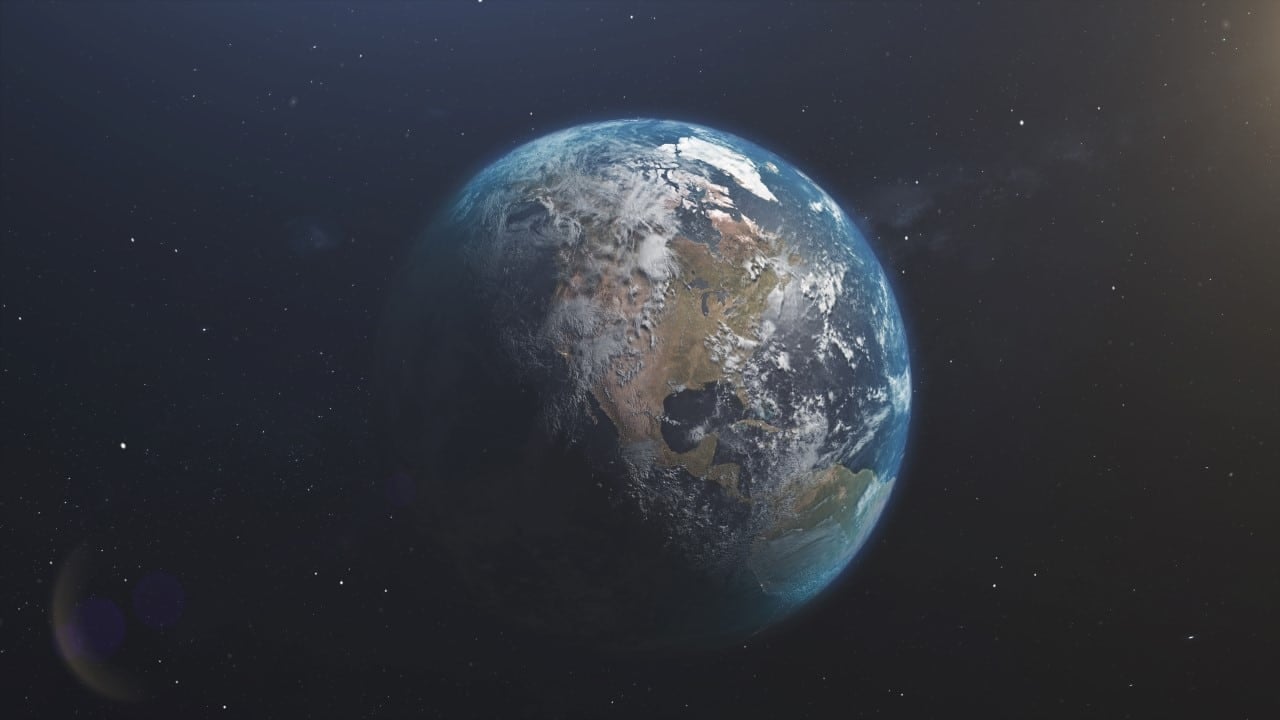
Technological impact requires precise adjustments in navigation systems
Global positioning systems like GPS rely on exact synchronization between atomic clocks and the Earth’s rotation. Pequenas millisecond discrepancies accumulate positioning errors that grow over time and affect applications ranging from maritime navigation to space operations. Agências spacecraft already incorporate corrections based on continuous rotation measurements.
The irregularity introduced by unpredictable ice melt makes these adjustments more complex than constant variations caused by lunar tides. Até the end of the 21st century, projections indicate that the climate effect may overcome the traditional influence of Lua on rotational deceleration. Mesmo minimal changes require permanent monitoring to maintain technological precision.
Connection between polar movement and day length gains evidence
Previous studies by the same research group had already demonstrated that climate change also affects long-term polar movement, that is, the drift of the rotation axis. The two phenomena are interconnected by the same mass redistribution caused by the melting of continental ice and changes in terrestrial water storage. Ambos derive from processes observed with greater intensity since the beginning of the 21st century.
Serviço Internacional of Rotação of Terra continues to record variations that require occasional insertion of leap seconds. The system was designed for predictable slowdown, but the increasing and erratic influence of human weather alters management conditions. Satélites and communication networks face similar challenges in accurately determining orbits and synchronization.
Fossils and models confirm absence of recent precedents
Reconstruction based on benthic foraminifera and late Plioceno data revealed natural fluctuations associated with glacial cycles. Grandes ice caps expanded and contracted repeatedly, causing accelerations and decelerations in rotation. However, the current pace between 2000 and 2020 remains unmatched in the last 3.6 million years.
Benedikt Soja of ETH Zurich noted that the discovery reinforces the exceptional nature of the rate of modern climate change. The team used physical models of planetary rotation integrated with high-precision observations. The calculations remained robust even in the face of uncertainties in paleoclimatic proxies.
The work consolidates evidence that the movement of surface water, driven by global warming, today shapes the Earth’s rotation in a dominant way. The trend remains clear, although absolute variations remain on the scale of fractions of a millisecond per century.