
Composition of interstellar comet 3I/Atlas suggests material from 10 billion years of early Milky Way

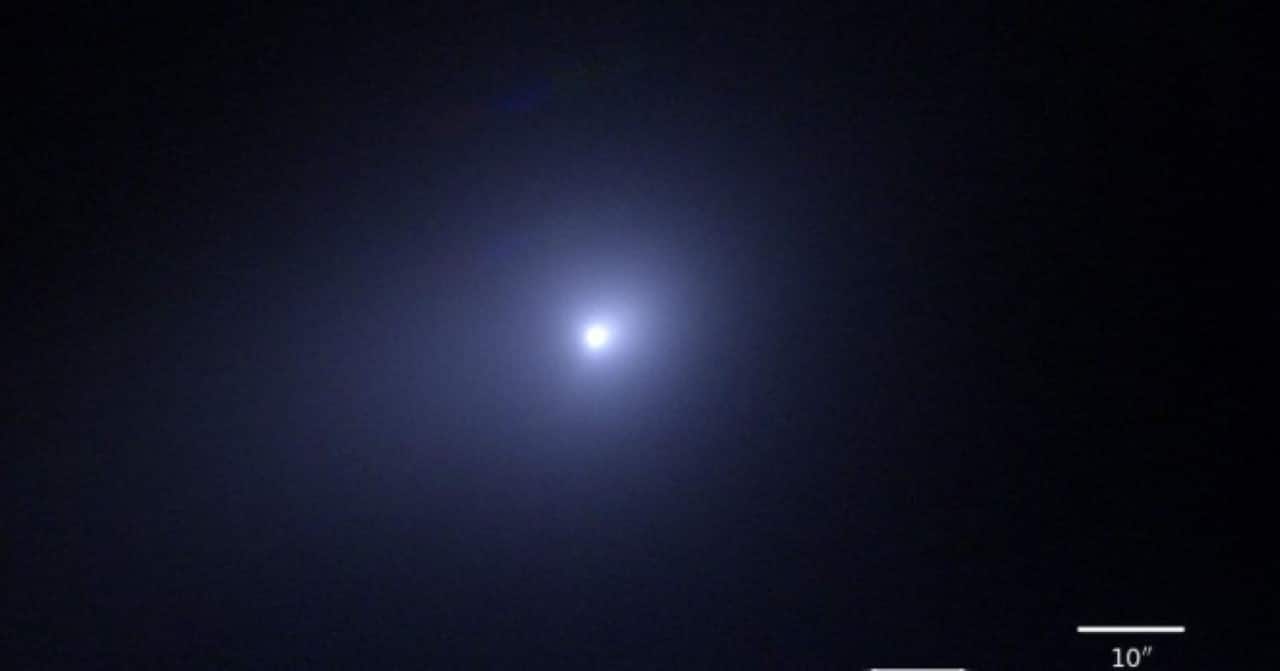
The interstellar comet 3I/Atlas continues to intrigue the scientific community with data that combines rare features observed during its trajectory through the solar system. Descoberto in July 2025 by the ATLAS system in Chile, the object follows a hyperbolic trajectory that confirms its origin outside the local cosmic neighborhood. Recent Análises instruments such as Telescópio Espacial James Webb and ALMA highlight unusual isotopic ratios and organic compounds that expand understanding of ancient planet-forming environments.
These measurements do not indicate the presence of life or artificial origin, but they highlight how 3I/Atlas offers a direct sample of materials formed in another star system. The high speed and behavior observed when approaching Sol allowed gas and dust emissions to be captured in unprecedented detail. Pesquisadores have been following the object since its initial detection, when it was already noted that it did not fit into the typical patterns of comets in the solar system.
- Hyperbolic trajectory confirmed by multiple observations
- Discovered on July 1, 2025 by ATLAS
- Passage without risk of impact with the Terra
Pre-biological chemistry detected in expelled material
Molecules such as methanol, hydrogen cyanide and methane appear in significant quantities in the emissions from 3I/Atlas during its approach to Sol. Esses compounds act as fundamental blocks in chemical reactions that can precede biological processes in favorable environments. The detection reinforces the idea that ingredients for complex chemistry existed in very ancient star-forming regions in the galaxy.
Detailed spectroscopic observations show that the release of these materials varied depending on the distance from the Sol. In certain periods, activity exceeded what was expected for similar bodies, which led teams to adjust ice sublimation models. The data collected contributes to discussions about how volatile compounds are preserved on long interstellar journeys.
Extreme deuterium level marks unique isotopic signature
The water present in 3I/Atlas has a ratio of deuterium to hydrogen that exceeds the values recorded in comets in the solar system by more than ten times. Medições indicate a D/H close to 0.95%, a value that points to formation at extremely low temperatures, below 30 kelvin, in an environment with little subsequent contamination. Essa feature suggests that the ice originated under conditions typical of cold, dense molecular clouds.
Scientists compare these results with models of galactic chemical evolution to estimate the age of the material. The isotopic signature also differs from averages observed in nearby interstellar clouds and current protoplanetary disks. Tal discrepancy helps to outline scenarios where the object formed in an early phase of Via Láctea, when the metallicity was lower.
The high concentration of deuterium serves as a reliable marker of the source environment. Equipes international researchers analyze how high ionization processes in the remote past could have enriched ice with this heavier isotope. The results published in recent studies consolidate the 3I/Atlas as a window into processes that occurred billions of years ago.
Released gases deviate from the behavior expected in local comets
The composition of the 3I/Atlas coma shows a predominance of carbon monoxide, carbon dioxide and methanol, with relatively low proportions of water vapor in some phases of the observation. Essa mixture creates challenges for explanations based solely on comets formed in the solar system, where the balance between volatiles tends to follow more predictable patterns. Além Furthermore, the 12C/13C carbon isotopic ratios vary between 123 and 191, values above typical ranges.
The irregular release of gases suggests that an outer layer hardened by cosmic radiation and long periods of extreme cold trapped volatile materials inside. Somente after prolonged exposure to solar heat, these compounds began to sublimate more intensely. Modelos adjustments indicate that this ancient crust explains some of the activity observed over months.
Passage close to Júpiter rekindles trajectory analysis
The object crossed Júpiter’s sphere of gravitational influence in March 2026 without being captured, but the proximity allowed subtle dynamic effects to be recorded along the route. Essa phase of the trip generated new speed and orientation measurements that refine calculations about interstellar origin. The influence of the gas giant did not significantly alter the hyperbolic trajectory, but it offered the opportunity for complementary observations by probes en route to the planet.
Images captured during this approach show variations in the comet’s tail and antitail. Equipes monitor how the gravity of Júpiter interacted with the flow of dust and expelled gas. The records help validate numerical simulations of encounters between interstellar objects and massive planets.
Hardened crust explains slowed comet activity
After billions of years in interstellar space, the surface of 3I/Atlas has undergone intense changes due to radiation and low temperatures. Essa outer layer acted as a barrier that retained volatiles until progressive solar heating. The explanation aligns with the observed delay in the release of certain compounds and the gradual increase in chemical activity.
Researchers combine spectral data with thermophysical models to estimate the thickness and composition of this crust. Preliminary Resultados indicate that the hardening process occurred in environments with little stellar interaction, preserving ancient chemical signatures. The hypothesis complements other observations without eliminating the possibility of additional processes at play.
Technological advance allows unprecedented detailing of the composition
Current instruments such as James Webb, ALMA and large ground-based telescopes detect faint emissions and compounds in distant objects with greater precision than was available in previous decades. Essa capability revealed details that make 3I/Atlas a prime case study for interstellar chemistry. Combining data from multiple platforms confirms trends that alone might appear anomalous.
The increase in the number of interstellar objects identified in recent years mainly reflects improvements in the sensitivity of automated surveys and real-time spectroscopic analysis. 3I/Atlas benefits directly from this observational evolution, which exposes previously inaccessible nuances in cosmic visitors.
Natural hypothesis remains main despite observed exceptions
The body of evidence points to a comet formed in another star system and ejected during the early stages of planetary formation. Modelos of galactic evolution suggest that 3I/Atlas accumulated between 10 and 12 billion years ago, in a phase of intense star formation with reduced metallicity. Essa interpretation accommodates most of the data collected to date.
Even with nonstandard features, no current observations require invocation of artificial or biological processes. The scientific debate focuses on refining the mechanisms that produced the unique isotopic and chemical signatures. Continuam the analyzes to integrate all the pieces of the cosmic puzzle presented by the object.
Importance of 3I/Atlas for the study of interstellar materials
The comet provides direct evidence that volatile-rich chemistry occurred in ancient protoplanetary disks from Via Láctea. Compostos detected indicate conditions conducive to complex reactions on early galactic scales. Pesquisadores plan to compare these results with data from other interstellar objects to map the diversity of formation environments.
The preservation of materials for billions of years turns the 3I/Atlas into a valuable relic. Observações future ones, even after leaving the solar system, will continue to explore the data archives already collected. The case reinforces the relevance of monitoring hyperbolic visitors with state-of-the-art instruments.



