


The North American space agency has successfully completed the transfer of the super-heavy launch system and crew capsule to complex 39B, located at Centro Espacial Kennedy, in the state of Flórida. The highly complex logistical operation began at night and required around twelve hours of uninterrupted work from the engineering and ground operations teams. The route of approximately six and a half kilometers required constant monitoring to preserve the structural integrity of the machinery, which has a total weight of around five thousand tons. The displacement takes place immediately after the completion of critical maintenance on the vehicle’s pressurization system, freeing the equipment for the launch window scheduled for the beginning of April.
The return of the machinery to the takeoff yard unlocks the lunar exploration program schedule, which has undergone recent changes due to mechanical failures identified in previous fueling tests.
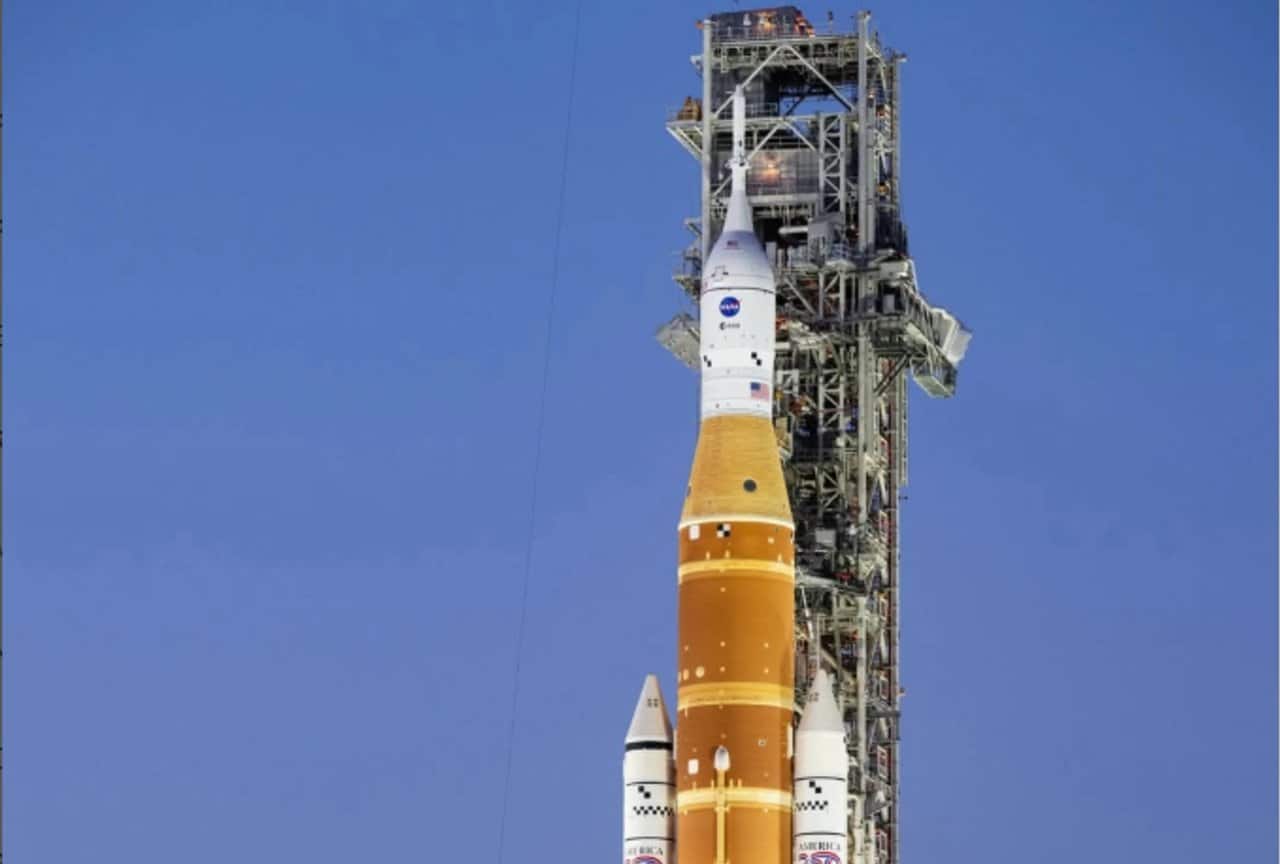
The structure now positioned outdoors will undergo final calibrations of the telemetry sensors and the synchronization of the onboard computers with the mission control center, preparing the ground for ignition.
Technical fixes and component replacement
At the end of February, the ground diagnostic systems detected an anomaly in the flow of helium gas, an essential element for pressurizing the propellant tanks and activating the valves of the main engines. The immediate identification of the problem forced flight directors to determine the return of the entire assembly to the assembly building, where the closed and controlled environment made safe technical intervention possible. During the collection period, experts carried out detailed inspections of the entire piping network, replacing seals and parts that showed premature wear and threatened the safety of the propulsion system.
Carrying out these repair procedures required a coordinated logistical effort across several work shifts, with the aim of ensuring that the return to the external area occurred without affecting the scheduled take-off date. Além After resolving the helium leak, maintenance teams used the time in the hangar to review connections for liquid hydrogen, a highly volatile substance that caused interruptions in past fueling tests. Preventive replacement of relief valves and implementation of new sealing methods were applied to drastically reduce the risks of recurring failures during actual fueling.
Physical isolation and crew preparation
While engineers finalize preparations at the launch pad on the east coast, the crew scheduled for the mission has entered official quarantine at the training facility at Houston, at Texas. The four astronauts comply with a strict physical distancing protocol and undergo daily medical assessments.
The team is made up of commander Reid Wiseman, pilot Victor Glover and mission specialists Christina Koch and Jeremy Hansen, forming an international alliance in the aerospace sector. The confinement is intended to eliminate any risk of infection by viral or bacterial agents in the weeks prior to boarding the ship.
Throughout this phase of health restrictions, crew members follow an intense schedule of reviewing procedures and simulating the most critical stages of the trip in a virtual environment. In-person contact is limited to first-degree family members and previously tested healthcare professionals.
Battery of operational tests on the platform
The vehicle’s arrival at complex 39B marks the beginning of an exhaustive sequence of readiness tests designed to assess the strength of electrical and mechanical systems prior to injection of cryogenic fuel into the main tanks. Software engineers perform full checks of the communication interfaces between the rocket’s central stage and the Orion capsule’s computers, ensuring that the emergency abort and stage separation commands operate with zero latency. Simultaneously, infrastructure teams carry out physical alignment tests, verifying that the launch tower’s umbilical arms are connected with millimeter precision to the space vehicle’s service panels. The final inspection of the ship’s heat shield is also conducted at this stage, using high-resolution laser scanning to confirm that the protective plates did not suffer microcracks or damage during terrestrial transport, as this structure is essential to withstand the extreme temperatures generated by friction during re-entry into the Earth’s atmosphere at the end of the mission.
Strict criteria for flight validation
To organize final approvals before the countdown, mission directors defined strict technical validation parameters that must be fully met by ground teams.
– Confirmação of the structural integrity of the liquid propellant supply system and purge lines.
– Testes charge in the internal batteries and verification of opening of the spacecraft’s solar panels.
– Validação of the life support and environmental control circuits of the pressurized cabin for astronauts.
Windows of opportunity and launch schedule
The first attempt to start the engines is scheduled for 18:24 on April 1st, East Coast time. If weather conditions or technical variables prevent the launch at this time, controllers have daily reservation windows that last until April 6th.
If none of these days offers a safe scenario for takeoff, orbital mechanics will force an interruption in the attempts, with a new viable alignment window only appearing on April 30th. The complete operation is estimated to last ten days, including leaving Earth’s orbit and returning with landing in the ocean.
Free return path and navigation
Flight planning determines a free return trajectory, a navigation method that uses the lunar gravitational force to throw the ship back to Terra without requiring long firings of the main engines. Este format ensures an additional layer of safety for astronauts in the event of malfunctions in the primary propulsion systems.
During the journey in deep space, the crew will take manual control of the capsule at scheduled times to test the equipment’s maneuverability. The focus is to analyze the performance of the attitude thrusters and the stability of the vehicle in a scenario without the protection of the Terra’s magnetic field.
Continuous life support monitoring
Life support equipment will be tested at the limit of its operational capacity, with crew members continuously checking oxygen reserves, carbon dioxide filtration and the thermal stability of the cabin interior. The capture of biometric data will occur constantly, generating fundamental metrics about the human body’s response to prolonged exposure to cosmic radiation outside low orbit.
Coordination of maritime rescue teams
As the launch date approaches, the teams responsible for oceanic recovery began practical exercises on the Oceano Pacífico, mobilizing the vessels and aircraft that will rescue the capsule after re-entry into the atmosphere. The operation requires seamless communication between ground teams on Flórida, the control center on Texas and naval forces.
Resolving recent technical obstacles has improved the space agency’s safety protocols, certifying that the vehicle positioned on the platform represents the state of the art in aerospace engineering. The success of this validation mission is the main requirement for authorization of future landings on the surface of the natural satellite in the coming years.



