
Mars reaches record brightness since 2003 in September 2035 with window for manned missions from NASA and China

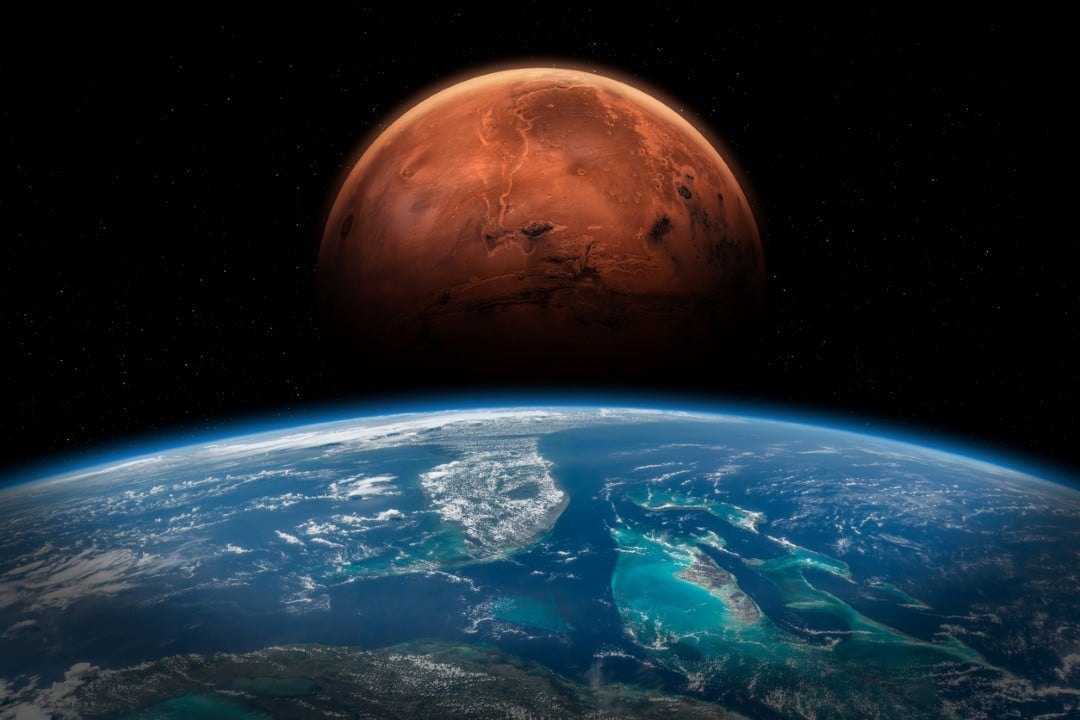
In September 2035, Marte will reach its closest proximity to Terra since 2003 and will exhibit an apparent brightness greater than that of any star in the night sky. The minimum distance between the two planets is expected to reach approximately 56.9 million kilometers on September 11th, with formal opposition taking place on September 15th. Esse alignment creates a favorable orbital window that both Nasa and the Chinese space agency have identified as an opportunity for sending manned missions to the Red Planet.
Observers in different regions of the globe will be able to follow the phenomenon with visible details of the Martian surface, including polar caps and dark formations. The apparent diameter of Marte will reach about 24.5 arc seconds, almost double that recorded in common oppositions. Essa configuration allows amateur and professional telescopes to capture higher resolution images over several weeks.
- Minimum projected distance of 56.9 million kilometers
- Magnitude close to -2.9, surpassing Júpiter in brightness
- Favorable visibility in the northern and southern hemispheres, including Brasil
- Prolonged duration of the phenomenon above 20 arc seconds
Orbital alignment favors detailed observation
Perihelical opposition occurs when Marte is close to perihelion, the closest point to Sol, at the same time that Terra performs orbital overshoot. Esse event repeats every 15 to 17 years and produces the most expressive brightness and apparent size on the planet. In 2003 the distance was 55.76 million kilometers, a record that will only be surpassed in 2287.
The approach to 2035 maintains very similar characteristics to that of 2003, with a difference of less than 2 percent that becomes imperceptible to the naked eye. The planet will rise in the east at sunset and remain visible throughout the night. Posição close to the celestial equator guarantees good visibility for observers at varying latitudes.
Characteristics of the Martian orbit explain variation in brightness
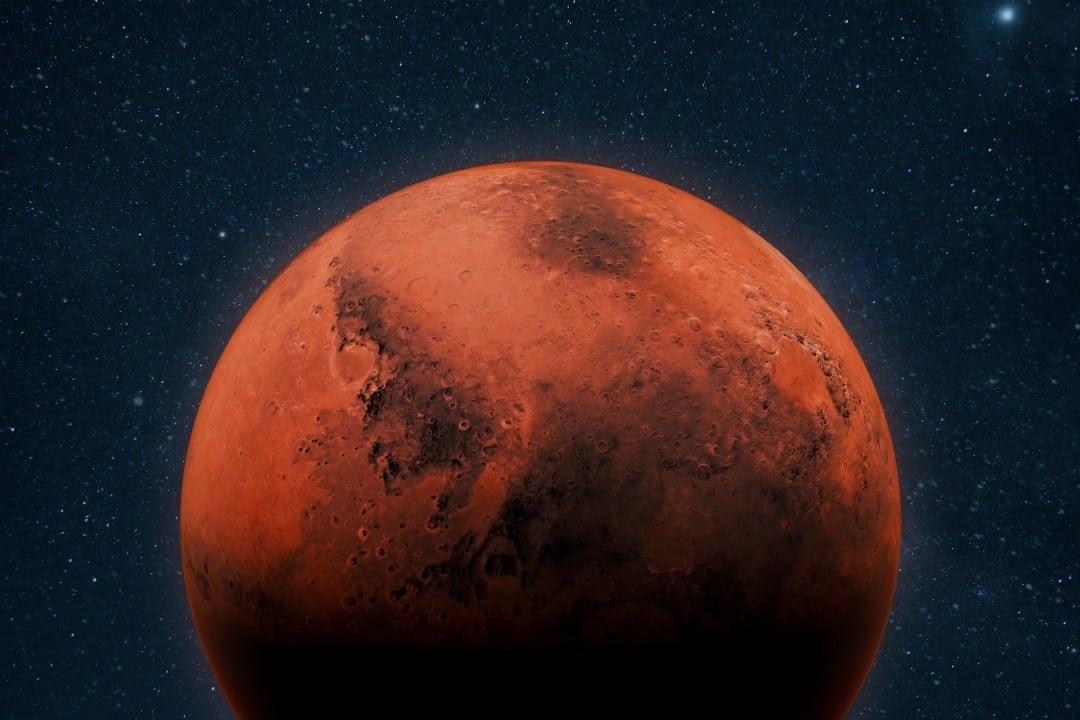
Marte has a more elliptical orbit than that of Terra, varying between 1.38 and 1.67 astronomical units in relation to Sol. Essa difference of around 21 percent causes large fluctuations in the distance between the planets over time. Every 26 months, Terra surpasses Mars, generating the phenomenon of opposition.
In common oppositions the distance can exceed 100 million kilometers. Já in perihelics it drops to less than 57 million kilometers, which explains the significant increase in brightness and apparent diameter. Dados of Association of Lunar and Planetary Observers confirm that in 2035 the apparent diameter will reach 24.5 arc seconds.
26-month window defines interplanetary travel planning
The 26-month cycle between oppositions serves as the basis for calculating Hohmann transfer trajectories, which optimize fuel consumption in Marte missions. Quando the window coincides with perihelic opposition, travel time decreases, as does the crew’s exposure to cosmic radiation. Essas conditions make the period especially attractive for manned missions.
Space agencies and private companies consider these alignments as the main reference for launches. The reduction in distance benefits both the shipping of supplies and the return of samples or crew in subsequent windows.
Nasa and China plans converge for 2033 and 2035
In 2021, China released a schedule that foresees manned launches at Marte in 2033, 2035, 2037 and 2041, with the aim of building a permanent base on the planet. Planning includes prolonged stay and return using the next orbital window.
Nasa maintains manned mission goals from 2033, with continuity scheduled for 2035 and beyond. The models studied involve trips lasting around nine months, an extended stay of Marte and a return totaling more than a thousand days. Ambas agencies recognize the advantages of the perihelic window for reducing operational risks.
Private initiatives also follow the orbital cycle
Companies like SpaceX develop aggressive schedules that include unmanned missions later this decade and expansion in subsequent windows. Caso plans move forward, 2035 could see the start of continued human presence in Marte. The convergence of public and private agendas reinforces the use of this specific astronomical opportunity.
Past events show the influence of oppositions on scientific advancement
In 1877, during favorable opposition, Giovanni Schiaparelli mapped the planet and described channels that influenced decades of studies. The 2003 approach boosted detailed observations with Telescópio Hubble and contributed to the advancement of robotic missions.
The 2035 opposition occurs in a different context, with the potential to coincide with preparations or execution of manned flights. The celestial spectacle can motivate greater public interest and support for space exploration programs.
Difference between 2003 and 2035 only changes the historical context
The distance in 2035 remains very close to that recorded in 2003, with a small variation that does not significantly alter the perceived brightness. What distinguishes the two events is the stage of human exploration. In 2003, Marte was the exclusive target of robotic probes.
In 2035, the planet may already receive or be about to receive the first human teams. Essa transition represents a milestone in the history of space exploration, moving from remote observation to direct presence.
Observation of the phenomenon benefits amateur and professional astronomers
The high apparent diameter will allow visualization of superficial details even with moderate-sized equipment. Favorable Posição in the sky facilitates monitoring by observers in Brasil and in other countries. Comunidades astronomical companies prepare photographic recording and data sharing campaigns during the period of greatest visibility.
Technical preparations gain momentum with celestial alignment
Engineers use windows like 2035 to refine trajectory calculations, test life support systems and real-time communications strategies. The coincidence between astronomical spectacle and operational planning reinforces the integration between observational science and space engineering.



