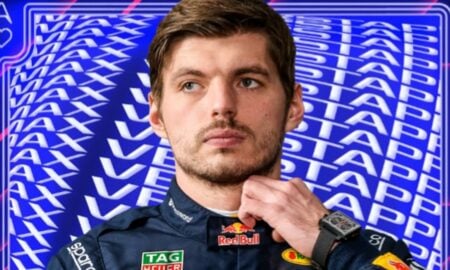
Max Verstappen wins Japanese Grand Prix and extends lead in Formula 1 World Championship in Suzuka


Max Verstappen consolidated his favoritism on the Suzuka circuit by winning Grande Prêmio from pursuers. The victory marks Verstappen’s third consecutive triumph on Japanese territory, reinforcing their quest for a fifth world championship.
The event at Suzuka was marked by distinct tire management strategies and higher-than-expected track temperatures for the start of Japanese spring. X__NM1____ The race took place with few interruptions, allowing the pure performance of the cars to define the positions on the final grid.
- Max Verstappen (Red Bull) – Vencedor
- Sergio Perez (Red Bull) – Segundo placed
- Lando Norris (McLaren) – Terceiro placed
- Lewis Hamilton (Ferrari) – Quarto placed
Red Bull’s technical dominance on Japanese soil
The Austrian team demonstrated remarkable technical superiority right from the free practice sessions, adapting the RB22 chassis perfectly to the high-speed corners of Suzuka. Max Verstappen was not threatened at any point after the first corner, managing to open a three-second gap in the first five laps of the competition. The aerodynamic setup allowed the Dutchman to preserve his tires while maintaining consistent lap times under 1min34s.
Sergio Perez complemented the success of the Red Bull by securing second position, beating the McLaren of The team’s strategy was based on a single stop for the Mexican, who used the hard compound for more than 30 laps with extreme efficiency. Essa one-two puts Red Bull in a comfortable position in the constructors’ championship, isolating the team at the top of the overall table.
Perez’s performance was praised by the technical board, as the driver managed to maintain the final pressure of Lewis Hamilton, which came with newer tires. The car’s stability in critical sections, such as the “S” of Suzuka and the famous 130R curve, was the difference in the team maintaining total control of the race. With this result, Red Bull adds vital points before the start of the European leg of the season.
Evolution of Ferrari and the impact of Lewis Hamilton
Lewis Hamilton produced one of his best displays since joining the Italian team, finishing fourth after a strategic battle against McLaren. The British driver used his experience to manage the energy recovery system at the right moments, ensuring decisive overtakes on George Russell and Fernando Alonso. The Ferrari appears to have resolved the tire overheating issues that affected performance in the previous race.
The Maranello team opted for an aggressive two-stop tactic for Hamilton, seeking to take advantage of the slipstream on the straights and the superior performance of the Ferrari engine in acceleration. Embora has not reached the podium, the race pace demonstrated by Hamilton indicates that Ferrari is closing the gap to McLaren. The team leader highlighted that the updates brought to the Japão worked as expected in the simulators.
Charles Leclerc also had a solid performance, securing important points by finishing in the top six. The Monegasque driver faced difficulties at the start of the race due to heavy traffic, but recovered positions with a sequence of fast laps after the second pit stop. The cohesion between the two Ferrari drivers has been fundamental for the team to challenge the Mercedes in the general classification of the 2026 season.
McLaren maintains consistency and ensures presence on the podium
Lando Norris confirmed McLaren’s excellent moment by taking the podium on a track that demands a lot of lateral aerodynamic efficiency. The English driver started in third position and managed to maintain a high-level duel against Sergio Perez during the first half of the race. McLaren opted to keep Norris on the track for longer in the first stint, attempting an “overcut” that almost resulted in a momentary lead in the race.
- Stability in high-speed curves.
- Reduced fuel consumption in the final laps.
- Efficiency of the DRS system on the pit straight.
- Mechanical precision during tire changes.
McLaren’s car, the MCL38, proved extremely competitive in sector two of Suzuka, where steering precision is key. Oscar Piastri also demonstrated talent by holding off pressure from Fernando Alonso in the final laps, ensuring that both team cars finished in the points zone. McLaren’s regularity has been the key point for the team to establish itself as the second force on the current grid.
The evolution of the Mercedes power unit, used by McLaren, allowed drivers to have top speeds equivalent to those of the Red Bull. Esse technological advance is the result of months of development focused on integrating the chassis with new hybrid systems. The team is now preparing for the next challenge at China, where the track configuration will require completely different adjustments to those made for Japanese asphalt.
Prospects for the rest of the world championship
Verstappen’s victory in the Japão extends his lead to 25 points over second place in the drivers’ standings. Este scenario puts opponents in a position of immediate need for victories in the next stages to prevent the Dutchman from climbing the rankings. Especialistas point out that Red Bull still has an advantage of around two tenths of a second per lap under normal racing conditions.
The teams now return to their bases to analyze the data collected in Suzuka and finalize the update packages for the May races. The Mercedes, which performed discreetly in the Japão, promised significant changes to the front suspension to improve corner entry. Enquanto therefore, Aston Martin seeks to understand why qualifying pace did not translate into race performance for Fernando Alonso.
The 2026 championship is shaping up to be one of the most competitive of the hybrid era, with at least three teams capable of fighting for podiums on a regular basis. Mechanical reliability will be the deciding factor in the coming months, especially with the extensive calendar placing maximum demands on engine components. Fórmula 1 heads to Xangai with the expectation of packed gates and a new technological battle between the giants of motorsport.
Analysis of tire wear and climate in suzuka
The track temperature reached peaks of 38°C during the afternoon, directly influencing the durability of the Pirelli compounds chosen for the weekend. Most teams envisaged a two-stop strategy, but Red Bull surprised by extending the use of medium tires from Verstappen until lap 22.
Wear on the left front tire, traditionally the most affected in Suzuka due to right-hand turns, was constantly monitored via telemetry. Track engineers have instructed drivers to avoid the higher curbs in the Degner curves to minimize the risk of punctures or structural damage. The absence of strong wind also helped the cars maintain a more stable trajectory in the high-speed sections.
Performance of mid-grid and novice teams
The competition for intermediate positions was intense, with Alpine and Williams fighting for every fraction of a second in the scoring zone. Pierre Gasly achieved a hard-earned tenth place, securing the French team’s only point after an aggressive start where they gained two positions. The Williams showed progress in straight line speed, but still suffers from a lack of aerodynamic pressure in more technical and blocked sectors.
The season’s rookie drivers faced the challenge of Suzuka for the first time in an Fórmula 1 car and demonstrated maturity. Não there were serious incidents or crashes that required the safety car to be deployed, which demonstrates the high technical level of the current grid. Physical preparation and the intensive use of simulators were cited by the pilots as the main factors for quickly adapting to the demanding route of the Japão.
Technology and innovations presented at the grand prize
The Japanese stage served as a showcase for new solutions in brake cooling systems, essential for sudden braking after long straights. Algumas teams tested redesigned air ducts that promise 15% greater efficiency without compromising the vehicle’s total aerodynamic drag. Essas innovations are crucial in a season where technical details define who climbs onto the podium or falls outside the top 10.
The integration of artificial intelligence into real-time data analysis allowed teams to adjust fuel mixtures and engine mapping lap by lap. Essa technology helps predict tire behavior and suggest the exact moment to perform a pit stop, minimizing human errors. The spectacle at Suzuka was, therefore, a combination of human expertise and cutting-edge technology on one of the most iconic stages in sport.