
NASA documented complete sequence of Apollo 11 that took Neil Armstrong and Buzz Aldrin to the Moon in July 1969

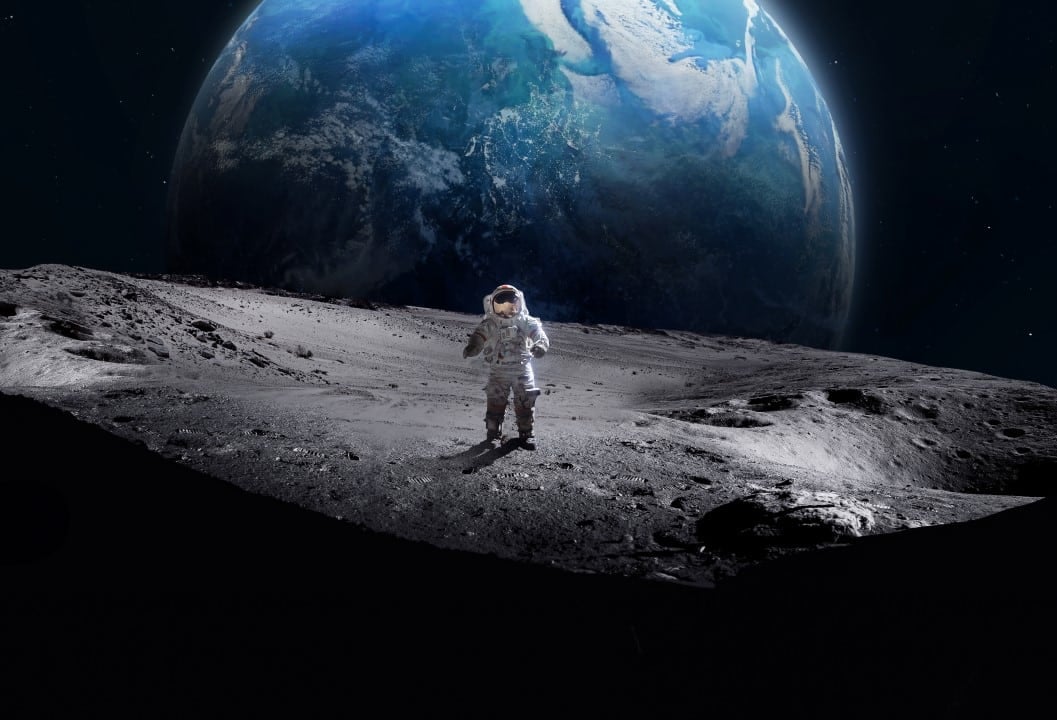
Apollo 11 performed the first manned landing on the surface of Lua on July 20, 1969. The mission fulfilled the national objective established years before by taking humans to Lua and returning safely to Terra.
The launch took place on July 16, 1969 from Centro Espacial Kennedy on Flórida. The crew traveled approximately four days to Lua. The Eagle module touched down with about 21 seconds of fuel remaining after Armstrong took manual control to avoid a rocky area.
Four previous crewed missions paved the way for the success of Apollo 11. Apollo 7 tested the command module in Earth orbit. Apollo 8 performed the first manned orbit around Lua. Apollo 9 verified the complete lunar module in Terra’s orbit. The Apollo 10 simulated lunar approach and descent without actual landing. Essas stages accumulated essential experience in propulsion, navigation and life support systems.
- The Saturn V rocket propelled the spacecraft beyond Earth orbit
- The service module performed trajectory corrections during the trip
- Lunar module Eagle separated from Columbia for final descent
- Armstrong conveyed the phrase about the small step for man and the giant leap for humanity
Programa Apollo continued after Apollo 11 and allowed ten more astronauts to walk on the lunar surface. Missions Apollo 12, 14, 15, 16 and 17 took different teams to different regions of the satellite. A total of twelve men set foot on Lua between July 1969 and December 1972. Cada expedition collected soil and rock samples that totaled 382 kilograms of lunar material brought to Terra.
Preparatory missions accumulated essential technical data
The development of the Programa Apollo involved years of engineering to overcome challenges such as space vacuum, radiation and landing precision. Equipes tested components in simulated conditions before manned flights. The Saturn V rocket, the largest ever built at the time, underwent rigorous validations in unmanned launches.
Apollo 7, launched in October 1968, verified the operation of the command module during 11 days in Earth orbit. Apollo 8, in December 1968, took the first humans beyond the low orbit of Terra and around Lua. The crew observed the far side of the satellite and captured iconic images of Terra rising over the lunar horizon.
Apollo 9, in March 1969, tested the complete lunar module in Earth orbit with docking and separation maneuvers. Apollo 10, in May 1969, simulated the entire lunar descent profile up to 15 kilometers from the surface without making the final touch. Essas activities ensured that Apollo 11 had mature systems and well-trained procedures.
Detailed timeline of Apollo 11 from launch to return
The countdown ended on July 16, 1969 with the successful launch of Saturn V. The spacecraft entered initial Earth orbit before the burn that sent it to Lua. Durante the translunar journey the crew carried out constant systems checks and trajectory corrections.
The lunar module Eagle separated from Columbia on July 20. Armstrong and Aldrin descended while Collins orbited Lua. Landing occurred at 20:17 UTC time on Mar of Tranquilidade, a basaltic lava plain. The astronauts spent about 22 hours on the lunar surface.
Armstrong left first and spent approximately two and a half hours outside the ship. Aldrin joined him to collect samples, set up scientific instruments, and take photographs. Eles planted the Estados Unidos flag and left a commemorative plaque. The ascent module took off and reconnected with Collins in lunar orbit.
The crew performed the return burn on July 21 and landed on Oceano Pacífico on July 24, 1969. Equipes rescue crews recovered the astronauts and the collected material. The mission lasted eight days and three hours in total.
Orbital Evidence Precisely Shows Landing Sites
The Lunar Reconnaissance Orbiter, in operation since 2009, has captured high-resolution images of the six Apollo landing sites. The photographs reveal the descent modules still on the ground, astronauts’ footprints and tracks left by vehicles on later missions. At the location of the Apollo 11 it is possible to identify the exact position of the Eagle and installed equipment.
Probes from other countries such as Índia, China and Coreia from Sul also recorded the same locations in independent images. Esses records show the remains of the missions intact on the lunar surface. The footprints remain preserved due to the absence of atmosphere and significant erosion.
These images corroborate the telemetry data sent in real time during the missions. Especialistas analyze the remains to map the exploration carried out by the astronauts. Visibility of equipment confirms that activities occurred as documented.
Analysis of lunar rocks reinforces the extraterrestrial origin of the material
Scientists from laboratories around the world are studying the 382 kilograms of samples brought back by the Apollo missions. The rocks have a different chemical composition than any terrestrial or meteoritic material found in Terra. Elas contain traces of prolonged exposure to solar wind and micrometeorites.
Recent studies using modern techniques have reopened samples sealed since 1972. An analysis of Apollo 17 revealed unusual forms of sulfur in the lunar interior. Outras research has identified variations in Lua’s ancient magnetic field associated with concentrations of titanium in basalts.
The samples allow precise dating that indicates events such as gigantic impacts around 4.4 billion years ago. Esses materials serve as a permanent record of the history of Sistema Solar. Nenhum scientific study questions the authenticity of the collected lunar rocks.
Astronauts who participated in the landings on Programa Apollo
Neil Armstrong and Buzz Aldrin were first on Apollo 11 in July 1969.
Alan Shepard and Edgar Mitchell performed Apollo 14 in 1971 in the region of Fra Mauro. David Scott and James Irwin explored Hadley-Apennines on Apollo 15 in 1971 with the first powered lunar rover.
John Young and Charles Duke visited Descartes on Apollo 16 in 1972.
Each pair spent between 22 and 75 hours on the lunar surface depending on the mission. Extravehicular activities accumulated more than 80 hours in total between all expeditions. The astronauts collected samples, installed seismometers, laser retroreflectors and particle detectors.
Scientific experiments installed on the lunar surface
The astronauts left instrument packages called ALSEP at various locations. Esses equipment included seismometers that recorded lunar tremors for years. Retrorrefletores laser still allows you to measure the Terra-Moon distance with millimeter precision.
Solar wind and cosmic ray detectors collected data on the interaction of Sol with Lua. Câmeras and other sensors transmitted information in real time. Muitos of these instruments operated for longer than initially planned.
The data obtained expanded knowledge about the internal structure of Lua, its tenuous atmosphere and geological history. Cientistas continue to analyze old records of these experiments with modern tools.
Technological advances derived from Programa Apollo
The development of Apollo required innovations in computing, materials and communication systems. Computadores on board guided the ship with less power than many current devices. Heat resistant Materiais protected the spacecraft during reentry.
Air filtration and water recycling technologies influenced later designs. Sistemas Inertial navigation and attitude control have evolved for civil and military applications. Muitos components tested in Apollo found use in land-based industries.
The program has demonstrated the ability to integrate thousands of engineers and scientists into a coordinated effort. Essa experience served as the basis for international projects such as Estação Espacial Internacional.
Public images and archives keep the historical record accessible
Nasa provides thousands of photographs, audio recordings and videos from the Apollo missions. Arquivos in real time allows you to follow each step of Apollo 11 minute by minute. Transcrições communications between the crew and the control center reveal decisions made in real time.
Technical documents detail specifications for each component. High-resolution Imagens landing sites continue to be produced by Lunar Reconnaissance Orbiter. Esses materials serve education and open scientific research.
Artemis program resumes lunar exploration with new objectives
Nasa leads Programa Artemis in partnership with international agencies and private companies. The Artemis II mission is scheduled to perform a crewed flight around Lua without an initial landing. The crew will test the Orion spacecraft and SLS rocket in deep space conditions.
Subsequent missions plan sustainable landings in the south polar region of Lua. The goal includes establishing long-term human presence and extracting resources such as water ice. Essas activities pave the way for future explorations in Marte.
The current architecture provides for more frequent releases with a standardized SLS configuration. Commercial Parcerias provide landers developed by companies such as SpaceX and Blue Origin. Recent Testes include simulations of lunar illumination and dust shields.
Recent analyzes of Apollo samples generate new scientific discoveries
Studies published in 2025 and 2026 reexamined lunar rocks with advanced techniques. Research has indicated that the lunar magnetic field has been predominantly weak for billions of years with brief episodes of intensity associated with the melting of titanium-rich materials.
Another analysis of a sample from Apollo 17 revealed unexpected chemical composition in the lunar mantle. Dados of zircon in rocks points to a global impact approximately 4.338 billion years ago that formed the Polo Sul-Aitken basin.
These findings demonstrate that material collected more than five decades ago still contributes to the understanding of the formation and evolution of Lua. Laboratórios continue to access the preserved samples for future investigations.
Technical details of the lunar module and support systems
The Eagle lunar module consisted of two parts: the descent section that remained on Lua and the ascent section that returned to orbit. The descent engine allowed precise control during the last few meters before touchdown.
Life support systems maintained the breathable atmosphere inside the cabin. Trajes space protected against extreme temperatures and radiation. The astronauts used portable backpacks with oxygen and refrigeration during their walks.
The command module Columbia served as a return vehicle with a heat shield capable of supporting high-speed reentry. The service module provided propulsion and power throughout the mission.
Navigation precision allowed the orbital rendezvous to occur smoothly. Computadores onboard calculated complex trajectories with real-time updates.
Programa Apollo demonstrated that human exploration of space requires rigorous integration of engineering, science, and training. Lessons learned continue to influence current and future missions.
The complete documentation for Apollo 11 remains available for public consultation. Imagens, data and samples support the factual record of the first manned landing. Cientistas and engineers analyze these materials to advance knowledge about Sistema Solar.



