
New NASA mission launches four astronauts for historic 10-day trip around the Moon

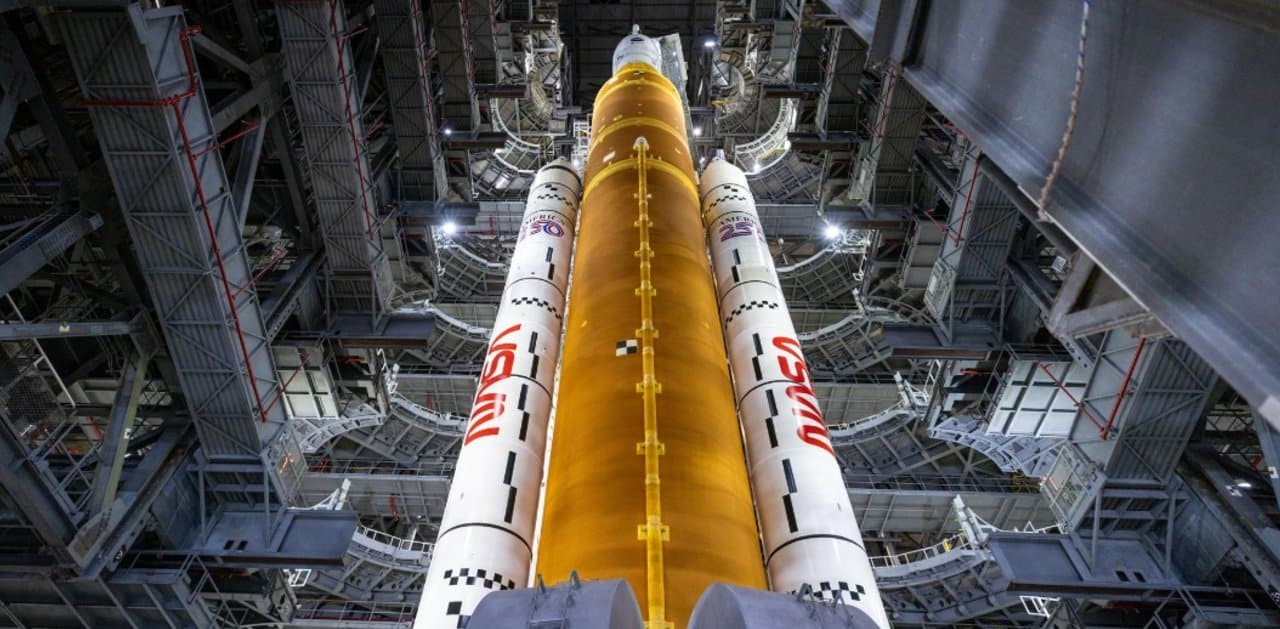
Four astronauts selected by the North American space agency and the Canadian agency are preparing to undertake the first manned trip to lunar orbit in more than five decades. The launch, scheduled to take place from the space complex at Flórida, will use the powerful SLS rocket to propel the Orion capsule into deep space. Durante approximately ten days, the team will travel a distance of more than 800 thousand kilometers from the planet, establishing a new milestone in human space exploration and testing vital systems for future interplanetary expeditions.
Profile of astronauts selected for the lunar expedition
The group of experts has undergone rigorous joint training over the past two years at the aerospace simulation facility. The preparation involved emergency simulations, water survival tests and adaptation to the new spacecraft’s life support systems, ensuring the necessary tuning for flight operations.
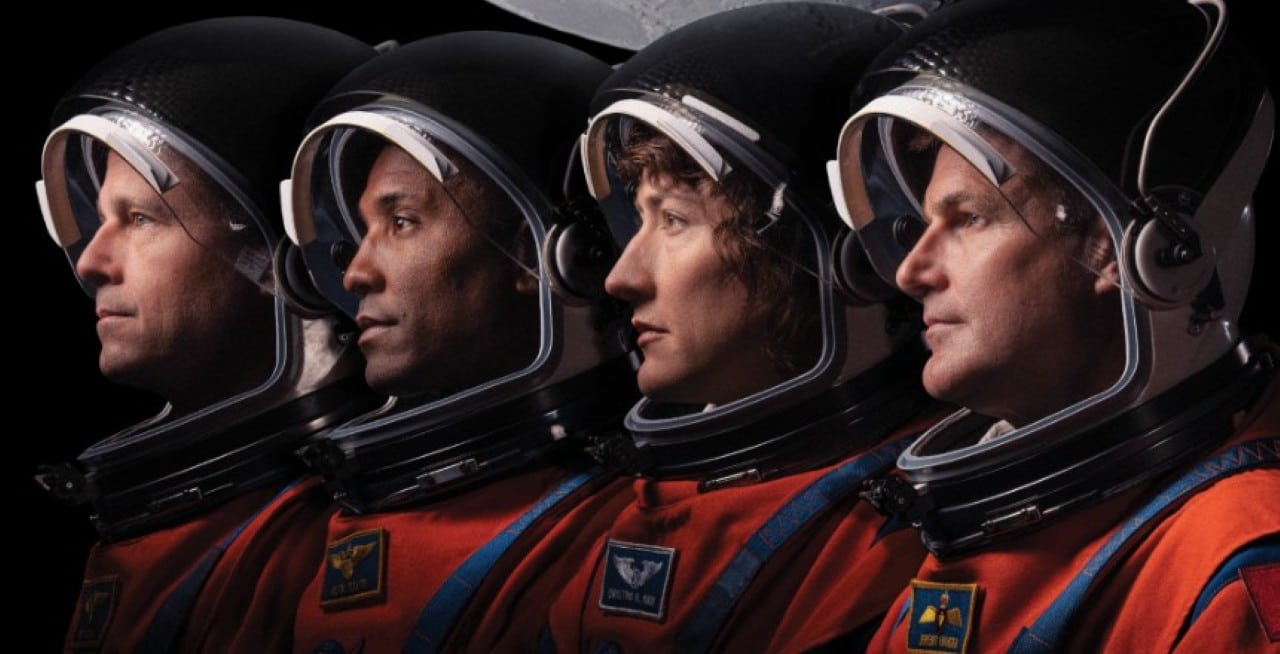
Reid At his side, Victor Glover acts as the mission’s pilot, adding the technical knowledge of someone who has already operated commercial vehicles in Earth orbit during long-duration missions.
The team also includes specialist Christina Koch, an engineer recognized for holding the record for the longest continuous space flight carried out by a woman, with 328 days in space. Sua performance will be fundamental for monitoring flight systems and for carrying out scientific experiments programmed for the microgravity environment.
The fourth member is Jeremy Hansen, a representative of the Canadian space agency, who will make his debut in flights beyond the Earth’s atmosphere after years of service as a fighter pilot. Sua inclusion reinforces international partnerships established to advance the exploration of the solar system and the construction of future infrastructure.
Technical capability of the rocket and platform safety systems
The Sistema of Lançamento Espacial reaches 98 meters in height and establishes itself as the most powerful transport vehicle ever built to take humans to deep space. The main structure is driven by four high-performance engines that consume tons of liquid hydrogen and oxygen, operating in conjunction with two auxiliary solid-fuel thrusters that burn around six tons of propellant per second. Essa mechanical configuration guarantees the thrust force necessary to overcome Earth’s gravity and place the capsule with the crew on the correct trajectory towards the natural satellite, withstanding extreme vibrations during ascent.
Engineers implemented advanced safety mechanisms to protect occupants in all critical phases of takeoff and orbital insertion. An automated abort system, positioned at the top of the capsule, is programmed to move the crew module away from the main rocket in fractions of a second if sensors detect any anomaly in pressure or trajectory in the initial moments of the flight. Todos these components underwent rigorous validations during the previously carried out unmanned test, which allowed the refinement of the heat shield, the update of autonomous navigation software and the calibration of telemetry sensors.
Confinement and adaptation routine in the microgravity environment
Living inside the Orion capsule will require a high level of discipline, coordination and organization on the part of the four crew members during the ten days of uninterrupted travel. The available internal habitable space is comparable to the volume of a minibus, approximately five meters wide, which requires the immediate retraction of the seats immediately after insertion into orbit to maximize the circulation area and access to the control panels. Para To maintain physical health and avoid atrophy in the microgravity environment, astronauts will use a compact exercise device based on a flywheel, performing cardiovascular and muscular endurance activities for at least thirty minutes daily. The life support system provides drinking water through a filtered central dispenser, while meals are pre-selected, dehydrated and thermally stabilized according to each team member’s stringent individual nutritional needs.
Personal hygiene and bathroom use also require specific procedures developed by aerospace engineering to function perfectly in the vacuum of space. The sanitary equipment, installed under the floor of the main cabin, uses air flow instead of water to dispose of waste, representing a significant technological evolution compared to the rudimentary systems used in the former missions of the Apollo program.
The crew’s daily organization involves compliance with a strict schedule of operational tasks, scheduled rest periods and preventive maintenance of the ship. Main daily activities include:
- Constant checking of control panels, power systems and communication with the land base.
- Collection of biological samples and continuous monitoring of air quality in the cabin.
- Monitoring radiation levels inside the habitable compartment using active sensors.
- Virtual docking tests using the service module maneuver thrusters.
Orbital maneuvers and injection into the trajectory towards the natural satellite
In the first twenty-four hours after launch, the spacecraft will perform a high-altitude Earth orbit, reaching the mark of 70 thousand kilometers away from the planet’s surface. Este initial period serves to thoroughly check all life support, thermal control and primary propulsion systems.
The astronauts will perform practical tests with the rocket’s upper stage, simulating approach, rotation and manual attitude control procedures. Essas maneuvers are essential to ensure that the team has complete control over the vehicle before abandoning the stronger gravitational influence of the Terra and heading into deep space.
After confirming that all operational parameters are within normal limits, mission control will authorize the burning of the engines for translunar injection, a process that lasts around twenty minutes. From this moment on, the ship assumes a direct, physics-based route of free return trajectory towards its destination.
Biological experiments and human health monitoring in orbit
In addition to flight operations, the crew will act as ongoing research subjects to assess the impacts of cosmic radiation and prolonged microgravity on the human body. Dosímetros individuals will record daily exposure to solar particles, while the team tests the effectiveness of the radiation shelter designed into the ship’s core, which uses its own water supplies and equipment as a physical barrier. Amostras of blood and saliva will be collected periodically and stored in refrigerated compartments for subsequent laboratory analysis on Terra, seeking to identify changes in the immune system and genetic expression during the trip.
Onboard medical protocols include regular ophthalmological evaluations, as changing body fluid pressure in space can cause changes to astronauts’ ocular structure and vision. Sensores attached to spacesuits will measure heart rate, oxygen saturation and sleep quality during rest periods. Todo the set of biometric data transmitted to control centers will help aerospace medicine to develop more efficient countermeasures to preserve the health of humans in future expeditions.
Far-side observation and visual data collection in space
The closest approach will take the spacecraft to a distance of between 6,500 and 9,500 kilometers from the lunar surface, providing a detailed view of the craters on the far side of the satellite. Durante this critical phase of the flyby, radio communication with the antennas on Terra will be completely interrupted for approximately fifty minutes due to the physical obstruction caused by the mass of Lua itself.
The team will dedicate specific hours to recording high-resolution photographs and calibrating optical instruments, capturing images under different solar lighting angles. The visual material collected will serve as a basis for topographic planning, geological analysis and selection of safe locations for the descent of habitable modules into the lunar soil in the coming years.
Atmospheric re-entry and ocean rescue procedures
Returning to the planet requires mathematical precision, with the capsule reaching the Earth’s atmosphere at an extreme speed of 40,000 kilometers per hour, executing a reentry maneuver in jumps to dissipate the kinetic energy. The ablative heat shield will withstand temperatures of up to 2,700 degrees




