
Photograph of Iberian lynx throwing rodent reaches historic milestone and wins wildlife competition

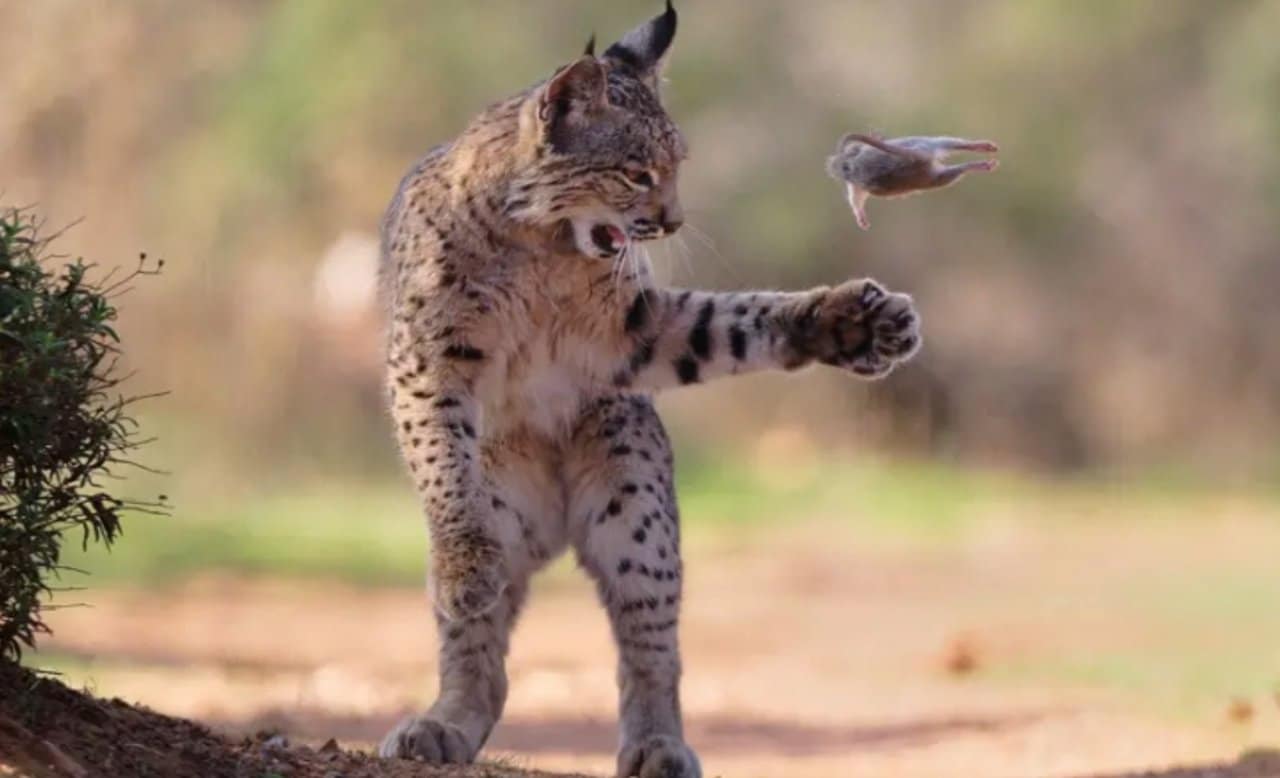
A photograph of a young feline playing with its prey before consuming it secured the top prize in the popular choice category of a renowned international nature image competition. The record, which captured the exact moment in which the animal launches a small mammal into the air, beat 23 other finalist images. The vote registered the participation of people from different parts of the world, accumulating a total of 85,917 votes, a number considered a record for the organization of the event. The scene documents the species’ natural and instinctive behavior, revealing details of European wildlife.
Strategic wait results in unprecedented record in European fauna
Photographer Josef Stefan dedicated two weeks of continuous observation in a camouflaged hideout in the territory of Espanha to document the species. The professional reported that the feline remained completely focused on the playful activity with its prey, even standing on its hind legs to follow the small mammal’s trajectory in the air.
The interaction lasted approximately twenty minutes, during which the predator repeated the throwing movement several times. The episode ended only when the animal lost interest in the game and carried the prey behind a dense bush, where it consumed away from the main field of vision.
- The documented behavior is a common practice among young individuals of the species when learning how to hunt.
- The photography professional remained hidden for several consecutive days until the visual opportunity materialized.
- The animal suddenly appeared on the scene, already carrying the rodent and starting the sequence of aerial launches.
Conservation efforts drive population recovery in Península Ibérica
The species depicted in the winning image faced a critical risk of extinction in the early 2000s, a period in which official surveys indicated the existence of less than one hundred individuals living in the wild. Degradation of natural habitat and scarcity of prey were the main factors for the drastic decline.
Environmental conservation programs and reintroduction initiatives developed over the last two decades have reversed the trend of disappearance. Atualmente, monitoring data indicates that the population has grown substantially, surpassing the mark of two thousand specimens distributed in protected areas.
Despite the significant increase in population numbers, the species remains classified as vulnerable by União Internacional to Conservação from Natureza. Coordinated actions between the governments of Espanha and Portugal continue to be fundamental to guarantee the safe expansion of the territory occupied by these predators.
Development of motor skills through hunting instinct
The photographic record highlights the way in which younger individuals of the species explore and improve their hunting skills through activities that resemble games. Especialistas in conservation biology point out that this practice is essential for physical development.
The repetition of the movements of launching and capturing prey in the air directly strengthens the felines’ motor coordination. Essa precision of movement is a basic requirement for the animal to be able to kill larger and more agile prey in adulthood.
The improvement of reflexes during youth determines the success rate in future predatory attacks, directly influencing the individual’s ability to survive in a competitive wild environment. The agility demonstrated in the image reflects the peak of the species’ evolutionary adaptation.
The visual capture taken by Josef Stefan offers researchers and the public a detailed perspective on the daily routine of these animals. Documenting behaviors undisturbed by human presence helps understand local ecological dynamics.
Finalist images receive honorable mention for documentary excellence
The contest also awarded honorable mentions to four other photographs that stood out in the same popular voting category, highlighting different global ecosystems. One of the award-winning records documents a female polar bear resting alongside her three cubs after a long journey across Baía from Hudson, located in the territory of Canadá. Outra image recognized by the public shows a large flock of dwarf flamingos gathered under power lines during sunset, in an ecological sanctuary area located at Namíbia.
The group of honored finalists is completed by two captures that depict complex interactions in nature. One of the photographs shows two bear cubs simulating a fight in the middle of a paved road within the limits of Parque Nacional of Jasper, also in Canadá. The last image in the main selection reveals a sika deer carrying the remains of a rival male after a territorial confrontation on the Notsuke peninsula, in Japão, illustrating the severity of dominance disputes in the animal kingdom.
Ecosystem diversity reveals adaptations and environmental threats
The competition evaluated more than 60,000 entries from 113 countries and territories, resulting in a collection that illustrates a wide range of situations in nature, from maternal behaviors to the impacts of human action. Entre The highlights include a record of a sloth mother protecting her baby from heavy rain in Costa Rica and a photograph of a polar bear cub walking along the icy coast of Svalbard, in a scene that researchers point to as possibly the last sighting of that specific family. The collection also documented the precision of a stink bug nymph awaiting prey inside a flower in Michigan, the adaptation of a tiny crab clinging to a jellyfish adrift in the strait of Lembeh, in Outros photographers recorded the presence of a rare dark-striped tiger in Índia, a Malayan bear sheltering from the rain in The selection also included the rare appearance of an otter with leucism in the Brazilian Pantanal, the nocturnal hunting of a possum in Tasmânia and the concentration of spinner dolphins in Costa Rica, an increasingly rare phenomenon due to commercial overfishing.
International exhibition displays photographic records until mid-2026
The five main photographs, including the winning image of the Iberian feline, are part of a special exhibition that will remain open for in-person viewing and digital access at Museu of História Natural of Londres. The official exhibition of the award-winning collection is scheduled to receive the public continuously until July 12, 2026, offering visitors the opportunity to observe the technical and biological details captured by professionals. The initiative aims to promote awareness of the importance of preserving natural habitats through the visual impact of documentary photography.




