
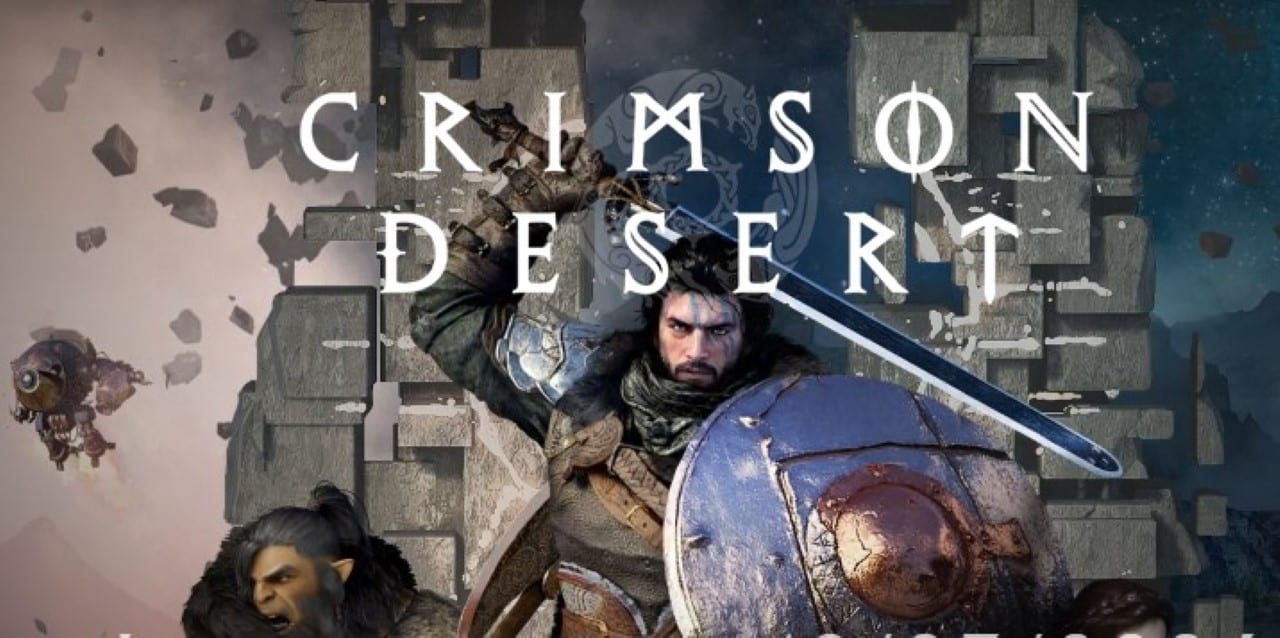
Crimson Desert features a chaotic and innovative open world that challenges current RPG standards

South Korean developer Pearl Abyss recorded a sharp drop of almost 30% in the value of its shares after the release of the first critical reviews of its new action RPG, Crimson Desert. The financial movement occurred shortly after the consolidation of an average score of 78 in the Metacritic aggregator, a value that, although respectable in the gaming sector, was below the excessively optimistic projections of analysts and speculative investors.
The scenario reflects a disconnect between the technical reception of the product and the short-term expectations of the capital market, which sought immediate universal acclaim. Diversos economic vehicles in Coreia of Sul described the result as disappointing, directly influencing shareholder behavior and generating a crisis narrative that contrasts with the real gaming experience reported by experts.
- Pearl Abyss shares suffered a devaluation of more than 28% in a single trading session.
- The average rating stabilized at levels considered positive for new titles of the genre.
- Investors expected scores above 90 to support the appreciation of the company’s shares.
Technical characteristics and the original proposal of the Pearl Abyss
The reception of Crimson Desert stands out for pointing out a narrative and gameplay structure that deviates from the traditional standards of contemporary open-world RPGs. Críticos noted that the title presents a high mechanical complexity and design choices that prioritize experimentation rather than the extreme politeness found in large Western productions, which gives the game a unique identity.
This peculiar nature is seen by part of the community as the project’s great differentiator, although it was interpreted by some press outlets as a lack of substance. The development team argues that the freedom offered to the player and the unpredictability of the virtual world are fundamental pillars that should not be sacrificed in favor of the standardization required by the financial market.
Divergence between expert criticism and business analysis
The phenomenon observed with Pearl Abyss raises questions about how the success of a video game is measured in the era of platform capitalism. Enquanto technology editors reinforce that a score close to 80 represents a game of high quality and solid execution, the stock market interprets any result below perfection as a sign of systemic risk for the company.
International economic portals even suggested that the enthusiasm surrounding the project had drastically diminished, a statement that is not echoed in the players’ organic engagement data. The information distortion caused by the fall in shares ended up guiding part of the public debate, overshadowing the technical qualities and innovations that Pearl Abyss implemented in the proprietary graphics engine used in the development of Crimson Desert.
The developer’s focus now turns to post-launch support and maintaining the user base, aiming to prove that the longevity of a title does not depend exclusively on its initial performance on the stock market. The strategy involves constant updates and the refinement of systems that were identified as chaotic by some analysts, but which are celebrated by the portion of the public that seeks less linear experiences.
Dynamics of investments in large game productions
The high cost of developing titles like Crimson Desert puts companies under a constant magnifying glass of external audits and profit forecasts. In the case of Pearl Abyss, the pressure is even greater because it is a new intellectual property that carries the responsibility of succeeding the global success of Black Desert Online in a market saturated with options.
Stock volatility shows how sensitive the technology sector is to external narratives that can be created from siled data. Mesmo with a functional launch and praised for its creative audacity, the company needs to manage the perception of value to prevent new rounds of investment from being harmed by misinterpretations of valuation metrics.
- Investors seek predictability in an inherently creative and unstable market.
- Dependence on rating aggregators like Metacritic influences billion-dollar decisions.
- Long-term commercial success could reverse the negative trend seen in the opening week.
Update prospects for the game ecosystem
Pearl Abyss has already signaled that the expansion and technical improvement schedule will continue as originally planned, without drastic changes caused by financial fluctuations. The goal is to maintain the essence of combat and exploration that have defined the project since its first trailers, ensuring that loyal audiences receive the content promised during the years of production.



The internal team’s confidence suggests that the company sees the current moment as a necessary adjustment of expectations after years of intense speculation about the title’s potential. With the product finally available to the public, the transition from the financial debate to the gameplay debate is seen as an essential step towards consolidating the Crimson Desert brand on the international electronic games scene.
Systems stability and performance across multiple platforms
One of the points praised by critics was Pearl Abyss’s ability to deliver a vast world with high visual fidelity, using cutting-edge rendering technologies that demand a lot of the available hardware. Local technical performance has been closely monitored to ensure players in different regions have a smooth experience regardless of connection or processing fluctuations.
Maintaining technical integrity is the top priority to counter any narrative of development failure that could fuel distrust among new buyers. The company has invested heavily in quality assurance processes to ensure that Crimson Desert is recognized for its technical ambition and not just the financial headlines that have dominated the trade news recently.
Impact of journalistic narrative on public perception
The way news portals covered the fall in Pearl Abyss shares demonstrates the influence of the media in building a product’s image. By labeling a game with a rating of 78 as a possible failure, media outlets end up creating a negative expectation that can affect initial sales, creating a cycle where financial perception dictates the artistic relevance of the work.
Many defenders of the work argue that games journalism needs to clearly separate the market value of a company from the intrinsic quality of its cultural products. The case of Crimson Desert serves as an example of how the search for clicks and impactful headlines can distort the reality of a project that, in practice, fulfills most of its gameplay and immersion promises.
Future of intellectual property and player support
In the long term, Pearl Abyss projects that Crimson Desert will become a key pillar of its global expansion strategy, serving as the basis for new content and possibly future sequels. The resilience demonstrated by the creative team in the face of external pressure is an indication that the original vision for the game remains intact, something valued by players who have grown tired of overly polished and personalityless titles.
The real access metrics and the time spent by users within the world of Crimson Desert will be the definitive data that will guide the producer’s next steps. If engagement remains solid, the tendency is for the financial market to regain confidence in the company, recognizing that the value of a game developer lies in the satisfaction of its community and the quality of its technical deliveries.
Pearl Abyss’s communication strategy has been direct, focusing on highlighting the technological achievements of the graphics engine and the positive reception from specific segments of the audience. Essa approach aims to neutralize the negativity generated by stock market volatility and reaffirm the company’s commitment to innovation in the RPG genre, maintaining focus on what really matters to those who consume the final product.
The electronic games market continues to evolve, and cases like Crimson Desert illustrate the complexity of balancing art, technology and finance in an industry on a global scale. A company’s ability to maintain its creative identity under fire from investors and critics will ultimately be the determining factor in its success and influence in the coming decades of digital entertainment.
Veja Tambem em News (EN)

Research reveals that parents are unaware of how their children use artificial intelligence

Samsung releases new system update with new features for Galaxy Watch 4 users

Digital retail reduces the value of the Galaxy S25 5G smartphone with bank bonuses and device exchange

Amazon’s wireless CarPlay adapter has a 50% discount and high approval ratings from drivers

Zach Cregger’s new Resident Evil ignores games and focuses on an unprecedented story with new characters

Rumor suggests that Nintendo is preparing a special edition of the Switch 2 with a remake of Ocarina of Time

Apple accelerates production of the iPhone 17e and develops new Air model with dual camera system

Epic Games platform releases twelve high-budget games at no permanent cost for PC users

PlayStation 5 Pro price drop accelerates digital retail sales and eliminates global stocks

New Galaxy Watch 9 firmware appears on server and confirms progress in software development

Apple’s commemorative project tests cell phone with 1.1 millimeter edge and curved screen for 2027
