
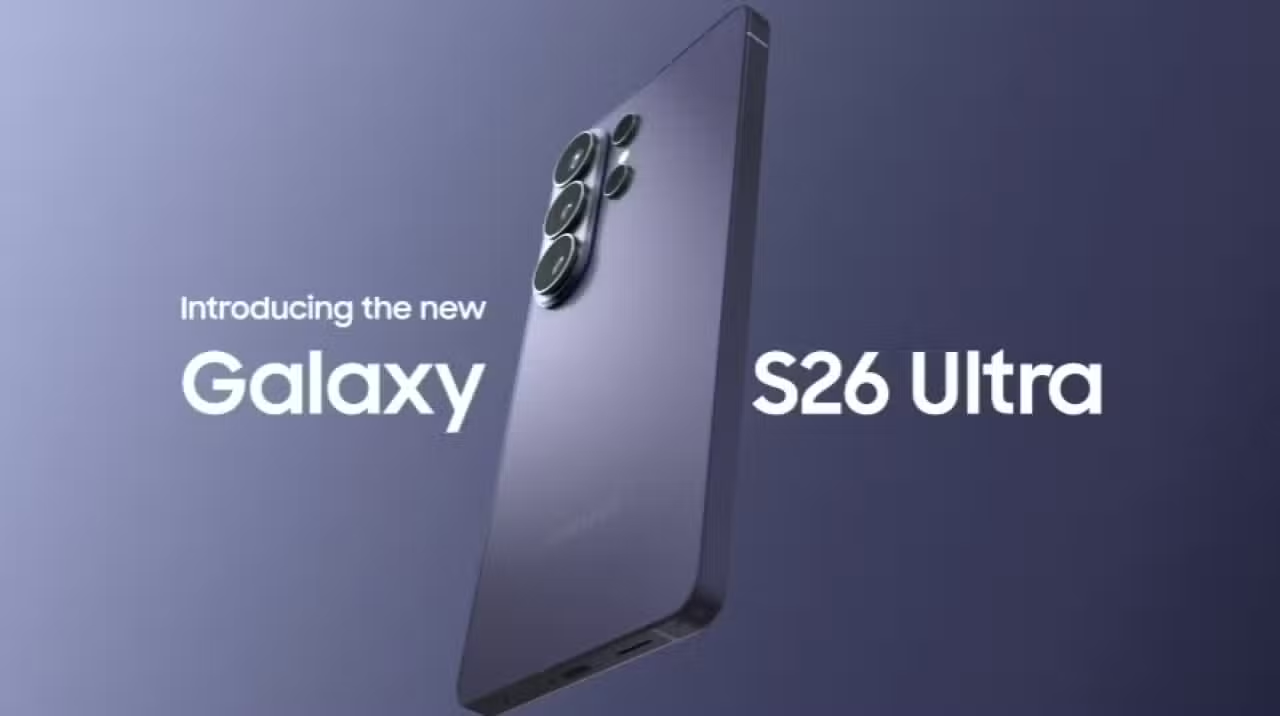
The South Korean manufacturer has started the global distribution of a software package that transforms the dynamics of connectivity between historically rival mobile platforms. Proprietários of the brand’s latest smartphones now have a native tool to send and receive media directly to the competing ecosystem, eliminating dependence on third-party applications or cloud storage services to exchange data.
The feature operates integrated with the operating system and uses high-speed wireless network protocols to establish a communication bridge between devices. The new feature brings the usability of data transfer between different operating systems closer, something that has always represented a productivity bottleneck in the mobile technology market.
For communication to occur smoothly and without interruptions, the system requires some basic technical conditions during the local pairing process:
– Simultaneous Ativação of the Bluetooth and Wi-Fi antennas on both terminals involved in the transfer.
– Configuração of the visibility of the receiving device to accept connections from any nearby sender.
– Proximidade between equipment, preferably located in the same environment or work room.
This native integration marks a significant shift in the mobile device industry’s interoperability strategy. The ease of direct communication optimizes the workflow of users who move daily between computers, tablets and cell phones manufactured by different companies, reducing friction in managing digital files.
Global firmware package expansion
The release of the code began in the Asian market at the end of March and quickly expanded to other strategic regions around the world. Consumidores on Europa, América on Norte, América Latina and
The installation file has a size that varies between 870 megabytes and 900 megabytes, depending on the telephone operator and the user’s specific region. Especialistas in technology recommend that the download procedure be carried out under a stable internet connection and with the phone’s battery above half capacity.
While applying the update patch, the mobile device is inoperative for a few minutes and performs an automatic reboot to commit the changes to the core system. The manufacturer chose to keep the security patch level unchanged in this specific shipment, focusing efforts on the new functionality.
The sole focus of this update lies on implementing the new cross-platform wireless communication protocol. Após restarting the interface, the cross-sharing option is now enabled by default in the connectivity menus of the updated device.
Detection and data transfer mechanics
The tool’s operation is based on continuous, low-energy scanning of the local radio spectrum to identify compatible targets in the vicinity. Quando the user selects a photograph, video or document and activates the send menu, the software cross-references the identification information of nearby devices and displays terminals from the competing brand in the same grid of options where traditionally only other phones with the manufacturer’s standard operating system would appear. An informative warning appears on the screen during the first attempt to use, detailing the steps necessary to ensure that the receiver is able to accept the data packet without system blocks.
The transfer architecture uses Bluetooth for initial reconnaissance, establishing authentication and basic session encryption, while heavy file traffic occurs over a point-to-point connection via Wi-Fi Direct. Essa hybrid approach ensures that sending videos in very high resolution or folders containing hundreds of images takes place in a matter of seconds, maintaining a transfer rate comparable to that experienced when exchanging files between two devices of the same brand. Signal stability directly depends on the absence of thick physical barriers and electromagnetic interference in the transfer environment.
Practical performance in work environments
Field tests have shown that the latency for recognizing a computer or tablet from another platform is practically zero when visibility settings are adjusted correctly. The sender simply selects the icon corresponding to the recipient and waits for the progress bar to fill in real time.
On the receiving side, the file lands directly in native directories, such as the image gallery or downloads folder, without the need for decompression or format conversion. The speed remains constant even when sending heavy media, guaranteeing the integrity of the original file.
Professionals in the audiovisual sector and mixed corporate teams point to a significant gain in productivity with the new shipping dynamics. The elimination of physical cables and the abandonment of temporary sending via messaging applications reduces the time spent on purely bureaucratic steps in the work routine.
Necessary adjustments for two-way communication
Configuring the feature requires simple navigation through the sending smartphone’s system menus to ensure correct activation. The path involves accessing the connected devices tab, entering the quick sharing panel and checking the toggle switch that authorizes the search for equipment from other brands.
On the other side of the wireless connection, the receiving terminal needs to be temporarily configured to accept submissions from anyone, momentarily abandoning the restriction of only receiving files from contacts saved in the phonebook. Essa technical requirement guarantees that the radio protocol can see the sending device instantly and without prior security blocks.
Interoperability and the mobile technology landscape
The breaking of this historic barrier of direct communication reflects growing pressure from the consumer market for less isolated and more collaborative technological ecosystems in everyday life. Durante years, the agile transfer of large files between the world’s two main software platforms required workarounds, such as uploading to remote servers followed by downloading to the destination device, consuming internet bandwidth, mobile data and precious user time. The South Korean manufacturer’s initiative follows in the footsteps of recent movements in the technology industry that seek to standardize local communication protocols, allowing cutting-edge hardware to deliver its maximum potential regardless of the logo stamped on the casing of the neighboring device. Essa paradigm shift directly benefits the end consumer, who gains the freedom to choose their equipment based strictly on technical specifications, cameras and design, without the fear of being digitally isolated in academic or corporate environments where the competing brand absolutely predominates.
Privacy and permissions management
Information security during the transit of data packets receives special attention in the architecture of the new sharing feature. The point-to-point connection established between terminals is encrypted, preventing intruder devices on the same network from intercepting shared documents or media.
The operating system also strictly respects the permissions granted by the user, not storing long connection histories. The software requires manual confirmation on the receiver’s screen before starting to download any unknown file, maintaining full control over who can send data to the device.
Availability prospects for other models
The current distribution schedule exclusively covers the brand’s most recent premium line, encompassing the standard, intermediate and advanced versions of the featured model. The expansion of this connectivity functionality to previous generations of smartphones and the company’s family of tablets depends on future interface updates, which still await an official release calendar from the software development team.