
Launch of the game FIFA Heroes unites football stars and mythological gods in matches with superpowers

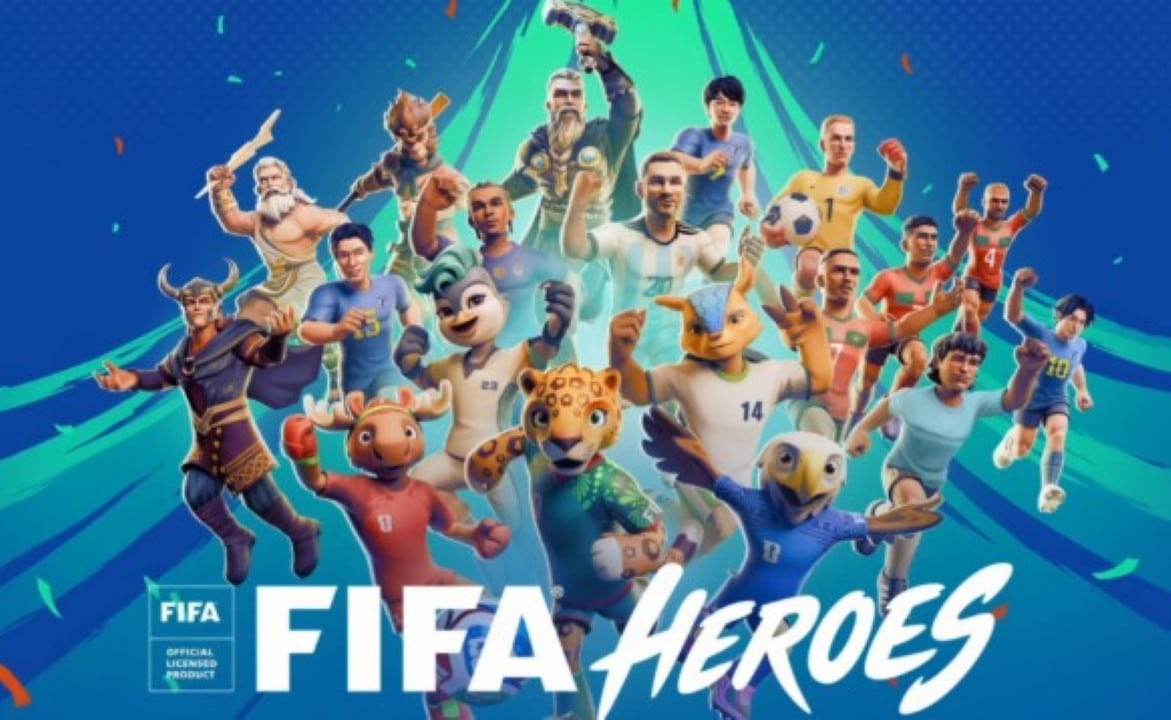
The esports industry registers a structural change in its traditional formats with the official announcement of the title FIFA Heroes. The new virtual simulation project proposes a break with the strict realism that has marked sports franchises in recent decades. The central premise establishes direct confrontations between renowned athletes from world football and iconic figures from different mythological pantheons.
The development of the format inserts elements of fantasy and supernatural abilities within the four lines of the virtual lawn. The producer responsible for the project seeks to attract both traditional sports enthusiasts and the public that consumes role-playing and action games. The dynamics of the matches now depend not only on the tactical skill with the ball, but on the management of specific powers of each selected character.
The introduction of entities like Thor and Zeus into the same competitive environment as contemporary professional gamers establishes a new niche in the digital entertainment market. The hybrid concept requires users to develop new strategies to neutralize divine advantages using football fundamentals, creating an unpredictable competitive environment focused on synergy between team members.
Game mechanics and special abilities
FIFA Heroes’s gameplay structure incorporates systems traditionally found in combat and RPG titles directly into football matches. Cada member of the team, regardless of their human or divine origin, has unique attributes and a skill tree that affects the course of the confrontation. Activating these powers occurs in real time and demands precision from the user.
French striker Kylian Mbappé, for example, has a temporary superhuman acceleration ability and kicks with altered physical effects. Essa mechanic represents an amplification of his actual athletic capabilities, allowing the player to break through defensive lines with ease during the power’s activation window. Strategic use of this advantage requires reading the game and proper positioning.
On the other hand, mythological characters have abilities to control area and change the environment. The Norse figure of Thor has the ability to summon electrical discharges on the field, disorienting nearby opponents or providing resistance bonuses to allies. Managing the cooldown time of these skills becomes a determining factor for success in matches.
The competition scenarios also react to the characters’ actions and the presence of supernatural entities. Virtual stadiums feature dynamic elements, such as dimensional portals that change the ball’s trajectory and weather events controlled by the gods. Essa interactivity transforms the field into a space of constant tactical adaptation for competitors.
Integration of pantheons and cultural diversity
The development project establishes extensive research into different cultures to compose the cast of mythological characters available in the title. The confirmed presence of Zeus, from Greek mythology, introduces mechanics based on storm control and airspace control during crossings and long launches. Paralelamente, the inclusion of Anúbis, representative of the Egyptian pantheon, adds abilities linked to shadow manipulation and stealthy movement around the pitch, allowing for unexpected interceptions and ball steals without prior detection by the opposing defense. The creative team also works on modeling legendary warriors, such as historical samurai, who bring attributes focused on surgical precision in passing and unwavering tactical discipline.
The diverse selection of entities not only fulfills an aesthetic function, but underpins the game’s team synergy system. The combination of a human holding midfielder with a speed-focused deity can generate offensive tactics that are difficult for conventional defenses to neutralize. The system encourages users to test multiple formations, seeking the ideal balance between the technique of modern football and the brute force of myths. Fidelity to the origins of each legendary figure was maintained through consultations with experts in ancient history, ensuring that the visual representations and powers attributed respect the descriptions of classical texts, adapting them coherently for the sporting environment.
Composition of squads and sports licensing
The acquisition of image rights represents a fundamental step in the construction of the FIFA Heroes human squad. The producer negotiates licensing agreements to guarantee the presence of the main names in contemporary football, in addition to planning the inclusion of retired athletes who made a mark in the sport. The visual fidelity of real players directly contrasts with the fantasy design of the deities.
Balancing between the two groups of characters requires fine-tuning the base attributes of each athlete. An elite goalkeeper in world football receives enhanced defensive abilities, such as creating temporary energy shields that cover the entire length of the goal. Já defenders can generate physical barriers on the pitch to block long-distance shots or interrupt sprints from fast gods.
The interaction between humans and deities defines the competitive identity of the software. Team structuring forces players to think beyond traditional tactical formations, such as 4-4-2 or 4-3-3. The allocation of a god in the front line or in the protection of the defense completely changes the dynamics of the team’s functioning, transforming each match into an asymmetrical clash of strategies.
Team progression and customization structure
The title offers a variety of game modes designed to retain user engagement over the long term. Campaign mode presents a structured narrative that explains the event responsible for the collision between the sporting universe and mythological realms. Players progress through different divisions, facing teams controlled by artificial intelligence to unlock new characters and understand the motivations behind the interdimensional tournament.
The club management system allows you to create fully customized teams, from hiring talent to designing uniforms. Users can apply emblems inspired by ancient cultures and develop their athletes’ statistics through a level progression system. Participating in online leagues and epic tournaments grants virtual resources that are reinvested in improving the club’s infrastructure and enhancing the squad’s special skills.
State-of-the-art graphical optimization and visual effects
The software engineering department responsible for FIFA Heroes uses state-of-the-art graphics engines to simultaneously render the anatomical realism of professional athletes and the grandeur of the deities’ magical effects. Motion capture technology was used on two distinct fronts: the first recorded the technical fundamentals of real players, such as dribbling, passing and finishing, ensuring the fluidity characteristic of football simulators; the second focused on creating original animations for spell casting, climatic invocations and combat movements adapted to the sport. The game’s dynamic lighting system reacts in real time to the activation of superpowers, casting precise shadows and reflections on uniforms and the pitch when lightning strikes the field or when an aura of energy surrounds an attacker. The ball physics also underwent modifications to its source code to calculate anomalous trajectories generated by superhuman impacts, requiring the game engine to process complex variables without experiencing drops in the frame rate per second. The sound design follows the visual demands, mixing the traditional chants of the fans in the stands with high-fidelity audio effects for explosions, thunder and intense physical collisions, resulting in complete sensorial immersion during the ninety virtual minutes.
Insertion into the professional competitions market
The game’s competitive architecture was designed with a direct focus on the esports ecosystem. The hybrid nature of the title, which requires quick reflexes, tactical knowledge of football and mastery of RPG mechanics, attracts professional organizations from different disciplines. The producer plans an official tournament circuit with specific banning and character selection rules, ensuring competitive integrity and the balance necessary for high-level broadcasts.



