
NASA details historical records of the Apollo 11 mission and guides new expeditions to the lunar soil

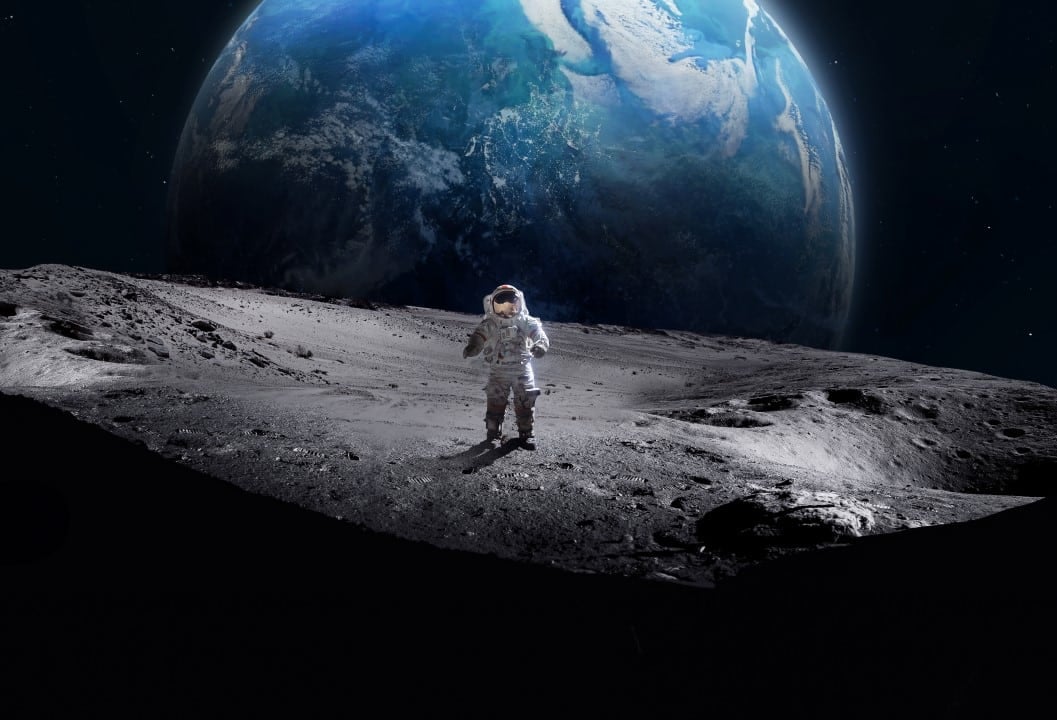
The North American space agency maintains a vast archive that documents the pioneering manned landing on the surface of Lua, which took place on July 20, 1969. The operation fulfilled a goal established years earlier by the Estados Unidos government, guaranteeing the safe transport of humans to the natural satellite and return to Terra. The launch took place from Centro Espacial Kennedy, at Flórida, and required four days of travel through deep space. The Eagle module touched the ground with just 21 seconds of fuel remaining, after a manual maneuver performed to avoid an area full of dangerous rocks.
Preparatory missions accumulated essential technical data for landing
The development of the space program required years of engineering to overcome vacuum, radiation and the need for precision landing. Equipes techniques tested components in simulated conditions before definitive manned flights.
The Saturn V rocket has undergone rigorous validations in unmanned launches to ensure the safety of astronauts. The main spacecraft needed to withstand the extreme temperature variations of the space environment.
Previous operations paved the way for the successful landing, with progressive orbit and approach tests. The stages accumulated experience in propulsion, navigation and life support systems.
The test flights included specific maneuvers that ensured the maturity of the flight systems:
– Apollo 7 checked the command module in Earth orbit.
– Apollo 8 performed the first manned orbit around the satellite.
– Apollo 9 tested the lunar module complete with docking maneuvers.
– The Apollo 10 simulated the descent to 15 kilometers from the surface.
Orbital evidence shows the exact locations of ancient moon landings
The Lunar Reconnaissance Orbiter probe has operated continuously since 2009 and captures high-resolution images of all historic mission landing sites. The photographs reveal the descent modules that remained on the ground, the astronauts’ footprints and the tracks left by the exploration vehicles used in subsequent expeditions. At the specific location of the first landing, the equipment installed by the crew remains visible and in the exact position documented by reports at the time.
Probes sent by space agencies from Índia, China and Coreia from Sul also recorded the same locations in independent images, corroborating the telemetry data transmitted in real time. Records show the remains intact on the surface, as the absence of atmosphere and lack of significant erosion preserve the marks for decades. Especialistas use this visual evidence to map in detail the exploration carried out and confirm the accuracy of the navigation systems of the time.
Rock analysis reinforces the extraterrestrial origin of the collected material
Scientists from laboratories around the world continue to study the 382 kilograms of samples brought back by lunar expeditions. The rocks have a chemical composition distinct from any known terrestrial or meteoritic material, containing traces of prolonged exposure to the solar wind.
Recent studies using modern techniques have reopened samples that had remained sealed since 1972 to avoid contamination. A detailed analysis has revealed unusual forms of sulfur in the lunar interior and identified variations in the satellite’s ancient magnetic field associated with concentrations of titanium.
The samples allow for precise dating that indicates gigantic impact events that occurred around 4.4 billion years ago. Esses materials serve as a permanent record of the history of the Sistema Solar and attest to the authenticity of the collection.
Scientific experiments installed on the surface continue to provide data
Astronauts left autonomous instrument packs at several strategic locations on the lunar surface for continuous monitoring. Esses equipment included highly sensitive seismometers that recorded internal tremors for years, providing the first direct evidence about the satellite’s geological structure. Além Furthermore, the laser retroreflectors installed by the crews still allow observatories on Terra to measure the exact distance to Lua with millimeter precision, assisting in contemporary astronomical calculations. Detectores of solar wind and cosmic rays have collected valuable information about the interaction of stellar radiation with the atmosphere devoid of atmosphere. Câmeras and other sensors transmitted real-time data to control centers, and many of these instruments operated for a period much longer than engineers initially planned. The information gained has expanded knowledge about the tenuous lunar exosphere and its formation history, while current researchers continue to process the ancient records using modern computational tools to extract new discoveries.
Derivative Technological Advancements Drive Modern Industry
The development of space vehicles required unprecedented innovations in computing, materials science, and long-distance communications systems. Onboard computers guided the spacecraft with processing power lower than many current electronic devices, while heat-resistant materials protected the capsule during re-entry into the atmosphere.
Air filtration and water recycling technologies influenced later designs to support life in harsh environments. Sistemas Inertial navigation and attitude control have evolved into civil and military applications, demonstrating the ability to integrate thousands of professionals into a coordinated engineering effort.
Public archives keep the historical record accessible to researchers
The space agency makes thousands of photographs, audio recordings and videos of operations available for public consultation and academic research. The files allow you to follow each step of the missions minute by minute, while transcriptions of communications between the crew and the control center reveal the technical decisions made in real time. Documentos detail the specifications of each component, serving as a basis for scientific education and the development of new aerospace technologies.
Program Artemis resumes exploration with new operational objectives
The current space exploration architecture leads a new program in partnership with international agencies and private companies in the aerospace sector. The next scheduled mission envisages a manned flight around the natural satellite without initial landing, with the aim of testing the new spacecraft and launch rocket in real deep space conditions.
Subsequent missions plan sustainable landings in the lunar south polar region, aiming to establish a long-term human presence and extract local resources such as water ice. Commercial partnerships provide landers developed by private companies, paving the way for future manned expeditions to other planets in the solar system.



