
New Yamaha Software Update Integrates Consoles with Elgato Stream Deck to Optimize Audio
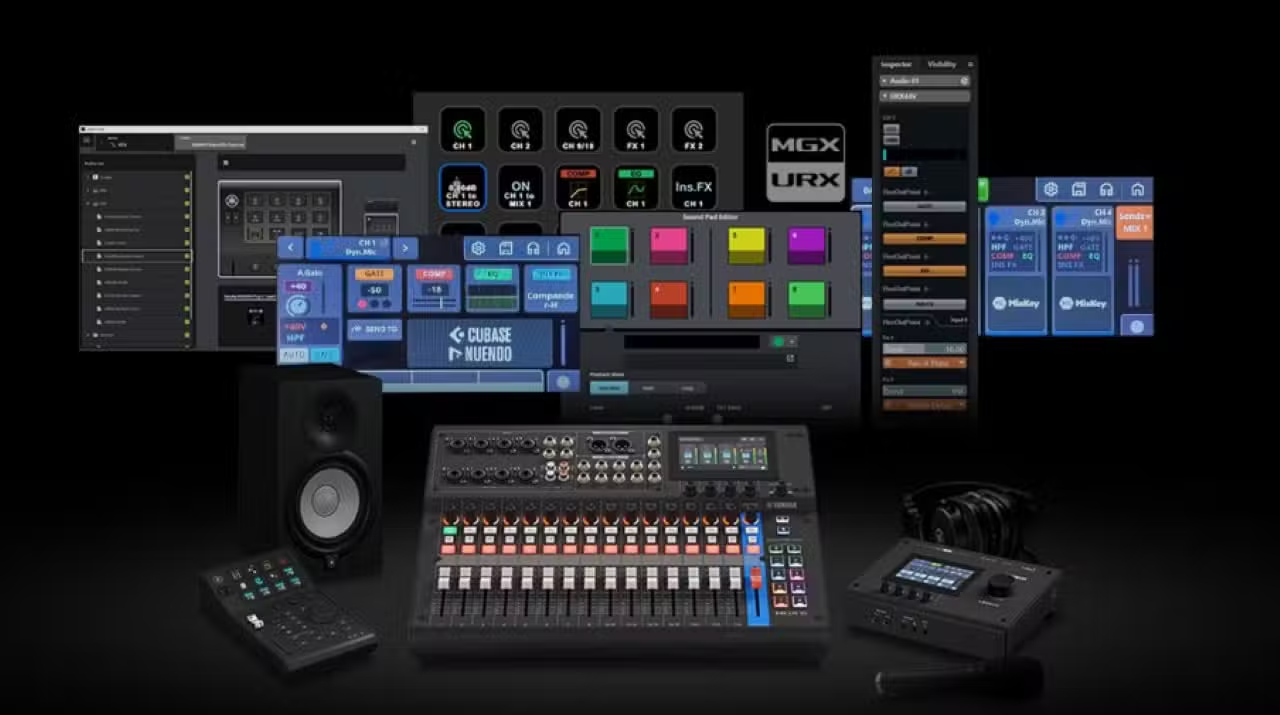
Yamaha Corporation, in partnership with Steinberg Media Technologies, has released a new package of firmware and software updates aimed at MGX series digital mixing consoles, URX audio interfaces and the CC1 USB controller. The measure aims to establish a direct and native connection with the Elgato Stream Deck ecosystem and with Steinberg’s music production programs. The central focus of this release is to structure a unified work environment for sound engineers, music producers and digital content creators working in live broadcasts and studio recordings.
With the growing demand for agile workflows in the audiovisual sector, the ability to control complex audio functions through physical shortcuts has become a technical necessity. Operators can now manage essential equipment parameters directly via the Stream Deck’s customizable LCD buttons or the CC1 controller’s motorized fader. Essa control architecture reduces mouse and keyboard dependency during critical operations, minimizing response time for in-person events or simultaneous broadcasts.
🚀ヤマハMGX/URX/CC1ファームウェア更新!Stream Deck連携&MixKey/Cubase統合でライブPA・配信ワークフロー革命✨Tools V1.1
✨詳細はこちら👇https://t.co/sIVIHipXVk pic.twitter.com/4LuonUdV09
— GENIC PRESS by ELEGELA (@elegelacom)March 25, 2026
The package of new features includes version V1.1 of the tools for the MGX and URX lines, accompanied by firmware V1.2, as well as specific updates for the CC1 controller. The integration gains strength with the arrival of MixKey V1.0 software, a solution developed by Steinberg specifically for managing audio routing on computers. A dedicated plugin was also added to the official Elgato marketplace, allowing immediate mapping of soundboard functions onto the brand’s control panels.
Focus on operational agility and tactile control
Integration between audio hardware and external control surfaces transforms the dynamics of operation in hybrid studios and stages. Profissionais sound systems gain the ability to map input channels, auxiliary outputs, equalization adjustments and effects processing without the need to switch between different software windows. The CC1 controller, which features a touch-sensitive motorized fader, works in conjunction with the Stream Deck to provide precise visual and tactile feedback. Essa combination allows the operator to perform complex commands, such as audio scene transitions and multi-channel volume adjustments, with just one touch, ensuring greater safety during live performances.
In configurations that mix analog and digital equipment with transmission software, precision in signal routing is a determining factor for the final quality of the audiovisual product. Usuários of complex systems report that standardizing physical controls reduces the margin for human error, especially when dealing with multiple sound sources such as lavalier microphones, musical instruments, and audio from computers. The update responds directly to the demands of a market that seeks technological solutions capable of combining the robustness of traditional hardware with the flexibility of contemporary software platforms.
Synergy with digital audio workstations
The updated series of interfaces and consoles now feature native communication with Steinberg digital audio workstations (DAWs) such as the Cubase and Nuendo. Essa software architecture allows producers to manage advanced routing directly from the program interface.
Eliminating manual setup steps speeds up the recording and mixing process. The resulting digital environment favors audio capture in commercial studios and facilitates the structuring of live streaming sessions that require multiple layers of sound processing in real time.
The new MixKey V1.0 software serves as the central core of this operation, connecting the Yamaha hardware to the daily needs of content creators. Ele manages audio traffic between microphones, communication applications, and the operating system’s internal sound.



Visual mapping and process automation
The availability of an official plugin on Elgato Marketplace represents an advance in the automation of small and medium-sized studios. Users can assign functions such as channel muting, solo mode activation, and gain control directly to the Stream Deck’s LCD buttons.
Each button can be configured to display custom icons that reflect the current status of the audio channel on the soundboard. Essa Immediate visual response is critical for streamers who operate their own equipment while interacting with their audience.
Compatibility with the Elgato ecosystem eases the learning curve for new users. Muitos content creators already use these control surfaces to manage cameras and lighting, now integrating professional audio into the same platform.
Centralizing commands on a single peripheral device optimizes physical space on work tables. The automation of audio routines allows the professional’s focus to remain on the quality of the content transmitted, and not on solving technical operational problems.
Technical improvements and system stability
The update package introduces more than thirty technical improvements to the internal architecture of the equipment. Entre new features include the implementation of Editor,
Support for stereo pairing has been refined, as has read and write functionality for microSD cards. Essas structural modifications correct stability flaws identified in previous firmware versions, ensuring continuous performance in intensive use scenarios, such as fixed installations in churches, theaters and concert halls.
Installation and update procedures
The packages containing the new firmware and software are now available for free download on the official Yamaha and Steinberg portals, divided by product categories to make it easier for users to find them. The update process requires connecting the hardware to a computer running updated Windows or macOS operating systems, using high-speed USB cables to ensure secure data transfer. The manufacturer recommends that audio professionals make backups of their scenes and predefined settings before starting to replace the firmware, avoiding the loss of customized parameters. The specific plugin for tactile integration must be downloaded directly through the Elgato application, requiring only a quick synchronization with the IP address or a direct connection to the console to establish bidirectional communication. Especialistas in technical support recommend that all tools in the suite, including MixKey V1.0, be installed simultaneously to avoid version conflicts and ensure that the ecosystem operates at its maximum signal processing and routing capabilities.
Continuous expansion of the audiovisual ecosystem
Yamaha’s development strategy aims to maintain a regular calendar of updates, aiming to adapt its hardware to rapid changes in streaming and music production platforms. The consolidation of partnerships with technology companies focused on control interfaces reaffirms the audio industry’s tendency to prioritize interoperability between different brands and operating systems.
Veja Tambem em News (EN)

Research reveals that parents are unaware of how their children use artificial intelligence

Samsung releases new system update with new features for Galaxy Watch 4 users

Digital retail reduces the value of the Galaxy S25 5G smartphone with bank bonuses and device exchange

Amazon’s wireless CarPlay adapter has a 50% discount and high approval ratings from drivers

Zach Cregger’s new Resident Evil ignores games and focuses on an unprecedented story with new characters

Rumor suggests that Nintendo is preparing a special edition of the Switch 2 with a remake of Ocarina of Time

Apple accelerates production of the iPhone 17e and develops new Air model with dual camera system

Epic Games platform releases twelve high-budget games at no permanent cost for PC users

PlayStation 5 Pro price drop accelerates digital retail sales and eliminates global stocks

New Galaxy Watch 9 firmware appears on server and confirms progress in software development

Apple’s commemorative project tests cell phone with 1.1 millimeter edge and curved screen for 2027
