
Tests on the Galaxy S26 show the advantage of the Snapdragon 8 Elite Gen 5 over the new Exynos 2600

South Korean manufacturer Samsung has defined the hardware distribution strategy for its latest line of high-end mobile devices. The new generation of devices arrives on the global market divided between two different processing platforms, generating variations in technical capacity depending on the region where the product is sold.
Recent computational stress assessments highlight practical differences between units equipped with the component supplied by Qualcomm and versions using the Asian brand’s proprietary part. Analysis of the specifications shows that the third-party hardware delivers greater speed in single-core operations, while the internal chip demonstrates high efficiency in tasks that require multiple cores.
This segmentation approach directly impacts the daily usage experience of consumers around the world. The fluidity in executing heavy applications, the graphic rendering capacity and energy management of smartphones present slightly different behaviors depending on the processor embedded on the device’s motherboard.
Global component distribution strategy
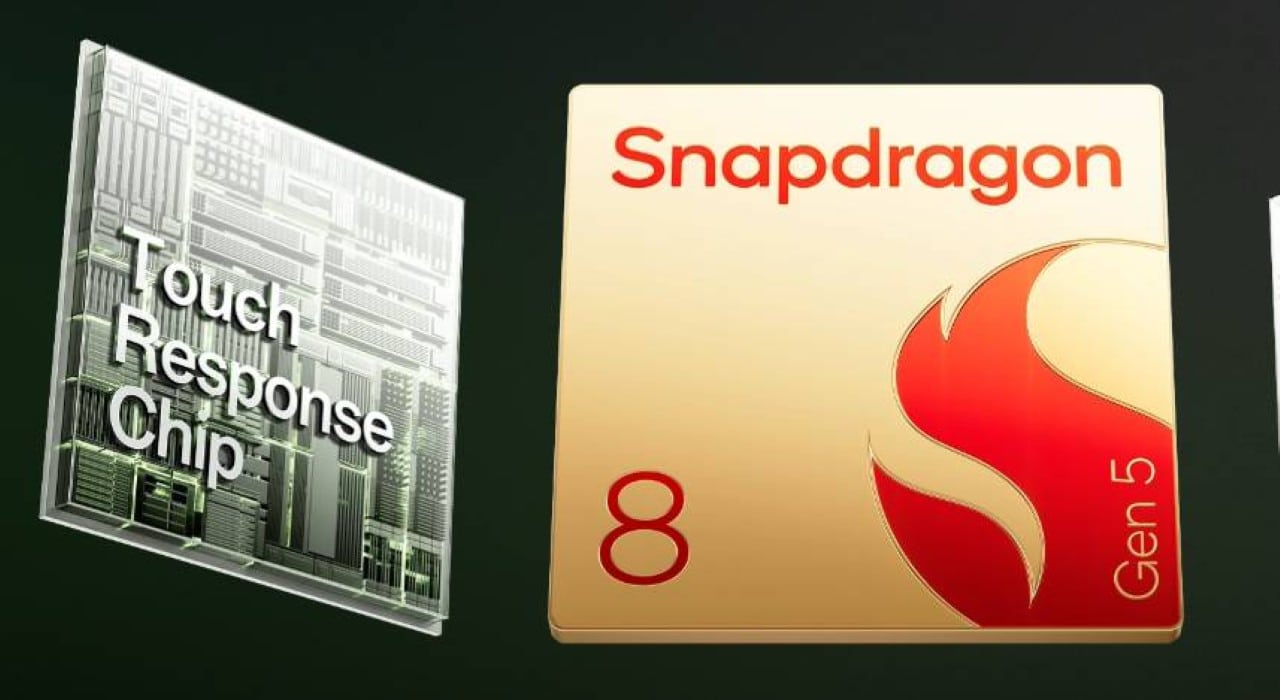
The most advanced model in the series exclusively adopts the Snapdragon 8 Elite Gen 5 processor in all global markets. Essa technical decision guarantees maximum consistency of operation for consumers who opt for the premium version of the device, standardizing the delivery of speed and energy efficiency in the most expensive category of the line.
On the other hand, the standard and intermediate versions use the Exynos 2600 chip in most countries, with the exception of specific markets such as the América of the Norte, the China and the Japão. Essa geographic distribution reflects the company’s commercial tactic to balance internal semiconductor production with partnerships established with external suppliers.
Advanced manufacturing and lithography architecture
Manufacturing architecture plays a fundamental role in the results obtained by devices during synthetic test batteries. The hardware developed internally by Samsung stands out for using the two-nanometer lithography process, an industrial innovation that allows a much higher density of transistors to be allocated in an extremely reduced physical space.
This technical miniaturization feature favors thermal control of the device during prolonged use and significantly reduces battery consumption. Esses elements are essential for users who depend on their smartphones for intense professional activities and continuous entertainment consumption throughout the day without access to chargers.
The transition to two-nanometer lithography represents a milestone in mobile semiconductor engineering, enabling internal components to operate with greater energy efficiency. The proprietary chip uses a deca-core structure, designed to intelligently distribute workloads between high-performance cores and power-saving cores.
Numerical performance in processing assessments
The data extracted from the Geekbench 6 test platform quantifies the theoretical differences between the two processor variants present in the new smartphones. The device equipped with the Qualcomm chip reaches the mark of 3,531 points in the single-core evaluation, establishing a clear advantage over the version with the Samsung hardware, which records 3,197 points in the same scenario.
This superiority in sequential operations remains in the intermediate version of the cell phone line, where the outsourced component reaches 3,725 points. The engineering behind the Snapdragon 8 Elite Gen 5 prioritizes brute force in sequential operations, which explains its numerical advantage in instantly opening programs and fluid navigation in the system interface.
However, the scenario is reversed when the evaluation requires the simultaneous operation of all processing cores available in the system. In the multi-core measurement, the device with the Exynos 2600 chip obtains 11,065 points, surpassing the 10,778 points recorded by the equivalent model with the competing processor.
The premium model in the series, which exclusively uses the Qualcomm part, leads the overall gross performance ranking. Este specific device delivers consistent scores of 3,785 in the single-core test and 11,563 in the multi-core evaluation, consolidating its position at the top of the technical specifications table in the current market.
Visual rendering capabilities and graphics testing
Evaluations focused on visual rendering capacity, carried out using the 3DMark Wild Life Unlimited tool, demonstrate a direct technical proximity between the two processing architectures. The standard smartphone with the proprietary chip records 7,250 points and a rate of 43.42 frames per second, numbers that attest to the Xclipse graphics processing unit’s ability to maintain sustained workloads. In comparison, the version with competing hardware achieves 7,059 points and 42.27 frames per second, showing a remarkable balance when performing complex visual tasks.
The middle variant of the line shows similar behavior during prolonged graph stress measurements. The Qualcomm processor reaches 7,518 points and 45.02 frames per second, while the equivalent version equipped with the Samsung component reaches 7,219 points and 43.23 frames per second. The proprietary chip’s two-nanometer technology shows its value in scenarios that require continuous processing of complex graphics, such as applying ray tracing to mobile video games, where improved thermal management prevents drastic speed reduction due to overheating.
Practical aspects of use and thermal management
The choice between different versions of the device is based on factors that go beyond the raw numbers presented by technical measurement tools, requiring a detailed analysis of the hardware’s behavior in everyday use. Mobile technology experts highlight that the variant with a third-party chip offers fractionally faster application opening due to high performance on a single core, optimizing the immediate responsiveness of the operating system. On the other hand, the model with a proprietary processor demonstrates greater thermal stability in continuous tasks, such as recording video in very high resolution, preserving long-term battery health thanks to the efficiency of the new lithography. Ambas architectures fully support the new generative artificial intelligence capabilities integrated into the system, ensuring that image editing and simultaneous translation functions operate without delay. In practice, the difference in performance in common tasks, such as browsing social networks and consuming media via streaming, is statistically zero, guaranteeing a premium experience regardless of the region in which the device is purchased.
Independence in semiconductor production
The development of the new two-nanometer component consolidates the Asian manufacturer’s position as a leading force in advanced semiconductor engineering. The ability to design and manufacture a part with such transistor density in-house reduces the sole dependence on external suppliers to keep the production line active, allowing for deeper integration between physical hardware and operating system software.
Operational differences in users’ routines
The practical variation in visual fluidity and data processing during everyday use tends to be imperceptible to the overwhelming majority of consumers, but presents specific technical particularities. The engineering applied to each platform results in different behaviors when the devices are subjected to extreme conditions of use. Laboratory tests indicate the following operational characteristics of each version:
– The Snapdragon 8 Elite Gen 5 processor delivers absolute speed peaks when starting the system and when opening heavy applications.
– The Exynos 2600 chip has lower heat dissipation during gaming sessions with intense three-dimensional graphics and prolonged use of the camera.
– The third-party architecture has specific software optimizations developed in conjunction with video game studios for maximum frame rate.
– The proprietary component guarantees greater active screen autonomy when playing high definition videos and continuous browsing on mobile networks.



