
TV station in Japan shows Monsters University with extra short and Detective Conan marathon

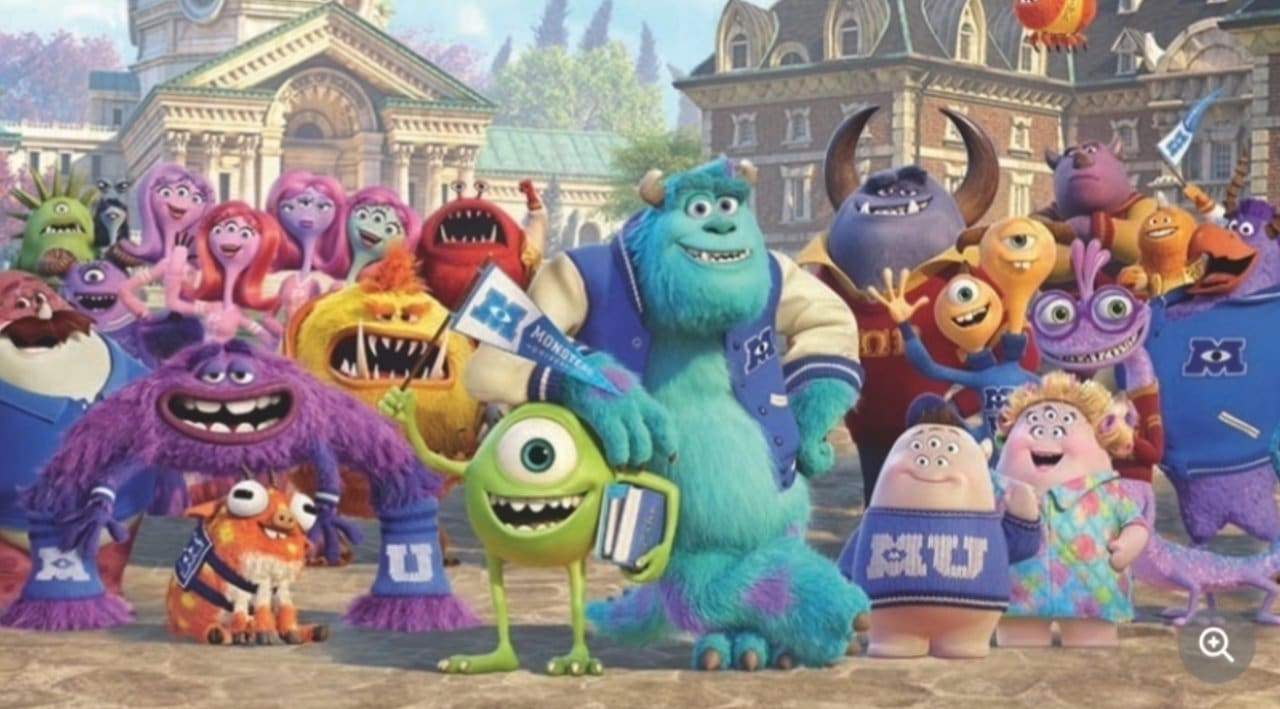
A Japanese television network has scheduled a special screening of Mike and Sulley’s youth-focused animated feature film for its traditional Friday night film block. The broadcast seeks to guarantee a fixed space for family entertainment and maintain the broadcaster’s high ratings in the popular weekend prime time slot.
The big difference in this session is the inclusion of ten minutes of extra content right after the end of the main work, functioning as a direct extension of the universe presented on the screens. The channel’s management chose to broadcast this bonus without commercial breaks between the end of the film and the beginning of the additional material, creating a fluid transition for those watching the schedule.
After this specific program, the communication network will begin a cycle of exhibitions focused on mysteries, dedicated to the famous investigative franchise about a young detective transformed into a child. The change in focus on nighttime entertainment is primarily intended to prepare viewers for upcoming releases in local movie theaters.
Primetime audience retention strategy
The network’s film block has a solid history of using themed screenings to hold viewers’ attention on Friday nights. The choice of animated features with a strong nostalgic appeal guarantees the interest of multiple age groups, from children who are just discovering the works to adults who have followed the franchise since its first theatrical releases.
The tactic of splicing new content acts as a technical tool that prevents the public from escaping during the final credits of the main attraction. The format allows televisions to remain tuned to the channel for an extended period, which directly reflects on audience measurement indices and the pricing of advertising spaces sold by the network.
Origin of academic rivalry between the protagonists
The film’s main narrative presents the academic journey of Mike Wazowski, a spherical-shaped monster who has the rigorous goal of becoming an elite professional scarecrow. The character’s motivation arises in his childhood, during a school trip to the facilities of the main energy company in his world, where he decides to pursue his career after observing professionals in action.
Upon entering university, the protagonist meets James P. Sullivan, a large monster who carries the weight of belonging to a lineage of historically famous scares. Sullivan relies entirely on his natural talent and physical size, while his colleague dedicates intense hours to theoretical studies and memorization techniques to compensate for his harmless appearance.
The difference in approaches generates immediate friction between the two students in the first weeks of classes on the university campus. The constant dispute for prominence in practical classes results in incidents that harm the performance of both before the demanding teaching staff of the educational institution.
Consequences of the dispute and team formation
The turning point of the disagreement occurs during the end-of-semester practical exam, with the accidental destruction of valuable university equipment following a heated argument. The program’s management assesses the situation as a serious disciplinary infraction, resulting in the duo’s immediate expulsion from the coveted scare course and mandatory transfer to the cylinder manufacturing department.
To regain their places in the main program, the protagonists sign an agreement with the rectory, betting on their stay at the institution in a traditional student endurance and technique competition. The tournament rules require exclusive participation in closed teams, which forces the pair to join the Oozma Kappa fraternity to obtain official registration.
This group is made up of monsters rejected by the traditional academic system and who do not have obvious natural abilities to generate fear in humans. The team must overcome elite fraternities in a series of physical and psychological tests that test stealth, agility, logical reasoning and evasion of complex obstacles.
The group’s biggest obstacle is learning to perform together under extreme pressure in the knockout stages of the competition, especially in tests like the silent crossing of the library. Cada challenge requires quick adaptation and intelligent use of the peculiar characteristics of each fraternity member to advance in the tournament and avoid summary elimination.
Extra material focuses on the university experience
The additional ten minutes included in the television broadcast correspond to a short film that narrates events that occurred shortly after the consolidation of the Oozma Kappa fraternity on the university campus. In the plot of this supplementary material, the group members decide to organize a party at their residence to celebrate recent achievements, but are faced with the total absence of guests on the night of the event. The emptying occurs because all students attended the party of the rival fraternity, Roar Omega Roar, which has more financial resources, high-quality sound equipment and unquestionable popularity among the institution’s students.
To solve this logistical problem and save the night, the protagonists use dimensional door stations, central transportation technology equipment in the franchise’s universe. The idea is to create a secret and direct shortcut between the two parties, allowing invisible interference in the competing event. With this ingenious spatial manipulation, the group manages to sneak the rival team’s food, music and guests through the doors. The operation transfers everyone to the Oozma Kappa house so quickly and continuously that the participants barely notice the change of location, guaranteeing the absolute success of the celebration and the consolidation of the group socially.
Changing gears for the criminal investigation genre
After airing the monster universe, the television network restructures its Friday schedule to focus on an investigative series starring high school detective Shinichi Kudo. The main character adopts the pseudonym Conan Edogawa after being forced to ingest an experimental substance developed by a secret criminal organization, which physically transforms him into a seven-year-old child. Sob this new identity, he begins to solve complex crimes using equipment created by a local inventor, while searching for evidence to find a cure for his physical condition. The film marathon from this franchise will occupy prime time for four consecutive weeks, significantly changing the demographic profile of the audience that tunes in to the channel on Friday nights. The initiative works as a meticulous commercial strategy to warm up the public, preparing viewers for the premiere of a new film production of the investigative series in local cinemas. The selection of feature films prioritizes stories that involve the central members of the crime syndicate responsible for the protagonist’s condition, ensuring a strong thematic connection between the weekly screenings. The curatorship aims to create a cohesive narrative, offering clues and contexts that enrich the understanding of the vast investigative universe of the work for those who follow the marathon continuously on television.
Strength of the linear model in the audiovisual market
Despite the accelerated growth of on-demand platforms, the collective experience of following scheduled programming maintains its commercial and cultural relevance in the Asian market. The offer of fixed schedules and the insertion of exclusive extra content preserve the importance of the traditional transmission model in the contemporary entertainment distribution scenario.
Commercial planning and measuring results
Planning the television schedule requires a comprehensive analysis of audience behavior and the adaptation of broadcasts to the expectations generated by major cinema franchises. Network executives structure programming based on maximizing the brand’s reach through intelligent curation of titles that speak to each other.
The gender transition demonstrates the flexibility of the night block in attracting different demographics and maintaining engagement at high levels throughout the months. The Japanese broadcaster’s strategy proves that the careful selection of works still acts as a strong competitive differentiator in the television audiovisual market.




