
Volkswagen recalls 94,000 global electric vehicles after identifying risk of battery fire

The German automotive conglomerate has begun a broad safety campaign covering thousands of electrically powered cars in several international markets. The preventive measure has as its central focus the identification of technical anomalies in the energy storage components of specific models.
Company engineers have detected that certain high-voltage battery modules may experience severe failures during continuous use. The official statement was registered and published by the database of Autoridade Federal Alemã of Transporte Motorizado, headquartered in the city of Flensburg.
The technical documents indicate that the first signs of the problem appear on the vehicle’s instrument panel. Drivers must pay attention to the following operational signs:
– Acendimento of a yellow warning light on the main panel.
– Redução drastic and sudden impact on the car’s total range.
– Limitação automatic power of the electric motor by the system.
In extreme scenarios and under specific conditions of use, there is a documented risk of ignition and fire starting in the lower compartment. The manufacturer based in Wolfsburg highlighted in its communications that thermal overload events represent statistically rare situations.
Product line and specific models affected
The ID series product family represents the group most impacted by this technical engineering determination. The list of models covers the VW ID.3, ID.4 and ID.5 passenger vehicles and hatchbacks, as well as the electric passenger van sold under the ID.Buzz nomenclature.
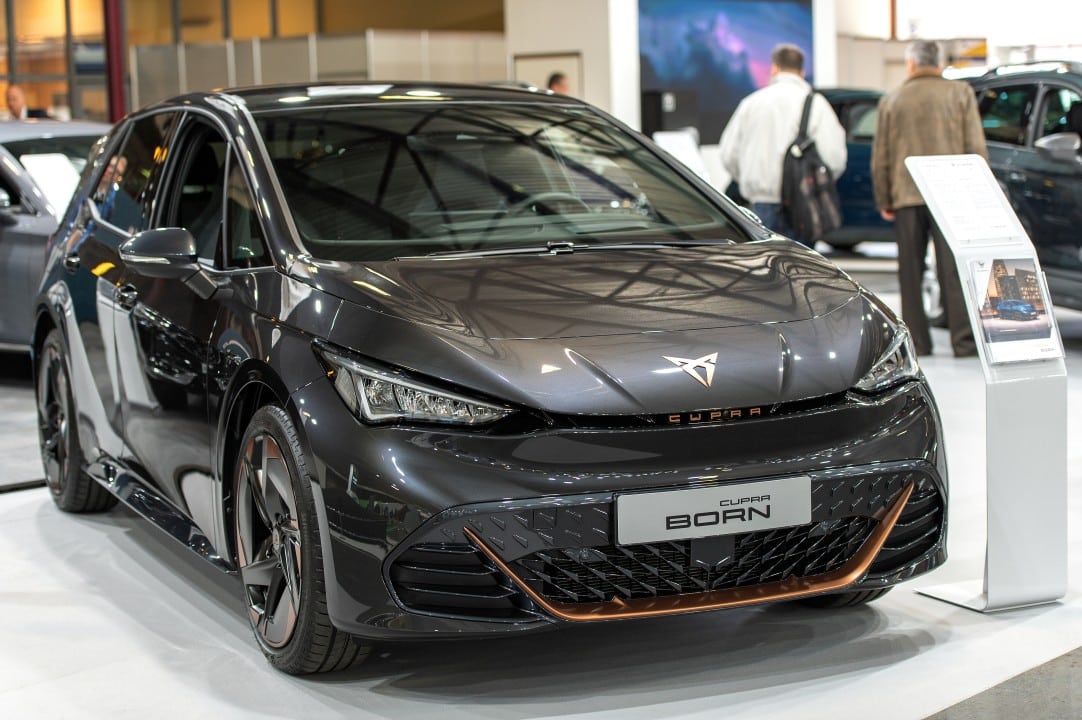
Under the umbrella of sister brands, the sports model Born by Cupra has also been included in the mandatory repair guideline. The total volume of the global operation encompasses approximately 94 thousand automobiles, divided between 75 thousand units of the main brand and 19 thousand examples of the sports division, manufactured between February 7, 2022 and August 23, 2024.
Technical details about the energy anomaly
The core of the mechanical and software failure lies in the individual modules that make up the large battery pack positioned on the floor of the cars. Relatórios internal investigation demonstrated that specific batches of these components do not meet the stringent technical specifications required for energy management.
Variation in production quality can generate an imbalance in the load distribution between the equipment’s internal cells. Este unevenness acts as the primary cause for thermal overload, an event in which the battery temperature exceeds the safe operating limits established in the original design.
When the vehicle management system detects this anomaly, it immediately activates an operational safety mode. Esta action restricts the driving force sent to the axles and triggers visual alerts for the driver, mitigating the chances of a total breakdown of the electrical system while driving.
Official positioning of the German automaker
An official spokesperson for the automotive company confirmed the extension of the repair campaign during a technical breakdown for the specialized press. The representative highlighted that the failure was identified proactively, as a direct result of the continuous quality control process implemented in European factories.
The corporation chose not to wait for external notifications or government requirements to initiate the global action plan. Apesar of the potential severity of the defect, the German regulatory agency certified that there were no records of incidents involving severe material damage or personal injuries to date.
The absence of reported accidents reinforces the strictly preventive nature of the mass recall announced by the manufacturer. Monitoring the fleet in circulation made it possible to isolate the problem before it became a negative statistic for international road safety indices.
The company reaffirmed its commitment to traffic safety and maintaining the trust of consumers who chose to transition to electric mobility. The classification of the risk of fire as a highly rare event did not reduce the automaker’s urgency in mobilizing its global dealer network.
Software and hardware update procedures
To mitigate the risk and definitively correct the faults, the traffic authorities stipulated a strict service protocol in authorized workshops. Affected vehicles must first undergo a full update of the high-voltage battery management software. Este new programming code increases the sensitivity of temperature and voltage sensors, allowing a more accurate and faster reading of any deviation in the behavior of the power cells. Digital intervention acts as a primary layer of defense against overheating.
In parallel with the digital intervention, a physical and detailed inspection of the high voltage hardware will be mandatory. Technicians will use advanced diagnostic equipment to measure the health of each individual module, a procedure that requires specific tools and adequate electrical insulation. Caso electronic scanning points out any need or deviation from the standard, individual battery modules will be replaced with new and updated parts. The automaker guaranteed that it had sufficient stock of replacement components to meet the demand generated by the recall.
Direct guidance for vehicle owners
Customers who have models listed in production records will be contacted directly by the respective brands through registered letters and official relationship applications. The process of scheduling the necessary service will be organized in a staggered manner to avoid overcrowding in the authorized network’s mechanical workshops. The automaker’s express recommendation is that owners wait to receive the official communication before going to a dealership, keeping their registration data updated in the company’s systems. Todo the diagnostic procedure, software update and possible replacement of parts will be carried out completely free of charge for the end consumer. Caso the yellow warning light comes on on the instrument panel before the scheduled repair date, safety protocol requires immediate action. The driver must park the vehicle in a safe place, turn off the propulsion system and call the manufacturer’s 24-hour assistance service, as ignoring the dashboard alerts can worsen the problem and increase the risk of thermal failure.
Action of sector regulatory bodies
The role of Autoridade Federal Alemã of Transporte Motorizado has been crucial in the oversight and transparency of this global recall process. Regulatory bodies around the world are stepping up oversight of the safety of new electric propulsion technologies, ensuring that manufacturers respond quickly to any sign of failure.
Complexity in the energy production chain
The supply chain for electric vehicle manufacturing presents unprecedented technical challenges for the traditional automotive industry. High-voltage batteries are not single parts, but rather complex clusters made up of hundreds of individual cells grouped into dozens of interconnected modules.
A microscopic defect in the manufacturing of a single cell can compromise the performance of the entire module, requiring highly sophisticated diagnostic systems. The ability to predict physical failures through software data analysis represents a fundamental advance in preventing accidents and protecting users on public roads.



