
Apple officially ends the Mac Pro line and marks the end of the era of tower computers

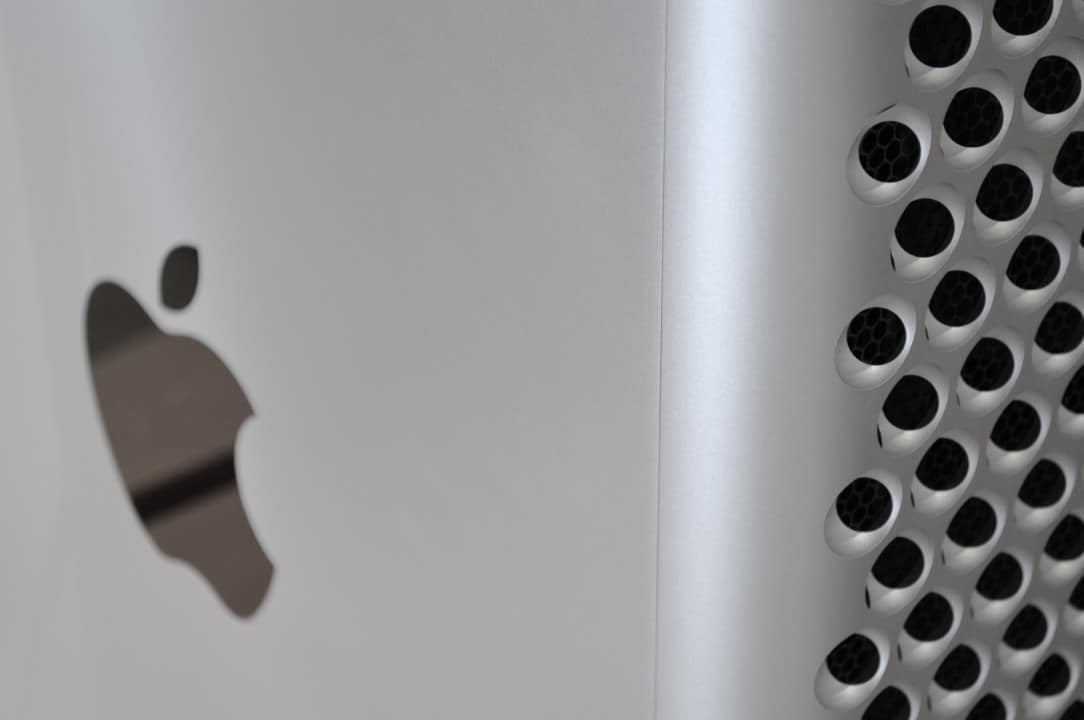
Tech giant Apple has officially confirmed the discontinuation of the Mac Pro, the most powerful desktop computer in its catalog and the last remnant of the modular tower design. The decision was formalized with the complete removal of the section dedicated to the product on its official sales portal this week, ending a cycle that lasted almost twenty years. The move signals a profound change in the company’s hardware strategy, which now focuses its efforts on high-performance solutions with reduced dimensions.
The Mac Pro was seen as the pinnacle of engineering for professionals in video editing, 3D modeling and complex software engineering. With its departure from the line, the company no longer offers a computer that allows internal expansion via PCIe cards, a feature that has defined the line since its original launch. Especialistas in the industry indicate that the transition to proprietary processor architecture has made the concept of expandable towers less central to the Cupertino brand’s vision of the future.
- The model was removed from the official website on the afternoon of Thursday, March 26, 2026.
- Remaining units can still only be found on the certified refurbished market.
- Software support for existing models must be maintained in accordance with the company’s multi-year policies.
- Consumers looking for high processing are now directed to the Studio line.
This closure does not come as a complete surprise to analysts who follow the technology supply chain. Relatórios internals already pointed out that the manufacturer had reduced the pace of component updates, believing that the compact format delivered equivalent results. The model’s last significant update occurred in 2023, when it received the M2 Ultra chip, remaining stagnant in terms of hardware since then, while other devices have evolved rapidly.
Market transition and the leading role of Mac Studio in companies
The Apple now positions the Mac Studio as the direct replacement for production environments that demand workstation-level performance. The company is fully confident that its custom silicon chips can meet the need for external expansion cards that previously occupied large cases. The massive use of Thunderbolt technology for storage and peripherals is the central bet to maintain the productivity of the most demanding users without the need for a large case.
The hardware unification strategy reflects a global trend towards simplifying professional workstations in modern offices. By eliminating the modular tower, the manufacturer reduces maintenance complexity and focuses on an ecosystem where processing power is concentrated in the system on a chip. Muitos image editors and music producers had already migrated to the Studio model due to its cost-benefit and less physical space occupation on editing tables.
Rumors indicate that a robust update for the Mac Studio should be announced soon, possibly before the 2026 developer conference. The market expectation is that the new hardware will deliver generational leaps in processing that justify the definitive absence of a modular option in the catalog. Esta renewal should consolidate the brand’s new standard of workstations, focusing on energy efficiency and total integration between hardware and operating system.
Trajectory of the productivity icon since its debut in 2026
The original Mac Pro was introduced to the market in 2006, marking the historic transition of the Apple from the Motorola chips to the Intel processors. Naquela time, the machine boasted two 64-bit Intel Xeon processors, four hard drive bays and eight RAM memory slots, costing from $2,499. The imposing aluminum design has become a symbol of status and technical competence in Hollywood studios and advertising agencies around the world.
During the following two decades, the model underwent several visual and conceptual transformations, including the controversial cylindrical design launched in 2013. Aquela version, although innovative, faced criticism for thermal limitations and upgrade difficulties, which forced the company to return to the traditional tower format years later. The return to origins in 2019 was celebrated by professionals, but the useful life of this architecture was shortened by the revolution in self-manufactured chips.
The Mac Pro journey reflects the evolution of high-performance personal computing and the challenges of balancing aesthetics with extreme functionality. Over the years, the line served as a laboratory for technologies that would later reach mass consumer computers. The end of production marks the end of an era where the user had direct physical control over the internal components of their main work machine.
Technical impact of removing modular architecture on workflows
The main criticism from specific sectors of the industry refers to the loss of physical modularity that only the Mac Pro chassis offered users. Engenheiros that depended on specific accelerator cards or massive internal storage systems now need to adapt their routines to external solutions via cables. Embora the bandwidth of current connections is high, the convenience of having all components protected by a single shielded enclosure was a valued differentiator.
Apple argues that the vertical integration of its components eliminates the need for traditional expansion buses used by competitors. The unified memory and media accelerators built into today’s chips perform tasks that previously required heavy, noisy dedicated hardware. Essa technical change allows much smaller machines to perform complex tasks with a fraction of the power consumption required by older towers based on Xeon processors.
- Cooling systems are now optimized for low-temperature silicon.
- The electrical consumption of the new workstations fell drastically compared to the old towers.
- Thunderbolt 5 connectivity should assume the role of the main expansion route for professionals.
- Rendering software is being reprogrammed to take advantage of shared memory architecture.
The absence of a professional tower also impacts the resale and specialized maintenance market, which handled large volumes of compatible components. With the hardware now fully soldered and integrated, the culture of manual upgrades on Apple computers reaches its final stage of demise. Support technology companies will now need to focus on external peripherals and networking solutions to expand the capabilities of the new compact machines.
Future scenario for workstations in high-demand environments
The technology market is closely watching how competitors using different operating systems will react to this vacuum left by the Apple tower. Enquanto brands that use Windows continue to invest in expandable models, Apple bets that the future is silent, compact and unchanging after purchase. Esta divergence of philosophy will define government and corporate purchasing choices for the next cycles of technological updating in large infrastructures.
The manufacturer’s confidence in its own ecosystem suggests that there are no plans for a return to the tower format in the near or foreseeable future. The unification of product lines around a single design language reinforces the brand’s visual identity as a provider of ready-to-use solutions. Profissionais who still own the 2023 model now hold a collector’s piece that represents the last gasp of a design philosophy that prioritized modular hardware.
The official closure of Mac Pro in 2026 is more than the death of a product; it is confirmation that the era of large cabinets has come to an end in Cupertino’s view. The company now focuses on developing technologies that allow maximum power in as little space as possible, aiming for absolute efficiency. The market now awaits the next releases that should definitively fill the gap left by this professional computing giant.




