
Data leak reveals graphics optimization of Monster Hunter Wilds for the new Nintendo Switch 2

The video game industry is following the emergence of new confidential documents that detail the behind-the-scenes of software development. Informações recent leaks on the internet indicate that Capcom is actively working on optimizing its next major release for future Nintendo hardware. The title in question undergoes rigorous adaptations to run natively on the hybrid device.
The exposed files reveal that the engineering team focuses on maintaining the integrity of the open-world hunting experience. The main goal is to ensure that the monsters’ complex mechanics and artificial intelligence work without processing bottlenecks. The transition requires a technical balance between visual quality and stable performance.
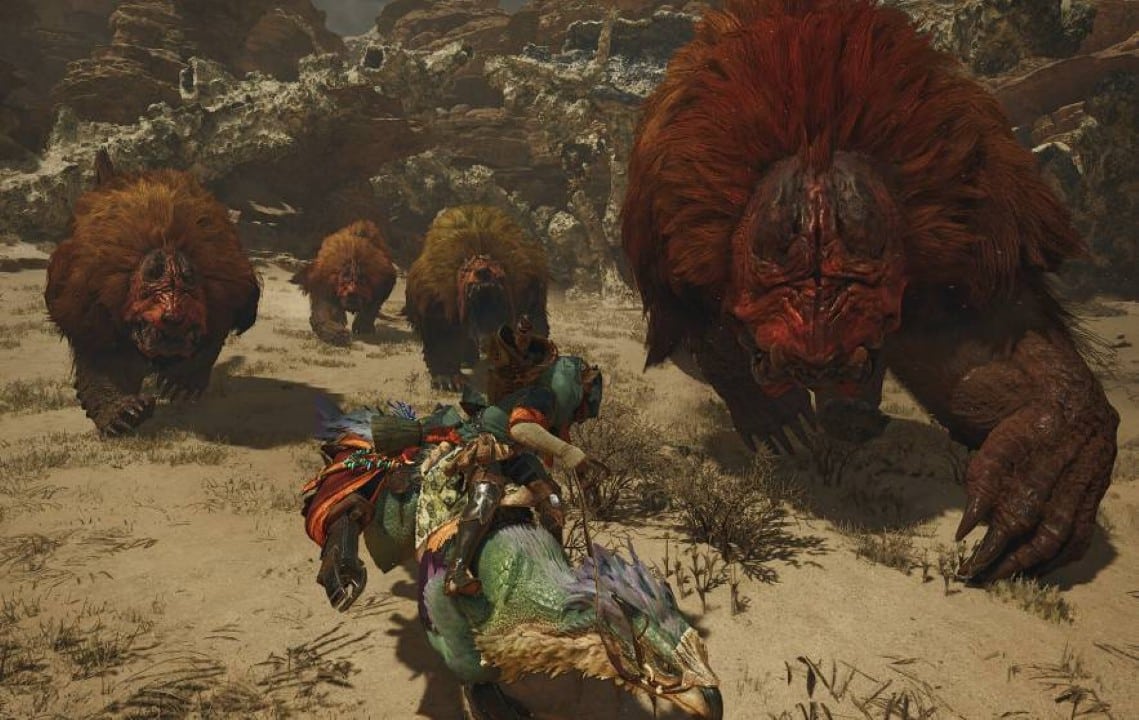
The global technology market awaits the official announcement of the successor to the current portable console. Enquanto the final specifications of the device remain under industrial secrecy, data from the Japanese developer provide concrete clues about the processing capacity of the new machine.
Software engineering and visual adaptation
The technical document mentions the implementation of a system internally called fast charging mode. Esta function was specifically designed to bypass the memory bandwidth limitations of the new device. The technique aims to drastically reduce the transition time between the vast areas of the map.
To achieve this result, programmers rewrote part of the virtual asset management code. The graphics engine now prioritizes allocating essential textures directly to RAM memory in advance. Isso prevents choking during continuous exploration of complex scenarios.
Another point highlighted in the leak is the aggressive use of a dynamic level of detail system. The geometry of objects and creatures changes in real time based on the distance from the player’s camera. Far Elementos lose polygons to save processing.
Despite the reduction in the fidelity of background elements, the internal guideline requires maintaining high resolution in models close to the main character. Armaduras, weapons and monsters in direct combat retain visual complexity. The strategy preserves immersion in critical moments of action.
Scalability of the developer’s graphics engine
The technical feasibility of this project depends entirely on the flexible architecture of the company’s proprietary engine, known in the market as RE Engine. Desde its initial introduction, the tool was built with the purpose of being highly scalable, allowing the same code base to be compiled for platforms with widely different computing capabilities. Software engineers adjust internal parameters that disable heavy post-processing effects like ray tracing and high-precision ambient occlusion, replacing them with less demanding alternatives that deliver a similar aesthetic result on the handheld’s smaller screen.
This centralized approach reduces development costs and the time required to port large productions. Instead of rebuilding the game from scratch for the Nintendo hardware, the team uses specific build profiles. The leak indicates that the profile intended for the new console automatically adjusts the density of foliage, fluid simulation and the complexity of particles generated during special attacks. Workflow standardization ensures that future updates and expansion packs can be released simultaneously on all commercially available platforms.
Dynamic scene rendering adjustments
The exposed technical reports detail the application of an improved occlusion discard technique. The algorithm identifies and stops rendering any three-dimensional object that is blocked from the player’s field of vision by mountains, walls or giant creatures.



The resource savings generated by this technique are redirected to maintaining the frame rate per second. In fast action games, the fluidity of movements takes priority over the native resolution of the image. The system constantly recalculates what should or should not be drawn on the screen.
Furthermore, global illumination has undergone adaptations to operate in real time with lower computational costs. Dynamic shadows cast by the sun and artificial light sources operate at a reduced resolution, receiving an anti-aliasing filter to disguise jagged edges during camera movement.
Feature parity across different platforms
Data analysis suggests that the hybrid console version will target graphics settings equivalent to the low or medium modes found on personal computers. The developer focuses on ensuring that the game’s content is exactly the same, with no cuts to missions, maps or equipment.
Gameplay parity is a strict requirement for co-op multiplayer to function properly. Jogadores on the handheld device will need to interact on the same servers as users of more robust tabletop platforms, requiring perfect synchronization of monster physics and animations during joint hunts.
Commercial strategy for the notebook market
The decision to invest significant resources in optimizing for Nintendo hardware reflects the franchise’s financial history. The Asian market, in particular, shows a strong preference for portable devices, which has boosted sales of previous titles in the series released exclusively for this console format.
Ensuring the presence of the new title in the launch catalog or in the initial window of the next device represents a crucial competitive advantage. The company is looking to capitalize on the user base that will migrate to the new platform by offering a high-budget experience that demonstrates the capabilities of the newly released hardware.
Technical challenges in the generational transition
The process of adapting software designed to take advantage of cutting-edge processors and ultra-high-speed storage drives into a compact form factor presents insurmountable physical barriers. Dispositivos laptops operate under severe constraints on thermal dissipation and battery consumption, which prevent chips from operating at their maximum frequencies for prolonged periods. To overcome excessive heating, the optimization team implements strict limits on the screen refresh rate and uses artificial intelligence-based image reconstruction techniques. Estes methods capture the image at a much lower internal resolution and apply mathematical algorithms to fill in missing pixels before sending the final frame to the display. The leaked documentation points out that the developer carries out exhaustive tests with different spatial scaling solutions to find the ideal balance between visual sharpness and energy efficiency, ensuring that the console does not overheat during prolonged gaming sessions in densely populated virtual environments.
Expectations from the technology sector
The hardware and software industry remains attentive to developments in this unofficial information. Confirmation of the optimization techniques described in the documents will depend on formal announcements from the companies involved, which traditionally remain silent about projects in the development phase and unannounced system specifications.
Veja Tambem em News (EN)

Research reveals that parents are unaware of how their children use artificial intelligence

Samsung releases new system update with new features for Galaxy Watch 4 users

Digital retail reduces the value of the Galaxy S25 5G smartphone with bank bonuses and device exchange

Amazon’s wireless CarPlay adapter has a 50% discount and high approval ratings from drivers

Zach Cregger’s new Resident Evil ignores games and focuses on an unprecedented story with new characters

Rumor suggests that Nintendo is preparing a special edition of the Switch 2 with a remake of Ocarina of Time

Apple accelerates production of the iPhone 17e and develops new Air model with dual camera system

Epic Games platform releases twelve high-budget games at no permanent cost for PC users

PlayStation 5 Pro price drop accelerates digital retail sales and eliminates global stocks

New Galaxy Watch 9 firmware appears on server and confirms progress in software development

Apple’s commemorative project tests cell phone with 1.1 millimeter edge and curved screen for 2027
