Humpback whale turns towards Mecklenburg after breaking free from sandbar
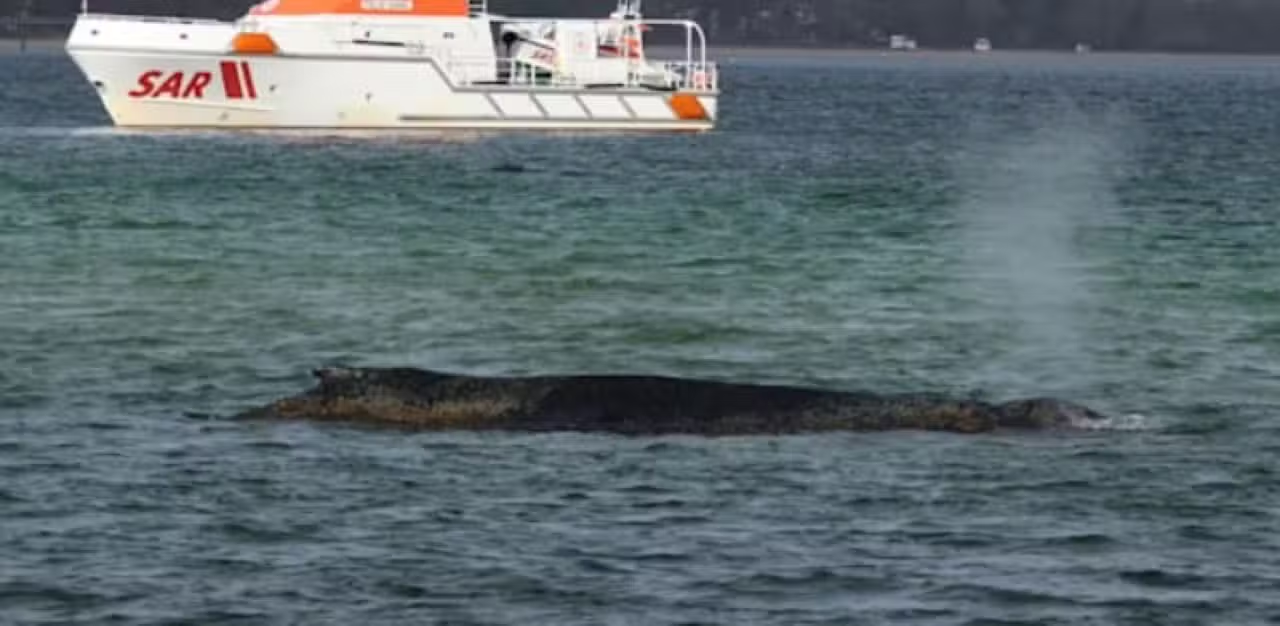
A humpback whale broke free overnight from Thursday to Friday from a sandbar in Praia of Timmendorfer, in the north of Alemanha. Operadores of excavators opened a long channel that allowed the approximately ten meter animal to resume movement. Socorristas from the coast guard, Associação Alemã from Salvamento Marítimo and scientists are now accompanying the whale on boats to try to guide it back to the deep waters of Atlântico. The animal demonstrates strength when swimming, but the journey presents new challenges in the shallow waters of the Mar Báltico.
- Five escort boats follow the mammal near Warnkenhagen, in Mecklemburgo-Pomerania Ocidental.
- The region has visible sandbars and reduced depth that increase the risk of new strandings.
- Experts monitor behavior to identify the safest possible route.
Rescue efforts mobilize multiple teams
Rescuers remain close to the animal and push it when necessary to prevent it from returning to shore. Durante the initial operation on Niendorf, a team including Frank Klaus, Marco Zitzow, Noel Altendorf, Excavator operator Lars Hoppe, coming from Baixa Saxônia, highlighted the feeling of seeing the immense size of the mammal and the determination it conveyed when moving.
Hoppe reported that direct contact with the animal brought a perspective on human insignificance in the face of nature. Ele observed clear signs of the will to live while digging the canal on Thursday. The operation moved everyone involved and was supported by DLRG and coast guard vessels.
Current situation reveals challenging waters
The whale is now sailing in an area with multiple sandbanks close to the coast of Mecklemburgo-Pomerania Ocidental. Cinco escort vessels maintain constant vigilance to correct the direction whenever the animal approaches shallow areas. Repórteres follow the developments to record the next steps of the journey.
Scientists from Instituto, Pesquisa, Vida Selvagem Terrestre and Aquática participate in monitoring. Eles assess the mammal’s health status and try to influence its trajectory away from dangerous areas. The continued presence of the teams seeks to prevent the whale from repeating the stranding that occurred previously.
History of the humpback whale odyssey
The animal has been circulating around the Mar Báltico since December 2025, with sightings recorded in different parts of the region. The whale has already faced weeks of displacement in waters that are not its usual habitat. Especialistas consider the resistance demonstrated over months to be surprising.
Previous sightings have included the port area of Wismar, also in Mecklemburgo-Pomerania Ocidental. The mammal, possibly a young male, shows the ability to recover even after prolonged periods in adverse conditions. The current operation represents another chapter in this extensive trajectory.
Excavator operator reports remarkable experience
Lars Hoppe described the moment he helped free the whale as transformative. Ele and his colleagues worked for hours to create the channel that allowed the animal to move. The larger excavator from Baixa Saxônia was essential to remove the dense sand around the mammal’s body.



Hoppe mentioned that the proximity to the animal generated reflections on the relationship between humans and nature. Ele clearly felt the vital force present in the whale’s behavior during the excavation. The entire team followed every movement with extra attention.
Monitoring seeks correct route to Atlântico
Coast Guard and DLRG vessels maintain formation around the whale to guide it. The main objective is to lead it out of Mar Báltico towards Atlântico. Cientistas analyze data in real time to adjust escort actions as the animal progresses.
The region between Timmendorfer and Warnkenhagen requires constant attention due to the underwater topography. Bancos of sand changes position with currents and winds, which complicates navigation. Teams adjust their strategy hour by hour to keep the mammal in safer waters.
Challenges persist on the sea journey
The whale demonstrated the ability to move on its own after the channel was opened. Socorristas intervene only when necessary to prevent it from returning to shallow areas. The combined effort of multiple organizations seeks to ensure that the animal completes the journey without further incidents.
Experts highlight that the will to live observed in mammals contributes to the chances of success. The operation continues with close monitoring and adjustments to the escort depending on sea conditions. Todos those involved monitor progress with a focus on the animal’s safety.
Whale demonstrates continued resilience
After weeks at Mar Báltico, the mammal maintains active movements even in complicated areas. The release last night represented a significant step forward in the rescue operation. Equipes now concentrate their efforts on guiding the trajectory away from the coast.
The history of sightings since December 2025 indicates that the whale has already traveled considerable distances. Cientistas record behaviors that suggest partial adaptation to the current environment. The escort seeks to transform this resilience into a successful return to suitable habitat.
Veja Tambem em News (EN)

Research reveals that parents are unaware of how their children use artificial intelligence

Samsung releases new system update with new features for Galaxy Watch 4 users

Digital retail reduces the value of the Galaxy S25 5G smartphone with bank bonuses and device exchange

Amazon’s wireless CarPlay adapter has a 50% discount and high approval ratings from drivers

Zach Cregger’s new Resident Evil ignores games and focuses on an unprecedented story with new characters

Rumor suggests that Nintendo is preparing a special edition of the Switch 2 with a remake of Ocarina of Time
Apple accelerates production of the iPhone 17e and develops new Air model with dual camera system

Epic Games platform releases twelve high-budget games at no permanent cost for PC users

PlayStation 5 Pro price drop accelerates digital retail sales and eliminates global stocks

New Galaxy Watch 9 firmware appears on server and confirms progress in software development

Apple’s commemorative project tests cell phone with 1.1 millimeter edge and curved screen for 2027