Mercedes prepares new aerodynamic strategy to end seven-year drought at the F1 Japanese GP

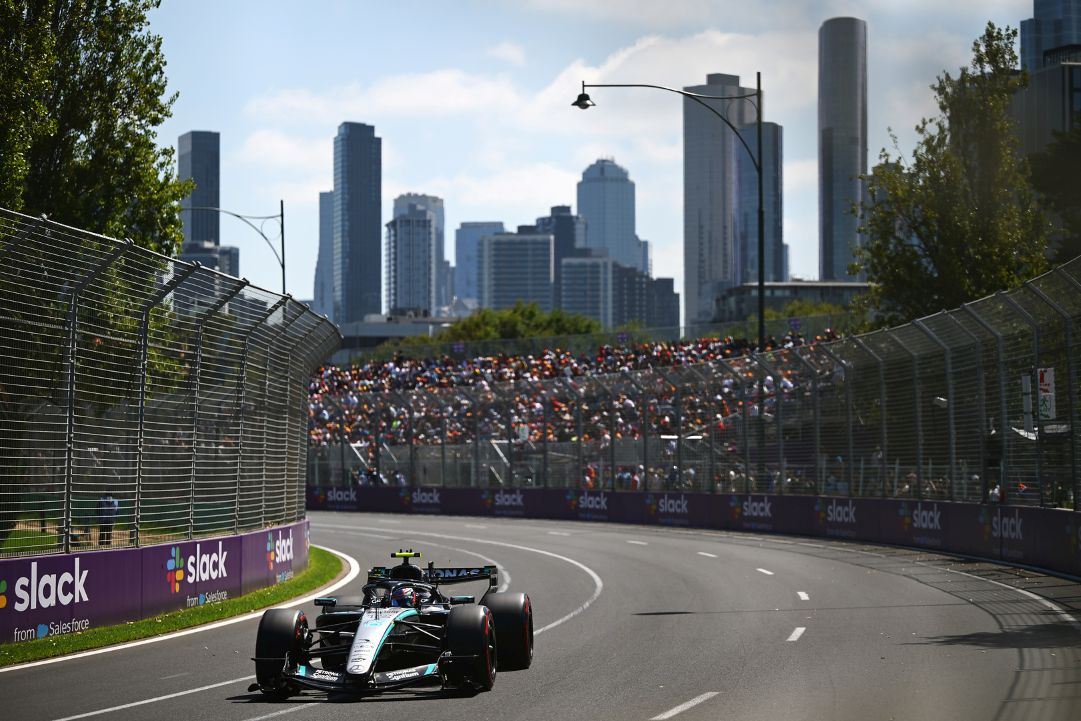
The Mercedes team arrives on the traditional Suzuka circuit with a technical and sporting goal strictly defined by its management. The German team’s main focus is to put an end to the uncomfortable period of seven consecutive seasons without reaching the highest place on the podium in the Asian stage of the Fórmula 1 world championship. The last occasion in which the garage celebrated a triumph on this specific track occurred in the 2019 season, under the command of driver Valtteri Bottas.
The current competitive scenario requires a profound restructuring of track strategies to overcome opponents who have gained significant strength over the last few years. The technical department works around the clock in the factory’s simulators to find the ideal setting that allows pilots to extract the limit of the equipment’s performance. The engineers pay special attention to adapting the chassis to the unique demands of the Japanese layout, recognized worldwide for its extremely high-speed curves and sudden changes of direction.
The telemetry data collected in the previous rounds provides a solid basis for the aerodynamic upgrades that will be implemented on the cars during the free practice sessions. The team occupies third place in the constructors’ championship, a factor that multiplies internal pressure for impressive results at this crucial stage of the competition. The team’s absolute goal is to drastically reduce the gap in lap times compared to the current tournament leaders.
Logistics operation and preparation in the pits of Suzuka
The arrival of all the equipment at the Asian track involved a complex and detailed logistical operation, coordinated weeks in advance of the main event. Mechanics began assembling the garages and thoroughly preparing the chassis as soon as the containers received clearance from local customs, ensuring that the schedule was not delayed. Cada car component undergoes rigorous quality control before being installed in competition vehicles, minimizing the risk of mechanical failures during official sessions. The team leader closely monitors the development of activities in the pits, ensuring that the established test program is followed with millimeter precision by all staff members.
Strategic alignment meetings take place daily between pilots and data engineers to define the initial configuration parameters of the machines. George Russell and Andrea Kimi Antonelli exhaustively analyze telemetry from previous years to understand the nuances of each sector of the track and identify opportunities to gain time. Clear and objective communication between team members is considered a determining factor for success in qualification sessions, when precision makes the difference. The real data obtained from the route will be immediately compared with the virtual projections generated at the team’s headquarters at Europa, allowing for quick and efficient adjustments.
History of dominance and break of hegemony in Asia
The team’s retrospective on this route reveals a period of absolute hegemony that profoundly marked the recent history of the top category of world motorsport. Durante the seasons from 2014 to 2019, the team established an impressive record by achieving six consecutive victories on the Japanese circuit, demonstrating indisputable technical superiority over other competitors. Nomes, known as Nico Rosberg and Lewis Hamilton, were mainly responsible for translating the immense potential of the cars into impressive results, dominating both the qualifying sessions and the main races with authority. The combined efficiency of the power unit and chassis allowed the drivers to manage the race pace with a comfortable safety margin in relation to their direct rivals, consolidating the brand as the force to beat on the Asian continent. However, the transition to the new technical regulations drastically altered the balance of forces on the grid, putting an abrupt end to the team’s winning streak in Suzuka. Desde the return of the race to the calendar, after global health restrictions, other teams took the lead, taking advantage of the aerodynamic changes to develop cars more adapted to the characteristics of the track. The 2022 race, marked by torrential rain and interruptions, highlighted the team’s difficulties in finding the ideal tire operating window in adverse weather conditions. From that moment on, engineers constantly seek to recover the lost competitive advantage, analyzing in depth the weaknesses of the current project in comparison with the successful models of the past.
Drivers’ performance in the current championship season
The pair of pilots arrive at the Japanese stage with different scores, but facing the same level of demands from the technical and sporting management. George Russell, which has already secured a victory in the Áustria this season, accumulates 51 points in the overall championship standings. The British driver demonstrates remarkable consistency in race pace, managing to get the most out of the equipment even on circuits that do not favor the car’s original characteristics.
On the other hand, newcomer Andrea Kimi Antonelli faces the natural learning curve inherent to his first full season in the main category. The young talent has scored 47 points in the championship so far, showing excellent speed in all laps, but still seeking greater regularity in the pace of the race. The team provides comprehensive support, with engineers dedicated to accelerating your technical development and improving your tactical reading of races.
Direct competition on the points table requires both competitors to maximize overtaking opportunities and minimize errors during the race. Max Verstappen leads the championship alone with 98 points, setting an extremely high standard of performance for the rest of the grid. Ferrari, positioned at the top of the constructors’ classification with 67 points, represents the immediate target to be surpassed in the next stages of the calendar.
The internal dynamics between teammates have proven to be highly productive, with constant sharing of information about the car’s behavior. Working together in the simulators helps to map the best trajectories and the most efficient braking points for the Japanese track. The technical management publicly praises their maturity in conducting the vehicle’s complex development program throughout the year.
Technical modifications and aerodynamic updates to vehicles
The update package introduced for this specific stage reflects months of intense research and development in the wind tunnel and in computational fluid dynamics simulations. The engineers concentrated their efforts on remodeling the floor and front wings, seeking to increase the aerodynamic load without compromising the final speed on the straights. The Suzuka circuit, with its famous sequence of “S” curves in the first sector, requires an extremely reactive and stable car in rapid changes of direction.
The vehicles’ suspension underwent a complete recalibration to absorb asphalt irregularities and keep the aerodynamic platform as constant as possible. Essa modification aims to avoid sudden losses of grip that could compromise lap time or cause excessive wear of rubber compounds. Além In addition, the power unit’s cooling system received fine adjustments to deal with the temperature variations predicted for the weekend.
The exact correlation between the virtual data generated at the factory and the real behavior of the car on the track will be the main indicator of the success of these implementations. The team will use additional sensors during early practice to map the airflow around the new aerodynamic parts. The result of this practical assessment will define the direction of the team’s technical development for the remainder of the season.
Official schedule of activities and preparation for the start
The calendar of activities on the track strictly follows the traditional format established by the organization of the world motorsport championship. Friday holds the first free practice session, allowing the cars to make initial contact with the asphalt and check basic systems. Drivers will have the opportunity to test different aerodynamic configurations and evaluate the initial behavior of the tires with a full and empty tank.
The formation of the starting grid will be defined on Saturday afternoon, in a qualifying session that requires absolute precision from the competitors. The main race, which traditionally attracts thousands of passionate fans to the racetrack’s grandstands, will have its authorized start on Sunday. Punctuality is a hallmark of the Japanese event, requiring total synchronization from mechanics in preparing the cars in the moments before the opening of the pits.
Weather conditions and tire strategies for the race
The climatic instability characteristic of the coastal region of Japão adds an element of strong unpredictability to the racing strategies devised by the teams. The team’s meteorologists monitor the radars continuously to anticipate the arrival of cold fronts or isolated rain showers during the sessions. The ability to quickly adapt to changes in track grip conditions separates the best prepared teams from the rest of the field.
The official tire supplier has made the hardest compounds in its range available, considering the very high lateral loads generated by high-speed curves. Efficiently managing the thermal degradation of rubber will be essential to avoid unscheduled pit stops, which cost precious time. Choosing the exact moment to change tires can determine the gain or loss of crucial positions in the final classification of the race.
Management expectations for performance in fast corners
The technical directors project a substantial gain in time in the first sector of the track, directly driven by recent updates to the vehicle’s floor. Directional stability in high-speed corners was highlighted as the strongest point of the new aerodynamic package during virtual tests carried out at the factory. Confirmation of these expectations on real asphalt will validate the design philosophy adopted by the engineering body for the current generation of cars, renewing hopes of a return to the top of the podium.