
NASA is still seeking to regain contact with the Maven probe in Mars orbit for more than three months


Nasa continues efforts to reestablish communication with the Maven probe, which has been orbiting Marte since 2014. The US space agency lost signal from the spacecraft on December 6, 2025, when it was supposed to emerge from the far side of the red planet. Até the moment, no response was detected despite attempts made after the end of the solar conjunction period.
The director of planetary sciences at Nasa, Louise Prockter, reported during Conferência of Ciências Lunares and Antes of signal loss, received data indicated normal operation in all subsystems. However, fragments of telemetry analyzed suggest that Maven began an unexpected rotation and left its planned orbit.
- The probe investigated the evolution of the Martian atmosphere and relayed communications to rovers on the surface.
- Other orbiters from Nasa and Agência Espacial Europeia took over part of the relay functions.
- An anomaly review committee evaluates the next steps in the recovery operation.
Recovery efforts mobilize additional resources
The space agency directed antennas from Deep Space Network and Observatório from Green Bank to try to capture signals from Maven. The Curiosity rover was also directed to monitor possible transmissions from the surface of Marte. Essas actions occurred after the end of the solar conjunction, which prevented communications between January 16th and the following period.
Louise Prockter highlighted that Nasa has not yet officially declared the probe lost. The director emphasized the work of the technical team to analyze the available data and create a timeline of events. The committee formed to review the anomaly continues to examine the real chances of a successful recovery.
Maven has completed more than 12 years of operation, well beyond the initial mission scheduled for just one year. During this period, she collected important data on how Marte lost its ancient atmosphere, contributing to understanding the planet’s transition from a potentially habitable environment to the current desert.
Technical details of signal loss
Preliminary analyzes indicate that the spacecraft rotated unexpectedly as it left behind Marte, which may have affected the orientation of the antennas. The last communication received two days before the loss showed all systems working with no apparent problems. Desde then, the silence persists even with renewed attempts.
The solar conjunction, when Sol is aligned between Terra and Marte, created a planned two-week period of silence to avoid distorted commands that could escalate any situation. The searches were resumed shortly after this break, but without positive results so far.
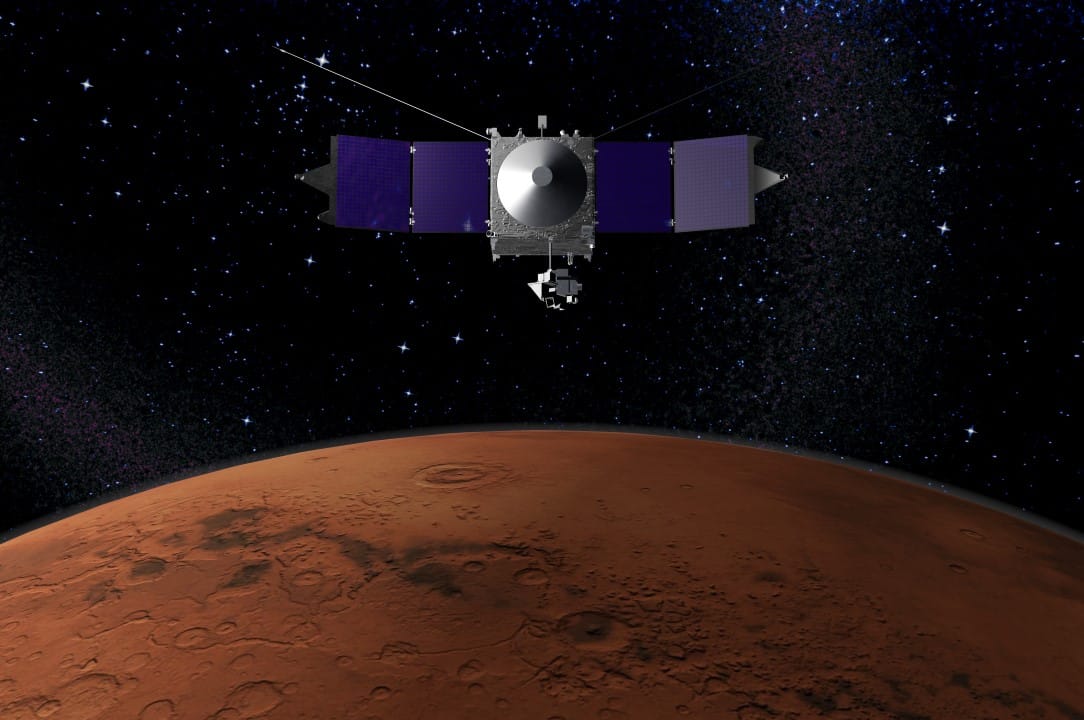
Role of the probe in Martian exploration
Maven was launched in 2013 with the main objective of studying the Martian atmosphere and the volatiles present on the planet. Seus instruments allowed measuring the loss of gases to space, offering clues about the ancient climate of Marte. Além of atmospheric science, the spacecraft acted as a communications relay, transmitting about 20% of the data between the Terra and the Curiosity and Perseverance rovers.
With Maven inactive, Mars Reconnaissance Orbiter and Mars Odyssey assumed greater responsibility for retransmissions. The Trace Gas Orbiter, from the Agência Espacial Europeia, also contributes to maintaining the flow of information from vehicles on the ground. Esses adjustments ensure continuity in current operations in Marte.
Nasa evaluates options to reinforce telecommunications infrastructure on the red planet. Planos include the development of a new orbiter dedicated to communications functions, with proposals from private companies already under discussion for possible launches in the coming years.
Scientific legacy and future planning
The mission provided valuable data on atmospheric processes that helped reconstruct the climate history of Marte. Cientistas used this information to compare the planet with the evolution of Terra and other bodies in the solar system. The technical team involved in the operation received recognition for the work carried out over the years.
Louise Prockter commented that not all spacecraft last indefinitely and that the agency plans the next steps for the exploration of Marte. Current efforts focus on maximizing the chances of recovery while preparing alternatives to maintain a scientific presence on the planet.
The formation of the anomaly committee allows for a structured assessment of the remaining events and possibilities. Não there is a defined deadline to end the searches, but work continues based on technical data and available resources.
Nasa continues to monitor the situation carefully to decide the direction of the Martian fleet. Outras ongoing missions, including rovers in operation, continue to generate important scientific results even with the temporary absence of Maven.



